We Compared 4 Solar Generators That Work in an Apartment

Off-grid power editor
Published
Updated
Last fact-checked

This guide is for renters. If you live in an apartment or a condo you almost certainly cannot run a fuel generator on the balcony, cannot mount panels on the roof, and cannot have an electrician wire anything into the panel. A battery power station, sold under the name solar generator, is the only backup option left to you. We shortlisted four units between 512Wh and 1056Wh and compared them on the things an apartment actually charges you for: the inverter surge that decides whether the refrigerator restarts, watt-hours per cubic inch of storage space, and how hard each one leans on a 15A branch circuit while charging. None of these units were tested by us, and every review states what its judgement rests on. What you will get is the runtime and space arithmetic, and a clear line between the two units here that can keep food cold and the two that cannot.
What is the best solar generator for an apartment?
The ALLPOWERS R1500 LITE suits most apartments. Its 1600W inverter with a 3200W surge is the only combination here with real headroom for a refrigerator compressor, and 1056Wh covers roughly nine hours of a small fridge. If you are in a walk-up, the Pecron F1000LFP does nearly the same work at 23.9 lb.
Key takeaways
- Inverter surge decides whether the refrigerator restarts; capacity only decides how long it stays cold afterwards
- In an apartment the scarce resource is floor space, not weight, so compare watt-hours per cubic inch rather than per pound
- A 15A apartment circuit carries 1440W continuously, which several fast-charge modes come close to on their own
- A balcony can substitute for a roof, but only on units that publish a solar input high enough to matter
- Two of these four cannot start a refrigerator at all, and no surge marketing changes that
Our picks at a glance
Every unit below wins a specific situation rather than a place in a ranking. Pick the row that matches how you will actually use it.
-
Best for keeping the refrigerator cold

ALLPOWERS R1500 LITE
Apartments where the refrigerator is the whole reason for buying, and where there is a corner or a closet floor the unit can occupy permanently.
-
Best for balcony solar recharging
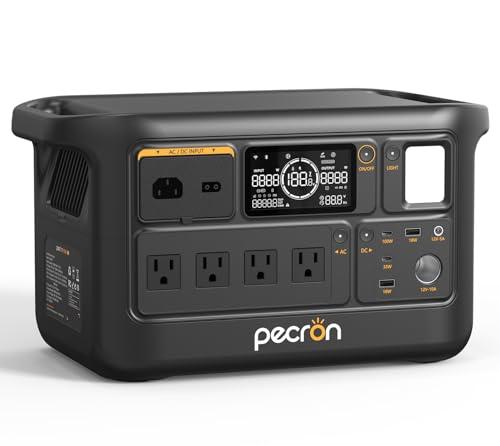
Pecron F1000LFP
Renters with a south-facing balcony who want a way to recharge during a multi-day outage without touching the roof or the building's wiring.
-
Best for running a home desk through an outage

Anker SOLIX C800X
Renters who work from home and need a laptop, a monitor, the router and a phone bank to survive a long afternoon cut without hunting for outlets.
-
Best for a studio with nowhere to put it

Jackery Explorer 500 v2
Studios and small one-bedrooms where the job is internet, lighting and devices, and where the unit has to live out of sight between outages.
How they compare
Scroll the table sideways to see every column.
| Product | Where to buy | Award | Capacity | AC output | Weight | Dimensions | Ports | Warranty | Best for |
|---|---|---|---|---|---|---|---|---|---|
| ALLPOWERS R1500 LITE | Best for keeping the refrigerator cold | 1056Wh | 1600W (3200W surge) | 33 lb (15.0 kg) | 12.3 x 10.4 x 16.3 in | 4 AC outlets, 2x USB-C 100W, 2x USB-A 18W, 120W car outlet, XT60 solar input | 5-year warranty | Apartments where the refrigerator is the whole reason for buying, and where there is a corner or a closet floor the unit can occupy permanently. | |
| Pecron F1000LFP | Best for balcony solar recharging | 960Wh | 1500W pure sine wave | 23.9 lb (10.8 kg) | 15.0 x 8.5 x 8.4 in | 10 total, 4 AC outlets, 2x USB-A 18W, 1x USB-C 33W, 1x USB-C 100W, DC 5525, car port | 2+3 years | Renters with a south-facing balcony who want a way to recharge during a multi-day outage without touching the roof or the building's wiring. | |
| Anker SOLIX C800X | Best for running a home desk through an outage | 768Wh | 1200W (1600W SurgePad) | 24.0 lb (10.9 kg) | 14.61 x 8.07 x 9.96 in | 10 total | 5 years | Renters who work from home and need a laptop, a monitor, the router and a phone bank to survive a long afternoon cut without hunting for outlets. | |
| Jackery Explorer 500 v2 | Best for a studio with nowhere to put it | 512Wh | 500W (1000W surge) | 12.6 lb (5.7 kg) | 12.2 x 6.2 x 8.1 in | 2 AC sine wave outlets | 5 year manufacturer | Studios and small one-bedrooms where the job is internet, lighting and devices, and where the unit has to live out of sight between outages. |
The full reviews
Best for keeping the refrigerator cold
ALLPOWERS R1500 LITE
ALLPOWERS
Of the four units here, only the R1500 LITE pairs a 1600W continuous inverter with a 3200W surge rating and 1056Wh behind it. That is the combination a refrigerator compressor asks for, and what you give up for it is a 16.3-inch-tall box that weighs 33 lb and never really hides.
What we like about the ALLPOWERS R1500 LITE
- 3200W surge on a 1600W continuous inverter is the widest published start-up headroom in this shortlist
- 1056Wh is the largest pack here, roughly nine hours of a small apartment fridge
- 15ms UPS switchover sits inside the 16.7ms of a single 60Hz mains cycle, the window a desktop power supply is generally built to ride through
- Rated at 3,500 or more cycles, so weekly outage duty will not wear the pack out in any realistic ownership period
- 5-year warranty, matching the longest cover in this group
Where it falls short for the ALLPOWERS R1500 LITE
- At 33 lb it is the heaviest unit here, which matters in a building where the elevator stops working the moment the power does
- Its 12.3 x 10.4 x 16.3 in case works out to 0.51Wh per cubic inch, the worst space efficiency in this shortlist and roughly half the Pecron F1000LFP figure
- The 1200W fast-charge draw uses 83% of the 1440W continuous ceiling on a standard 15A apartment circuit, so a microwave on the same breaker while it charges will trip it
- No published solar input figure, so a balcony panel setup cannot be sized against a manufacturer number
Key specifications
- Capacity
- 1056Wh
- AC output
- 1600W (3200W surge)
- UPS switchover
- 15ms
- AC recharge time
- About 1 hour, 1000W standard or 1200W fast AC charging
- Weight
- 33 lb (15.0 kg)
- Dimensions
- 12.3 x 10.4 x 16.3 in
- Rated cycle life
- 3,500+ cycles
Most apartment buyers start with capacity and end up with a unit that trips the moment the fridge kicks in. The R1500 LITE is the pick here because it starts at the other end.
The surge number is the one that matters
A refrigerator compressor draws a brief spike several times its running wattage when it starts. A unit that handles the running load fine can still fail the start, and when it does the unit shuts down and the food warms up.
The R1500 LITE publishes 1600W continuous with a 3200W surge. That is twice the continuous rating in reserve, and the widest published headroom of the four units here. The Pecron F1000LFP is rated 1500W, the Anker SOLIX C800X 1200W with SurgePad to 1600W, and the Jackery Explorer 500 v2 only 500W. If your fridge is the reason you are shopping, this is the shortest list you should be choosing from.
What 1056Wh buys in an apartment
A small apartment refrigerator, roughly 10 to 18 cubic feet, averages about 100W once the compressor duty cycle is accounted for. Assume 85% of the rated pack actually reaches the outlet after inverter losses, and 1056Wh becomes about 898Wh delivered, or nine hours of cold.
That is one long evening, not a weekend. Add a router at 20W and it drops to roughly seven and a half hours. Nobody selling these units frames it that way, but that is the number to plan against.
Where the space cost lands
An apartment pays for backup power in floor area, not in pounds. The case is 12.3 x 10.4 x 16.3 inches, which is 2,085 cubic inches holding 1056Wh, or 0.51Wh per cubic inch. The Pecron manages 0.90Wh per cubic inch in the same shortlist, nearly twice as dense.
The consolation is that the R1500 LITE is tall rather than wide. Its footprint on the floor is 128 square inches, essentially the same as the Pecron, so it costs a closet corner rather than a stretch of wall. It just does not slide under anything.
The charging trap nobody mentions
Standard apartment branch circuits are 15A at 120V, which is 1800W peak and 1440W under the 80% continuous rule. The R1500 LITE charges at 1000W standard or 1200W fast, and 1200W is 83% of that ceiling. Charge it fast on the kitchen circuit while a microwave runs and the breaker goes.
ALLPOWERS quotes about an hour for a full AC recharge, and the standard 1000W rate leaves real margin against the breaker. It does not publish a separate time for each rate, so we cannot tell you exactly what the slower setting costs. In a rented apartment, where you cannot add a circuit, the margin is worth more than whatever that difference turns out to be.
Who should skip it
Anyone above the second floor of a walk-up. Thirty-three pounds down four flights during an outage, in the dark, is a genuinely bad idea, and the Pecron does most of the same work at 23.9 lb.
- Best for
- Apartments where the refrigerator is the whole reason for buying, and where there is a corner or a closet floor the unit can occupy permanently.
- Choose something else if
- You live in a walk-up above the second floor, or the unit has to disappear under furniture between outages because there is no spare floor space.
Best for balcony solar recharging
Pecron F1000LFP
Pecron
The F1000LFP accepts 600W of solar, twice the input of anything else on this shortlist, which is what makes a balcony rail a viable substitute for a roof. It also happens to be the flattest box here at 8.4 inches tall, so it lives under furniture instead of beside it.
What we like about the Pecron F1000LFP
- 600W maximum solar input is double the next best figure here, so a balcony array can refill it inside an afternoon
- 1500W pure sine wave output has enough margin to start a small refrigerator compressor
- 8.4 inches tall, low enough to slide under a console table or into the base of a coat closet
- 960Wh in a 15.0 x 8.5 x 8.4 in case is 0.90Wh per cubic inch, the best space efficiency in this shortlist
- Charges at 1000W AC, which is 69% of the continuous ceiling on a 15A circuit and leaves room for other appliances
Where it falls short for the Pecron F1000LFP
- The 20ms UPS switchover is the slowest here and falls outside the roughly 16.7ms of a single 60Hz mains cycle, so a desktop or NAS can still reboot when the grid drops
- Warranty is quoted as 2+3 years rather than the flat five years on the ALLPOWERS and Jackery units, so check what the second stage requires before counting on it
- No published cycle-life figure, so there is no way to compare pack longevity against the 3,500 cycles the ALLPOWERS R1500 LITE states or the 6,000 the Jackery Explorer 500 v2 does
- 960Wh is the smallest pack of the two fridge-capable units here, about 45 minutes less cold than the R1500 LITE
Key specifications
- Capacity
- 960Wh
- AC output
- 1500W pure sine wave
- Max solar input
- 600W
- UPS switchover
- Within 20ms
- AC recharge time
- 50 minutes to 80%, 70 minutes to full at 1000W AC
- Weight
- 23.9 lb (10.8 kg)
- Dimensions
- 15.0 x 8.5 x 8.4 in
An apartment has no roof, and that is usually where the solar conversation stops. The F1000LFP is the unit here that makes the conversation worth continuing.
Why 600W of input changes the maths
Every one of these units is sold as a solar generator. Only two publish a solar input figure at all, and the Pecron’s 600W is double the 300W on the Anker SOLIX C800X. That gap decides whether panels leaning on a balcony rail are a gesture or a genuine recharge path.
Work it through. Two 200W folding panels on a rail, derated to about 65% for angle, heat and the glass they usually sit behind, deliver roughly 260W. Against a 960Wh pack that is a full refill in a little under four hours of usable sun. Three panels at the same derating reach about 390W and cut it to two and a half hours. Either way the unit finishes the day full, which is the only thing that matters when the outage runs into a second night.
The honest caveat: this assumes sun actually reaches the balcony. North-facing balconies, deep overhangs and neighbouring towers can halve those numbers, and nothing in the specification saves you from that.
The flattest box in the shortlist
At 15.0 x 8.5 x 8.4 inches the F1000LFP holds 960Wh in 1,071 cubic inches. That is 0.90Wh per cubic inch, against 0.65 for the C800X and 0.51 for the ALLPOWERS R1500 LITE. In a home where storage is the scarce resource, it is the most capacity per unit of space on this page.
The 8.4-inch height is the practical part. It fits under a console table, in the base of a coat closet, or on a low shelf. The R1500 LITE, at 16.3 inches, fits in none of those places.
What it will actually run
A small apartment refrigerator averages roughly 100W across its compressor duty cycle. Allowing 85% of the rated pack to reach the outlet, 960Wh delivers about 816Wh, or eight hours of cold. The 1500W inverter has the margin to start that compressor, which the 1200W C800X and the 500W Jackery do not reliably have.
Where it gives ground
The UPS switchover is quoted as within 20ms. One cycle of 60Hz mains is 16.7ms, and desktop power supplies are generally built to ride through about that long. A 20ms handover therefore sits on the wrong side of the line. For a fridge, a lamp or a phone charger it is irrelevant. For a work machine mid-call it is the difference between a flicker and a restart, and the ALLPOWERS at 15ms or the Jackery at 10ms are the safer choices there.
- Best for
- Renters with a south-facing balcony who want a way to recharge during a multi-day outage without touching the roof or the building's wiring.
- Choose something else if
- A desktop computer or network storage has to survive the switchover without restarting, or you want a published cycle-life number before committing.
Best for running a home desk through an outage
Anker SOLIX C800X
Anker
Ten ports on a 768Wh pack makes the C800X the unit that keeps a whole desk alive rather than one appliance. It is deliberately not a refrigerator unit, and reading it as one is the mistake to avoid: 1200W continuous is below the line we draw for compressor starts.
What we like about the Anker SOLIX C800X
- Ten ports means a laptop, monitor, router, phones and a lamp run from the unit without a power strip
- 14.61 x 8.07 in footprint is the smallest floor area of the three larger units here, 118 square inches
- 300W solar input gives renters with a balcony a slow but real recharge route
- 5-year warranty matches the longest cover in this shortlist
- 1600W SurgePad headroom above the 1200W continuous rating covers short spikes from small appliances
Where it falls short for the Anker SOLIX C800X
- 1200W continuous, even with SurgePad to 1600W, is under the 1500W we would want before trusting it to start a refrigerator compressor
- Anker does not publish an AC recharge time for the C800X, so you cannot plan refills against a short grid window the way you can with the Pecron F1000LFP at 50 minutes to 80%
- No published UPS switchover figure, so it should not be treated as a substitute for a desktop UPS
- Neither a cycle-life rating nor the battery chemistry is published, so a unit meant to sit indoors for years cannot be compared against the 3,500 cycle ALLPOWERS R1500 LITE or the 6,000 cycle Jackery Explorer 500 v2 on how long the pack will last
Key specifications
- Capacity
- 768Wh
- AC output
- 1200W (1600W SurgePad)
- Max solar input
- 300W
- Ports
- 10 total
- Weight
- 24.0 lb (10.9 kg)
- Dimensions
- 14.61 x 8.07 x 9.96 in
- Warranty
- 5 years
Every other unit on this page is chosen around one big load. The C800X is the one chosen around many small ones, which is what an apartment outage usually looks like once the fridge question is settled.
Ten ports is the specification
A desk during a power cut is not one device. It is a laptop, an external monitor, a router, a modem, a desk lamp and two phones that all want power at once. Most power stations answer that with three or four AC outlets and expect you to bring a power strip.
The C800X publishes ten ports. In a rented flat where the outlets are already scarce and probably behind furniture, that removes a genuine annoyance rather than a theoretical one.
How long the desk actually lasts
Take a realistic work-from-home draw: a 65W laptop, a 30W monitor and 20W for the router and modem, so 115W. Assume 85% of the rated pack reaches the outlet after inverter losses and 768Wh becomes about 653Wh delivered. That is roughly five and a half hours, which covers most of a working afternoon.
Strip it back to just the router and modem at 20W and the same pack runs for about 32 hours. If the goal is staying reachable rather than staying productive, that is more than a day of internet from a box the size of a carry-on.
Where it deliberately stops
The continuous rating is 1200W, with SurgePad lifting the ceiling to 1600W. For resistive and electronic loads that is comfortable. For a refrigerator we would not rely on it, and the guide above sets 1500W as the practical floor for compressor starts.
Two other gaps matter in an apartment. Anker does not publish an AC recharge time for this unit, so if your grid comes back in twenty-minute windows you cannot calculate what a window buys you. Nor is a UPS switchover figure published, which means it should not be the thing standing between a desktop and a lost document.
Where the space goes
At 14.61 x 8.07 x 9.96 inches the C800X takes 118 square inches of floor, the smallest of the three larger units here, but only 0.65Wh per cubic inch of the volume it occupies. The Pecron packs 0.90Wh into the same space. You are trading a little density for a shape that sits neatly on a shelf, and for a lot more ports.
- Best for
- Renters who work from home and need a laptop, a monitor, the router and a phone bank to survive a long afternoon cut without hunting for outlets.
- Choose something else if
- The refrigerator is the reason you are buying, or you need a published switchover time because a desktop machine must not restart.
Best for a studio with nowhere to put it
Jackery Explorer 500 v2
Jackery
At 12.6 lb and roughly the size of a shoebox, the Explorer 500 v2 is the only unit here that goes on a shelf rather than on the floor. It buys that with a 500W inverter, which rules out the refrigerator and makes this a lights, router and laptop machine.
What we like about the Jackery Explorer 500 v2
- 12.6 lb and a 12.2 x 6.2 in base, so it stores on a bookshelf instead of claiming floor space
- 40.6Wh per pound is the best capacity-to-weight ratio in this shortlist
- 10ms UPS switchover is the fastest here and comfortably inside the roughly 16.7ms of one mains cycle
- Rated at 6,000 cycles, which at a full discharge every week is longer than anyone will own it
- 52 minutes to 80% means a short return of grid power puts most of the pack back
Where it falls short for the Jackery Explorer 500 v2
- The 500W continuous rating, even with the 1000W surge, will not reliably start a refrigerator compressor, so it cannot do the job most people buy backup power for
- 512Wh is half the ALLPOWERS R1500 LITE, about four and a half hours of a small fridge if the compressor started at all
- Two AC outlets only, so a desk with a laptop brick, a monitor and a lamp still needs a power strip on top
- No published solar input figure, so balcony charging cannot be planned against a manufacturer number
Key specifications
- Capacity
- 512Wh
- AC output
- 500W (1000W surge)
- Weight
- 12.6 lb (5.7 kg)
- Dimensions
- 12.2 x 6.2 x 8.1 in
- UPS switchover
- 10ms
- AC recharge time
- 52 minutes to 80%
- Rated cycle life
- 6,000 charge cycles
The other three units on this page assume you have somewhere to put them. In a studio that assumption often fails, and this is the unit that survives it.
Small enough to actually own
The case is 12.2 x 6.2 x 8.1 inches and it weighs 12.6 lb. That is 613 cubic inches, less than a third of the ALLPOWERS R1500 LITE, and it fits on a bookshelf or in a wardrobe between outages instead of standing in a corner.
The weight ratio is the best here too. 512Wh across 12.6 lb is 40.6Wh per pound, against 32Wh per pound for both the C800X and the R1500 LITE. If the unit ever has to come down four flights of stairs, or travel to a relative’s place, that difference is the whole argument.
What it will run, honestly
The inverter is rated 500W continuous with a 1000W surge. That covers a laptop, a router and modem, LED lighting, phone charging, a fan and a CPAP. It does not cover a refrigerator, and no amount of headline surge changes that.
Numbers for the loads it does cover, assuming 85% of the pack reaches the outlet: about 435Wh delivered. A router and modem drawing 20W run for roughly 21 hours. A 65W laptop plus a 10W lamp runs close to six hours. A CPAP at around 40W, without the humidifier, covers a full night with a good margin left.
Cycle life is not the constraint
Jackery rates the pack at 6,000 charge cycles. At one full discharge a week that is over a century, and even at one a day it is more than sixteen years. Cycle life is simply not what limits a backup unit that gets used a handful of times a year. The 5-year warranty and calendar ageing are the real limits, which is worth knowing before paying extra elsewhere for a bigger cycle number.
The switchover is better than it needs to be
At 10ms the transfer is the fastest here, well inside the 16.7ms of a single 60Hz mains cycle that a desktop power supply is generally built to ride through. Plug a work machine and a router into it and a grid drop becomes a non-event.
That is the sensible way to buy this unit: not as your only backup, but as the one that protects the desk while something larger handles the kitchen.
- Best for
- Studios and small one-bedrooms where the job is internet, lighting and devices, and where the unit has to live out of sight between outages.
- Choose something else if
- You expect to keep food cold, or you want one unit that covers every appliance in the home rather than the small ones.
How we researched this guide
Four units between 512Wh and 1056Wh were compared using published manufacturer specifications and aggregated owner reports. None were tested by us. Runtime, space and circuit-load figures on this page are our own arithmetic from published ratings, with every assumption stated where it is used.
The full process is on our how we test portable power stations page, including what counts as hands-on use.
- Units evaluated
- 4
- Used hands-on
- 0
- Assessed from documentation and owner reports
- 4
Evaluation methods used: specification comparison
Which one should you buy?
Match your situation on the left to the recommendation on the right.
-
Keeping the refrigerator cold is the reason you are buying
Recommendation: Buy the ALLPOWERS R1500 LITE for its 1600W continuous rating and 3200W surge headroom
-
You have a sunny balcony and outages that run into a second day
Recommendation: Buy the Pecron F1000LFP, the only unit here that accepts 600W of solar input
-
You live above the second floor of a walk-up with no elevator
Recommendation: Buy the Pecron F1000LFP at 23.9 lb rather than the 33 lb ALLPOWERS R1500 LITE
-
You work from home and need a laptop, monitor, router and phones covered
Recommendation: Buy the Anker SOLIX C800X for its ten ports and 118 square inch footprint
-
You live in a studio where the unit must be stored out of sight
Recommendation: Buy the Jackery Explorer 500 v2, which fits a bookshelf at 12.6 lb
Mistakes buyers make
- Buying on watt-hours alone and ending up with an inverter that trips the moment the fridge compressor starts
- Assuming solar generator means the unit needs panels, when all of them charge from a normal wall outlet
- Fast-charging a unit on the kitchen circuit while a microwave runs, which puts a 15A breaker over its continuous limit
- Choosing the biggest unit available without checking whether it fits anywhere you are willing to keep it
- Planning to carry a 33 lb unit down four flights during an outage, when the elevator fails at the same moment the lights do
- Treating a power station without a published switchover time as a substitute for a desktop UPS
Our final recommendation
If you want one answer rather than a shortlist, this is the unit that suits the widest range of readers in this category.
Best for keeping the refrigerator cold
Apartments where the refrigerator is the whole reason for buying, and where there is a corner or a closet floor the unit can occupy permanently.
Questions buyers ask
Is a solar generator safe to run indoors overnight?
Yes. There is no fuel, no combustion and therefore no carbon monoxide, which is the whole reason this category exists for renters. The one practical caution is heat: these units run cooling fans under heavy load and while charging, so keep the vents clear and do not shut one inside a cupboard while it works.
Do I need solar panels to use one of these?
No. Solar generator is a marketing name for a battery with an inverter. All four of these charge from an ordinary wall outlet, and most owners never buy a panel. Solar matters only if you expect outages long enough that the grid will not be there to refill the unit.
Will my lease or building rules stop me from owning one?
Lease and fire-code restrictions in apartment buildings are almost always written about stored fuel and combustion appliances, which is what rules out a petrol generator on a balcony. A sealed lithium battery is treated like any other appliance. Mounting anything to a balcony rail is a separate question, and that one is worth asking before you buy panels.
Can I plug one into my apartment wiring to power the outlets?
No. Feeding a circuit requires a transfer switch wired into the panel by an electrician, which is not something a tenant can authorise. In an apartment you run extension cords from the unit to the appliances you care about, which in practice means the refrigerator, a lamp and the router.
How many of these can actually run a refrigerator?
Two of the four. We treat 1500W continuous as the working floor for starting a compressor, which the ALLPOWERS R1500 LITE and the Pecron F1000LFP clear and the 1200W Anker SOLIX C800X and 500W Jackery Explorer 500 v2 do not. Compact apartment fridges draw less than full-size units, but the start-up spike is what trips an inverter, not the running load.
About the author