We Compared 4 Portable Power Stations That Can Run an Air Conditioner

Off-grid power editor
Published
Updated
Last fact-checked
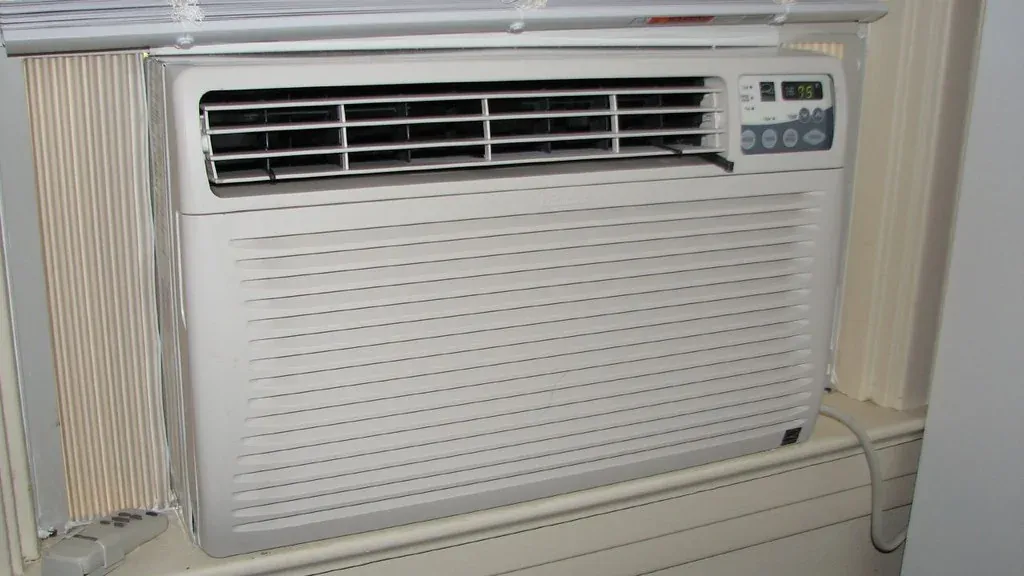
This guide is for anyone who wants to run a window or portable air conditioner without a wall socket, whether that is a summer outage, a bedroom with no spare circuit, or a van. Air conditioning is the heaviest load most households will ever put through a power station, and it is where the small units advertised as emergency backup stop being an option entirely. We compared four units on continuous inverter output, capacity, weight and recharge speed, then divided the rated watt-hours by realistic air conditioner draw so you can see the hours rather than a runtime chart. We did not test these units and every review says what its recommendation rests on. What you get here is the arithmetic, the assumptions behind it, and a blunt line under the sizes that cannot do this job.
What is the best portable power station for an air conditioner?
The BLUETTI Elite 200 V2 suits most buyers. Its 2600W continuous inverter is the largest here under 60 lb, which is what keeps a compressor restart from tripping the unit, and its 2073.6Wh pack covers about four hours of continuous cooling on a small window AC. If you need a full night on a large portable AC, only the EcoFlow DELTA Pro has the capacity for it.
Key takeaways
- Air conditioning needs both a big inverter and a big battery, and most units fail on one of the two
- Anything under roughly 2000W continuous and 2000Wh will not run an air conditioner usefully, whatever the surge rating says
- Surge modes such as X-Boost and Power Lifting reach their numbers by lowering voltage, so they never apply to a compressor
- A 2000Wh unit is about four hours of continuous compressor running on a small window AC, or a night once the thermostat starts cycling
- Recharge speed decides whether you get a second hot afternoon, because an AC will empty 2000Wh in one
Our picks at a glance
Every unit below wins a specific situation rather than a place in a ranking. Pick the row that matches how you will actually use it.
-
Best for the largest window air conditioner

BLUETTI Elite 200 V2
Running a full-size 8,000 to 12,000 BTU window air conditioner where the compressor restart is the thing you are most worried about tripping the unit.
-
Best for moving the cooling from room to room

Jackery Explorer 2000 v2
Cooling one occupied room at a time and carrying the same unit to the bedroom at night, or keeping a plugged-in window AC alive through a short grid cut.
-
Best for refilling between afternoon heat peaks

BLUETTI AC200L
Multi-day heat events where power or sunlight returns in windows and you need the unit topped up again before the next afternoon peak.
-
Best for cooling through a full night
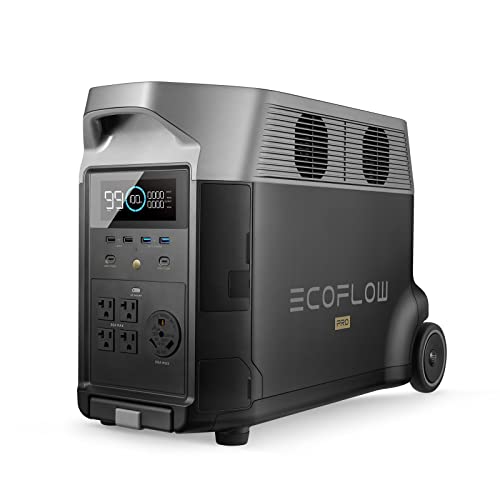
EcoFlow DELTA Pro
Running a 12,000 BTU portable air conditioner or a large window unit overnight in one fixed location, with a fridge on the same power station.
How they compare
Scroll the table sideways to see every column.
| Product | Where to buy | Award | Capacity | AC output | Battery chemistry | Weight | AC recharge time | Warranty | Best for |
|---|---|---|---|---|---|---|---|---|---|
| BLUETTI Elite 200 V2 | Best for the largest window air conditioner | 2073.6Wh | 2600W continuous (3900W Power Lifting) | LiFePO4 | 53.35 lb (24.2 kg) | 0-80% in 1 hour on Turbo mode (1800W AC), full in 1.6 hours on Standard mode | -- | Running a full-size 8,000 to 12,000 BTU window air conditioner where the compressor restart is the thing you are most worried about tripping the unit. | |
| Jackery Explorer 2000 v2 | Best for moving the cooling from room to room | 2042Wh | 2200W across 3 AC ports | LiFePO4 | 39.5 lb (17.9 kg) | 66 minutes to 80% | 5 year manufacturer | Cooling one occupied room at a time and carrying the same unit to the bedroom at night, or keeping a plugged-in window AC alive through a short grid cut. | |
| BLUETTI AC200L | Best for refilling between afternoon heat peaks | 2048Wh | 2400W | LiFePO4 | 61.41 lb (27.9 kg) | 0-80% in 45 minutes (2400W AC input) | 4-year warranty | Multi-day heat events where power or sunlight returns in windows and you need the unit topped up again before the next afternoon peak. | |
| EcoFlow DELTA Pro | Best for cooling through a full night | 3600Wh | 3600W (4500W X-Boost) | LiFePO4 | 99 lb (44.9 kg) | 1.8 hours on a 240V outlet, 2.7 hours on a 1800W wall outlet | 5 years | Running a 12,000 BTU portable air conditioner or a large window unit overnight in one fixed location, with a fridge on the same power station. |
The full reviews
Best for the largest window air conditioner
BLUETTI Elite 200 V2
BLUETTI
At 2600W continuous the Elite 200 V2 carries the most inverter headroom of any unit here under 60 lb, which is what you want when a compressor kicks in while a fan and a router are already drawing. The pack behind that inverter is 2073.6Wh, so it is generous on starting power and merely adequate on hours.
What we like about the BLUETTI Elite 200 V2
- 2600W continuous inverter leaves roughly 1900W spare while an 8,000 BTU window unit runs, so the compressor restart is not a cliff edge
- 2073.6Wh returns about 4 hours 10 minutes on a 5,000 BTU window AC drawing 450W, before the thermostat cycles off at all
- Turbo mode refills 0-80% in 1 hour, which is roughly 1660Wh recovered inside one grid window
- Rated for over 6,000 cycles, so even a full charge and discharge every night of a three-month summer leaves the cell rating untouched for decades
Where it falls short for the BLUETTI Elite 200 V2
- The 2073.6Wh pack gives only about 1 hour 35 minutes on a 12,000 BTU portable air conditioner drawing 1150W, so the inverter is far more capable than the battery behind it
- At 53.35 lb it stores 38.9Wh per pound against the Jackery Explorer 2000 v2's 51.7Wh per pound, so you carry a third more weight for the same hours
- Turbo mode reaches 80% in an hour by pulling 1800W, which is the entire 15 amps a standard 120V circuit carries and above the 1440W it is rated to carry continuously, so on a shared bedroom circuit that hour is not a number you can plan around
- Power Lifting reaches 3900W by reducing output voltage, which does nothing for a motor, so 2600W is the only number that applies to an air conditioner
Key specifications
- Capacity
- 2073.6Wh
- AC output
- 2600W continuous (3900W Power Lifting)
- Weight
- 53.35 lb (24.2 kg)
- AC recharge time
- 0-80% in 1 hour on Turbo mode (1800W AC), full in 1.6 hours on Standard mode
- Solar input
- Full charge in 2.4 hours with 1000W panels
- Rated cycle life
- Over 6,000 cycles
Air conditioning is the one household load where the inverter and the battery pull in opposite directions. You need a big inverter so the compressor can start, and you need a big battery so it can keep running. The Elite 200 V2 is the clearest example in this guide of a unit that is much stronger on the first than the second.
What 2600W actually buys you
An 8,000 BTU window air conditioner draws roughly 700W while the compressor runs. Against a 2600W continuous rating that leaves about 1900W unused. That margin is not decoration. A compressor pulls several times its running draw for a fraction of a second at start-up, and it does that every time the thermostat calls for cooling, which on a hot afternoon is several times an hour.
A unit sized so that the compressor start only just fits will trip eventually, usually at the worst moment, and usually because something else was plugged in at the same time. The Elite 200 V2 has enough spare that a fan, a phone charger and a router alongside the AC change nothing.
Ignore the 3900W Power Lifting figure entirely. That mode reaches its number by lowering output voltage. Lower voltage is fine for a kettle and useless for a motor, which needs full voltage to develop torque.
Where the arithmetic runs out
The pack is 2073.6Wh. Assume 90% inverter efficiency, so a 450W air conditioner pulls about 500W from the battery. That is 2073.6 divided by 500, or about four hours and ten minutes of continuous compressor running.
Real air conditioners cycle. Once a small bedroom is down to temperature, a window unit might run 60% of the time, which drops the average pack draw to roughly 300W and stretches the figure to just under seven hours. That is a night, but only in a small, shaded, well-sealed room.
Point it at a 12,000 BTU portable air conditioner drawing about 1150W, or roughly 1280W from the pack, and the same sum gives about one hour and thirty-five minutes of compressor running. The 2600W inverter never breaks a sweat. The battery simply empties.
Recharge and lifespan
Turbo mode takes it from empty to 80% in an hour, which is about 1660Wh recovered. On a grid that flickers back for an hour at a time, that is one more useful run. Standard mode fills it in 1.6 hours if you would rather not push it.
Check the socket before you count on the hour. Turbo draws 1800W, and at 120V that is 15 amps, the full rating of an ordinary branch circuit and above the 1440W such a circuit is rated to carry continuously. Anything else on that circuit and you are either tripping a breaker or charging slower than the specification says.
The 6,000-cycle rating is worth a moment. Even if you fully drained and refilled this pack every single night of a three-month summer, that is around 90 cycles a year. The cell rating is not what will retire this unit.
Who should choose something else
If you want a full night on a big portable AC, the EcoFlow DELTA Pro is the only pick here with the watt-hours for it. If you will be carrying the unit between rooms, 53.35 lb with no wheels is a real deterrent and the Jackery is 14 lb lighter for nearly the same capacity.
- Best for
- Running a full-size 8,000 to 12,000 BTU window air conditioner where the compressor restart is the thing you are most worried about tripping the unit.
- Choose something else if
- You want a full night of cooling from one charge, or you need to carry the unit upstairs on your own, because 53.35 lb is a two-handed lift with no wheels.
Best for moving the cooling from room to room
Jackery Explorer 2000 v2
Jackery
The Explorer 2000 v2 packs 2042Wh into 39.5 lb, which is 51.7 watt-hours per pound and the best ratio in this guide by a wide margin. You give up inverter headroom for that, and its 20ms switchover makes it the one unit here that can sit between a wall socket and a window AC without the compressor noticing an outage.
What we like about the Jackery Explorer 2000 v2
- 2042Wh in 39.5 lb works out to 51.7Wh per pound, against 33.3Wh per pound for the BLUETTI AC200L, so it is the only pick here one person can genuinely relocate
- 20ms UPS switchover means a running window air conditioner keeps running when the grid drops, instead of restarting its compressor cold
- 2200W continuous handles a 5,000 BTU window unit at about 450W with 1750W to spare for everything else in the room
- 66 minutes to 80% recovers roughly 1630Wh, enough for another three hours of continuous compressor running, or about five and a half hours once the thermostat cycles
Where it falls short for the Jackery Explorer 2000 v2
- The 2200W continuous rating is 400W below the BLUETTI Elite 200 V2, and on a 12,000 BTU portable AC drawing 1150W that leaves barely 1000W of headroom for a compressor restart with a fridge on the same unit
- Only 3 AC outlets and a single USB-C port, so a bedroom running an AC, a fan and a lamp has used every socket
- 2042Wh is the hard ceiling, because nothing in its published specification adds an expansion battery, while the BLUETTI AC200L reaches 8192Wh and the EcoFlow DELTA Pro 25kWh, so a heat event longer than one charge means buying a second unit
- 2042Wh is roughly four hours of continuous compressor running on a small window unit, which is an evening rather than a night if the room never reaches temperature
Key specifications
- Capacity
- 2042Wh
- AC output
- 2200W across 3 AC ports
- Weight
- 39.5 lb (17.9 kg)
- AC recharge time
- 66 minutes to 80%
- UPS switchover
- 20ms
- Warranty
- 5 year manufacturer
Weight is the specification buyers ignore until the unit arrives. Every pick in this guide is heavy, because 2000Wh of LiFePO4 cannot be light. The Explorer 2000 v2 is the one that makes the trade cleanly.
The number that decides this category
Divide capacity by weight and the shortlist separates immediately. 2042Wh over 39.5 lb is 51.7 watt-hours per pound. The BLUETTI Elite 200 V2 manages 38.9. The AC200L manages 33.3. The DELTA Pro, wheels and all, manages 36.4.
That gap is the difference between a unit that lives where you last put it and a unit you will actually move. If your plan is a window AC in the living room during the day and a bedroom at night, or a tent, a van and then a garage, this is the only pick here you will not resent carrying.
The switchover nobody mentions
At 20ms, this unit takes over from the grid faster than a compressor can notice. That is more useful with air conditioning than with almost any other appliance. When mains power drops and comes back, an AC compressor cannot restart immediately against residual head pressure. Many units impose a delay of several minutes before they will try again, so a two-second grid blip can cost you five minutes of cooling. Sitting the AC behind this unit removes that entirely.
None of the other three picks here publish a switchover figure in the specifications we worked from, so this is a genuine point of difference rather than a marketing line.
Where the headroom gets thin
2200W continuous is enough, but it is the smallest margin on this page. A 5,000 BTU window unit at roughly 450W leaves about 1750W spare, which is comfortable. A 12,000 BTU portable AC at roughly 1150W leaves about 1050W, and if a refrigerator is sharing the unit you have used most of that before either compressor tries to start.
The battery runs out first anyway. At 90% inverter efficiency a 450W window AC pulls about 500W from the pack, so 2042Wh divided by 500 is just over four hours of continuous compressor running. Let the thermostat cycle at around 60% and you get close to seven hours. The 66-minute refill to 80% adds about 1630Wh, which is another three hours of continuous running, or about five and a half duty-cycled, if you have a grid window to use.
Who should choose something else
Anyone running a big portable AC as their main cooling should take the DELTA Pro’s 3600Wh instead. Anyone who wants the most inverter margin available under 60 lb should take the Elite 200 V2 and accept the extra 13.85 lb.
- Best for
- Cooling one occupied room at a time and carrying the same unit to the bedroom at night, or keeping a plugged-in window AC alive through a short grid cut.
- Choose something else if
- You plan to run a 12,000 BTU portable air conditioner alongside a refrigerator, because 2200W is the tightest inverter margin of the four units here.
Best for refilling between afternoon heat peaks
BLUETTI AC200L
BLUETTI
Heatwaves are not one long block of demand, and the AC200L is built for the gaps. It takes 1638Wh back in 45 minutes and accepts up to 1200W of solar, more than a small window air conditioner draws, so it is the one unit here that can plausibly cool and charge at the same time in the middle of the day.
What we like about the BLUETTI AC200L
- 0-80% in 45 minutes puts roughly 1638Wh back, which buys about three more hours of continuous window AC running per grid window, or five and a half once the thermostat is cycling
- 1200W maximum solar input exceeds the roughly 500W a 5,000 BTU window unit pulls from the pack, so a well-aimed array can run the AC and still add charge
- Expandable to 8192Wh, four times the base pack, which is the only route on this page to multi-day cooling without a second unit
- 2400W continuous covers a 12,000 BTU portable AC at about 1150W with more than 1200W left for a fridge on the same unit
Where it falls short for the BLUETTI AC200L
- The 45-minute recharge needs 2400W of AC input, which is 20A at 120V and more than a standard 15A household circuit can legally supply, so on a normal bedroom socket you will not see that figure
- At 61.41 lb for 2048Wh it stores 33.3Wh per pound, the worst ratio here and 18.4Wh per pound behind the Jackery Explorer 2000 v2
- 2048Wh alone is about four hours of continuous compressor running on a small window unit, so the expansion batteries are not optional if you want more than a night
- The 4-year warranty is a year shorter than the Jackery's, on a unit likely to be cycled hard every summer
Key specifications
- Capacity
- 2048Wh
- AC output
- 2400W
- Weight
- 61.41 lb (27.9 kg)
- AC recharge time
- 0-80% in 45 minutes (2400W AC input)
- Max solar input
- 1200W
- Expandable
- Yes, to 8192Wh with expansion batteries
- Ports
- 11 ports, including a 30A RV port and a 48V/8A DC port
Most guides treat recharge speed as a convenience. With air conditioning it is the whole strategy, because unlike a fridge, an AC will happily drain 2000Wh in an afternoon and ask for more.
Why the refill rate matters more than the pack
Assume a 5,000 BTU window unit drawing about 450W, and 90% inverter efficiency, so roughly 500W leaves the battery. The AC200L’s 2048Wh covers about four hours of continuous compressor running, or close to seven hours once the thermostat starts cycling at around 60%.
That is one hot afternoon. What decides whether you get the next one is how much you can put back before it arrives. At 0-80% in 45 minutes the AC200L returns about 1638Wh. Divided by the same 500W the pack gives up under a continuously running compressor, that is roughly three more hours per grid window, and about five and a half hours once the thermostat cycles at 60% and the average pack draw falls to 300W. No other unit here comes close per minute plugged in.
The circuit is the catch
That 45-minute figure requires 2400W of AC input. At 120V, 2400W is 20 amps. A standard 15A household branch circuit tops out at 1800W and is only rated for 1440W continuous, so a bedroom socket physically cannot feed this unit at its headline rate. You need a 20A circuit, and ideally one with nothing else on it.
This is the single most important thing to check before buying the AC200L for this job, because the fast recharge is the reason to choose it over the Elite 200 V2. Without a suitable circuit you have bought the heaviest unit here for no advantage.
Solar changes the equation
1200W maximum solar input is the highest on this shortlist and it crosses an interesting threshold. A 1200W array will not deliver 1200W in practice; derate to something like 70% in good midday sun and you are looking at roughly 840W. The small window AC in the example above pulls about 500W from the pack. That leaves headroom to run the air conditioner and gain charge at the same time, in the hours when you most want the cooling.
Nothing else here can claim that. The Elite 200 V2 lists a full charge in 2.4 hours from 1000W of panels, which is respectable but is a charging figure, not a run-and-charge one. The Jackery and DELTA Pro specifications we used publish no maximum solar input at all.
The weight you pay for it
61.41 lb for 2048Wh is 33.3 watt-hours per pound. The Jackery Explorer 2000 v2 delivers 51.7. You are carrying an extra 21.91 lb for the same usable hours, and buying the 30A RV port, the 11 ports and the expansion path with it. If you will never expand and never see a 20A circuit, that weight buys you nothing.
- Best for
- Multi-day heat events where power or sunlight returns in windows and you need the unit topped up again before the next afternoon peak.
- Choose something else if
- Your only charging source is a standard 15A wall socket and you have no solar, because the fast refill that justifies this unit will never happen.
Best for cooling through a full night
EcoFlow DELTA Pro
EcoFlow
Every other unit here is an evening of air conditioning. The DELTA Pro's 3600Wh is the first capacity on this page that survives a night on a real portable AC, and its 3600W inverter is the only one with enough margin to run that AC and a refrigerator without thinking about it. It weighs 99 lb, which is the whole argument against it.
What we like about the EcoFlow DELTA Pro
- 3600Wh covers about 12 hours of duty-cycled running on a 5,000 BTU window unit, which is the only genuine overnight figure in this guide
- 3600W continuous leaves roughly 2450W spare while a 12,000 BTU portable air conditioner runs, so a fridge, a fan and lighting share the unit without competing
- Wheels and a pull-up handle, which no other pick here has and which a 99 lb unit absolutely needs
- Expandable from 3.6kWh to 25kWh, so a single night can become a week of intermittent cooling without replacing the base unit
Where it falls short for the EcoFlow DELTA Pro
- At 99 lb it holds 36.4Wh per pound against the Jackery Explorer 2000 v2's 51.7, and the 1558Wh you gain over the Jackery costs 59.5 lb, which is only 26.2Wh per extra pound
- Wheels do not help on stairs, and at 25 in long it is a two-person lift into a truck bed or up to a first-floor bedroom
- The quick 1.8-hour refill needs a 240V outlet, which a bedroom or a living room does not have, so in practice you get the 2.7-hour figure from an 1800W socket, the slowest recovery here and far less use out of a short grid window than the AC200L's 45-minute burst
- A 12,000 BTU portable AC at 1150W uses under a third of the 3600W inverter, so if air conditioning is the only reason you are buying, you are paying 99 lb and a 25-inch footprint for output this load never reaches
Key specifications
- Capacity
- 3600Wh
- AC output
- 3600W (4500W X-Boost)
- Weight
- 99 lb (44.9 kg)
- AC recharge time
- 1.8 hours on a 240V outlet, 2.7 hours on a 1800W wall outlet
- Expandable
- Yes, from 3.6kWh to 25kWh with extra batteries or smart generators
- Ports
- 15 outputs total, 5 AC outlets
The three 2000Wh units in this guide all land in the same place: an evening of cooling, or most of a night in a small room that reaches temperature quickly. The DELTA Pro exists on this page because that is not what a lot of people are asking for.
The overnight arithmetic
Take the same assumptions used throughout this guide. A 5,000 BTU window air conditioner draws about 450W while the compressor runs, and at 90% inverter efficiency that is roughly 500W leaving the battery. 3600 divided by 500 is 7.2 hours of continuous compressor running, before the thermostat cycles at all. Let it cycle at around 60% and the average pack draw falls to about 300W, which stretches to 12 hours.
The harder case is a 12,000 BTU portable AC at roughly 1150W, or about 1280W from the pack. That is 2 hours 50 minutes of continuous running, or close to 4 hours 40 minutes duty-cycled. The 2000Wh units manage roughly 1 hour 35 minutes and 2 hours 40 minutes respectively on the same sums. This is the only unit here that turns a big portable AC into an overnight proposition rather than a nap.
Inverter margin you will not use up
3600W continuous means the 12,000 BTU portable AC uses under a third of the available output. A refrigerator, a box fan and a few lamps on top of it are still comfortably inside the rating.
Ignore the 4500W X-Boost number. Like every boost mode in this category it gets there by dropping output voltage, and a compressor needs full voltage to make torque. For an air conditioner, 3600W is the figure that counts, and it is more than enough.
What 99 lb really means
This is where the argument turns. 3600Wh in 99 lb is 36.4 watt-hours per pound. The Jackery Explorer 2000 v2 manages 51.7. Framed as an upgrade, you gain 1558Wh and pay 59.5 lb for it, which is 26.2Wh per extra pound. That is a poor exchange rate by the standards of this shortlist.
The wheels and pull handle make it moveable across a flat floor. They do nothing on a staircase, and at 25 in long it is a two-person job into a vehicle. Buy this if the unit is going to live in one place and stay there.
Recovery is its weakest specification
2.7 hours from an 1800W wall outlet is about 1330Wh recovered per hour, or 1.8 hours on a 240V outlet if you have one. In absolute terms that is fine. Measured against a 45-minute grid window, it is the weakest performer here, which is exactly why the AC200L exists further up this page.
- Best for
- Running a 12,000 BTU portable air conditioner or a large window unit overnight in one fixed location, with a fridge on the same power station.
- Choose something else if
- The unit has to travel, be carried up any stairs, or be lifted by one person, because 99 lb on wheels is still 99 lb the moment the floor stops being flat.
How we researched this guide
Four units were shortlisted from a 27-product catalogue on two hard filters: at least 2000W continuous inverter output and at least 2000Wh of capacity. They were then compared on published specifications, and every runtime figure on this page is rated capacity divided by an assumed appliance draw at 90 percent inverter efficiency. None of these units were tested by us and no air conditioner was connected to any of them.
The full process is on our how we test portable power stations page, including what counts as hands-on use.
- Units evaluated
- 4
- Used hands-on
- 0
- Assessed from documentation and owner reports
- 4
Evaluation methods used: specification comparison, documentation and owner-report research, editorial selection
Which one should you buy?
Match your situation on the left to the recommendation on the right.
-
You are running an 8,000 to 12,000 BTU window unit and worry about the compressor tripping it
Recommendation: Buy the BLUETTI Elite 200 V2 for its 2600W continuous rating, the highest here under 60 lb
-
You will move the unit between a living room by day and a bedroom at night
Recommendation: Buy the Jackery Explorer 2000 v2 at 39.5 lb, which stores 51.7Wh per pound against 33.3 for the AC200L
-
Your air conditioner is already plugged into the wall and you want it to survive grid blips
Recommendation: Buy the Jackery Explorer 2000 v2, the only pick here publishing a switchover figure at 20ms
-
You have a 20A circuit or a large solar array and face several hot days in a row
Recommendation: Buy the BLUETTI AC200L, which returns about 1638Wh in 45 minutes and accepts 1200W of solar
-
You need a 12,000 BTU portable AC to run overnight in one fixed room
Recommendation: Buy the EcoFlow DELTA Pro, the only unit here whose 3600Wh reaches roughly 4 hours 40 minutes duty-cycled on that load
Mistakes buyers make
- Buying a 500Wh or 1000Wh unit for an air conditioner because the surge rating looked big enough on the listing
- Sizing against the air conditioner's BTU number instead of its running wattage, which is the figure the inverter actually sees
- Assuming a headline surge mode will start a compressor, when those modes work by reducing output voltage
- Choosing the fast-charging unit without checking the household circuit can supply the input wattage it needs
- Planning around continuous runtime figures when a thermostat cycling at 60 percent changes every number on the page
- Putting the power station in the same sealed room as the AC and letting its own waste heat add to the load
Our final recommendation
If you want one answer rather than a shortlist, this is the unit that suits the widest range of readers in this category.
Best for the largest window air conditioner
Running a full-size 8,000 to 12,000 BTU window air conditioner where the compressor restart is the thing you are most worried about tripping the unit.
Questions buyers ask
Will a 1000Wh power station run a window air conditioner?
Not usefully. Even if its inverter starts the compressor, 1000Wh at roughly 500W drawn from the pack is about two hours of continuous running, and a 1000W-class inverter has almost no margin left once the compressor kicks in. Below about 2000W and 2000Wh you are buying a unit that will trip, run out, or both.
How many watts does a window air conditioner actually use?
Running draw is the number that matters, and it scales with BTU rating rather than with anything on the box. This guide assumes roughly 450W for a 5,000 BTU unit, 700W for an 8,000 BTU unit and 1150W for a 12,000 BTU portable. Check the nameplate on your own machine, because efficiency between models varies widely.
Can I run an RV rooftop air conditioner off one of these?
Only with care. Rooftop RV units draw similar running watts to a large window AC but produce a much harsher start-up surge, which is why soft start kits exist. A soft start reduces that inrush and turns a marginal pairing into a workable one. Without it, treat any of these units as unlikely to start a rooftop RV air conditioner reliably.
Can solar keep an air conditioner running all day?
It can come close for a small unit. A 5,000 BTU window AC cycling at 60 percent takes roughly 2.4kWh out of the pack across an eight-hour day. A 1200W array at four peak sun hours and a 70 percent real-world derate yields around 3.4kWh. That is why the AC200L's 1200W input ceiling matters. Cloud, panel angle and heat all move that figure, so treat it as a best case.
Does running the power station in the same room make cooling harder?
Slightly, yes. An inverter working at 10 to 15 percent loss under an AC load is dumping a few dozen watts of heat into the room, and its fans run hard while it does. In a small sealed bedroom that is heat your air conditioner then has to remove. Put the unit outside the cooled space and run a cord in where you can.
About the author