Oxygen Concentrator Backup Power: 4 Stations Compared on Continuous Hours

Off-grid power editor
Published
Updated
Last fact-checked
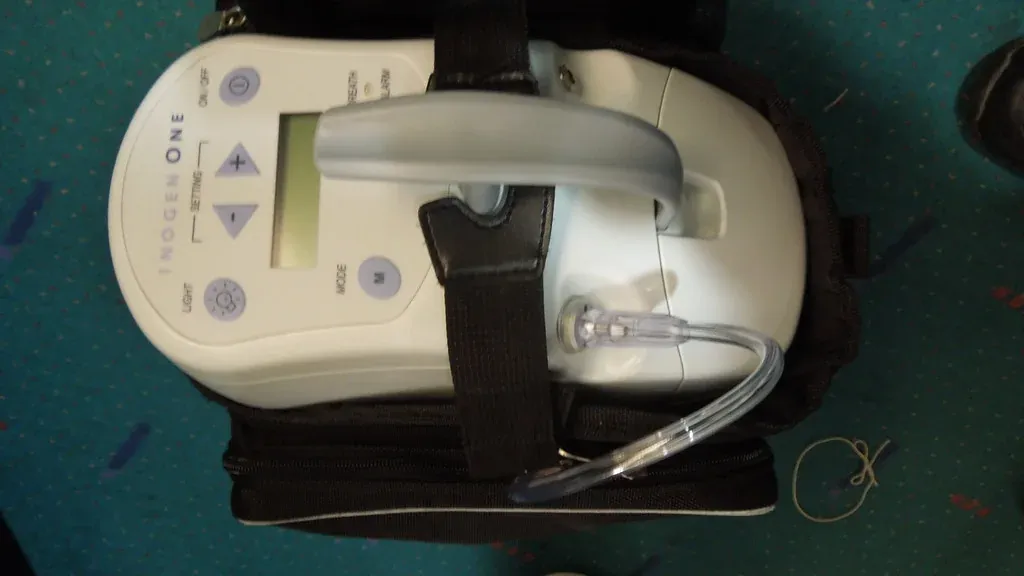
This guide is for people who need a concentrator to keep running when the grid does not. That is a harder job than a CPAP or a phone, because a concentrator draws its load continuously for as long as it is switched on, and because the battery gets charged every single day rather than a few times a year. We compared four units on the four specifications that decide the outcome: continuous inverter output, rated capacity, rated cycle life and solar input ceiling. We did not test any of them with a concentrator, and every review states exactly what its recommendation rests on. What you get here is the hours arithmetic at three stated machine loads, cycle ratings converted into years of nightly charging, and an honest look at which solar ceilings actually refill a pack rather than just slowing it down.
What is the best portable power station for an oxygen concentrator?
The BLUETTI Elite 200 V2 suits the most households. Its 2600W continuous inverter is the largest here, so a stationary concentrator's compressor start is never in doubt, and its rating of over 6,000 cycles is about 16 years of charging it every night. If your outages run past a single night, the Anker SOLIX F3800 is the only unit here that runs a stationary machine for close to ten hours on one charge, roughly twice what the 2kWh units manage.
Key takeaways
- Continuous inverter rating decides whether a compressor starts; capacity only decides how many hours follow
- Cycle life is the specification oxygen households should read first, because they cycle the pack nightly rather than seasonally
- A solar ceiling below your machine's draw never refills the battery, it only makes the drain slower
- Boost modes such as X-Boost and Power Lifting reach their headline wattage by lowering voltage, so they do nothing for a compressor
- A 2kWh unit holds roughly five hours on a 5 LPM machine, which is part of a night rather than a whole one, whatever the runtime chart suggests
Our picks at a glance
Every unit below wins a specific situation rather than a place in a ranking. Pick the row that matches how you will actually use it.
-
Best for a stationary 5 LPM concentrator

BLUETTI Elite 200 V2
A home 5 LPM concentrator that runs on mains most of the time and needs a battery standing by to carry it through roughly five hours of outage without being moved.
-
Best for charging every single night
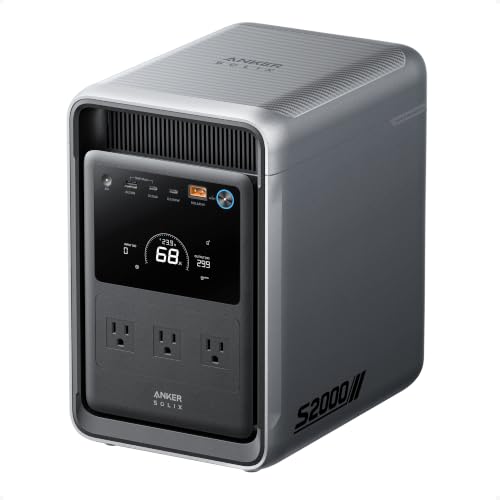
Anker SOLIX S2000
A household that will charge the unit every day for years and wants the pack to outlive the concentrator, with enough lightness to carry it to a car when needed.
-
Best for refilling from solar during a long outage

EcoFlow DELTA 2 Max
Households in areas where outages run past a single night and there is somewhere to set out panels, so the concentrator keeps running while the battery refills.
-
Best for coverage measured in days rather than hours

Anker SOLIX F3800
A household on a stationary concentrator in a region where outages run into a second and third day, with a fixed place to keep a heavy unit permanently wired in.
How they compare
Scroll the table sideways to see every column.
| Product | Where to buy | Award | Capacity | AC output | Solar input | Rated cycle life | Weight | Battery chemistry | Best for |
|---|---|---|---|---|---|---|---|---|---|
| BLUETTI Elite 200 V2 | Best for a stationary 5 LPM concentrator | 2073.6Wh | 2600W continuous (3900W Power Lifting) | Full charge in 2.4 hours with 1000W panels | Over 6,000 cycles | 53.35 lb (24.2 kg) | LiFePO4 | A home 5 LPM concentrator that runs on mains most of the time and needs a battery standing by to carry it through roughly five hours of outage without being moved. | |
| Anker SOLIX S2000 | Best for charging every single night | 2010Wh | 1500W (3000W peak) | 400W | 10,000 cycles | 35.7 lb (16.2 kg) | LFP | A household that will charge the unit every day for years and wants the pack to outlive the concentrator, with enough lightness to carry it to a car when needed. | |
| EcoFlow DELTA 2 Max | Best for refilling from solar during a long outage | 2048Wh | 2400W (3400W X-Boost) | 1000W | 3,000 cycles to 80% | 50.7 lb (23.0 kg) | LiFePO4 | Households in areas where outages run past a single night and there is somewhere to set out panels, so the concentrator keeps running while the battery refills. | |
| Anker SOLIX F3800 | Best for coverage measured in days rather than hours | 3840Wh | 6000W | 2400W | 3,000 cycles to 80% | 132 lb (60 kg) | LiFePO4 | A household on a stationary concentrator in a region where outages run into a second and third day, with a fixed place to keep a heavy unit permanently wired in. |
The full reviews
Best for a stationary 5 LPM concentrator
BLUETTI Elite 200 V2
BLUETTI
The Elite 200 V2 is the only unit here that pairs a 2600W continuous inverter with a rated life of over 6,000 cycles, which is the pair of numbers a stationary concentrator actually stresses. It buys headroom and longevity rather than portability, and at 53.35 lb it is meant to sit in one place and stay there.
What we like about the BLUETTI Elite 200 V2
- 2600W continuous is the highest rating on this shortlist, so a stationary concentrator's compressor start is a non-event rather than a trip
- Over 6,000 cycles is roughly 16 years of one full charge every single night, double what the 3,000-cycle units here promise
- 2073.6Wh works out at about 1,866Wh after a 90% conversion allowance, or 5.3 hours at a 350W stationary machine
- Turbo mode returns 80%, about 1,659Wh, in one hour, so one hour of restored grid puts back most of the pack
Where it falls short for the BLUETTI Elite 200 V2
- At 53.35 lb holding 2073.6Wh it carries only 38.9Wh per pound, the worst ratio of the three 2kWh-class units here, so it is a set-down unit and not something a patient moves between rooms
- BLUETTI publishes no UPS switchover figure for this model in the specifications we compared, so it cannot be assumed to bridge the instant the grid fails without the concentrator restarting
- The cycle rating is published as "over 6,000 cycles" with no end-of-life capacity attached, while the DELTA 2 Max and F3800 both state 3,000 cycles to 80%, so the 16-year figure that justifies buying this unit rests on a number whose endpoint BLUETTI does not state
- Our specification record lists no expansion battery, so the ceiling is fixed at 2073.6Wh and a second night means a second unit
Key specifications
- Capacity
- 2073.6Wh
- AC output
- 2600W continuous (3900W Power Lifting)
- Rated cycle life
- Over 6,000 cycles
- AC recharge time
- 0-80% in 1 hour on Turbo mode (1800W AC), full in 1.6 hours on Standard mode
- Weight
- 53.35 lb (24.2 kg)
- Battery chemistry
- LiFePO4
A stationary concentrator is the hardest load in this whole category, and not because it is large. It is because it never stops.
Why the continuous rating is the number that matters
A 5 LPM home machine runs a compressor and a cooling fan for as long as it is switched on. Assume 350W once it has settled, which is a common figure for that class, and check your own machine’s plate rather than trusting ours.
That 350W is easy for any unit here. The moment that is not easy is the start, when a compressor draws several times its running figure for a fraction of a second. The 2600W continuous rating gives the Elite 200 V2 more than seven times the running load in headroom. Nothing else on this shortlist has that much.
Ignore the 3900W Power Lifting number. Like every boost mode of its type it reaches its figure by dropping output voltage, and a motor needs voltage to make torque. For a compressor the honest ceiling is 2600W.
The runtime, done properly
Rated capacity is not delivered capacity. Allow 90% through the inverter and 2073.6Wh becomes about 1,866Wh at the socket. Against that:
- A 350W stationary 5 LPM machine: 5.3 hours
- A continuous-flow portable at roughly 130W: 14.4 hours
- A pulse-dose portable at roughly 60W: 31 hours
So on a home machine this covers part of one night, not all of it, and nothing like a weekend. Anyone planning past that needs the recharge section of the guide, not a bigger number on this page.
Sixteen years of nights
Here is the specification most oxygen buyers never look at. A concentrator user charges the battery every day, not a few times a year. Over 6,000 cycles divided by 365 nights is about 16 years of daily full cycles before the rating expires. The 3,000-cycle units in this guide reach roughly eight.
That is the real argument for this unit over a cheaper 2kWh box, and it is worth more than the 25Wh of extra capacity it holds over the EcoFlow.
Where it stops making sense
Weight. It stores 38.9Wh for every pound you have to lift, against 56.3Wh per pound for the Anker SOLIX S2000. If the unit needs to travel with the patient, or even move between a bedroom and a living room, that ratio is the whole argument and this is the wrong unit.
The second gap is the missing switchover figure. Plenty of units publish one; this record does not. If your requirement is that the machine never restarts at the instant the grid drops, buy something that states a number.
- Best for
- A home 5 LPM concentrator that runs on mains most of the time and needs a battery standing by to carry it through roughly five hours of outage without being moved.
- Choose something else if
- You use a small pulse-dose portable and want something you can lift into a car, or you need a documented switchover time for a device that must not restart.
Best for charging every single night
Anker SOLIX S2000
Anker
Rated at 10,000 cycles, the S2000 is built for the one thing an oxygen household does that a camper never does, which is fully cycle the battery every day of the year. It is also the lightest 2kWh unit here at 35.7 lb, and it pays for both with the smallest inverter on the shortlist.
What we like about the Anker SOLIX S2000
- 10,000 cycles is about 27 years of one full charge every night, more than three times what the 3,000-cycle units here are rated for
- 2010Wh in 35.7 lb is 56.3Wh per pound, the best capacity-to-weight ratio in this guide by a wide margin
- Under 10ms switchover is the fastest published figure here, quick enough that a concentrator on pass-through should not see the cut
- About 1,809Wh reaches the socket after a 90% conversion allowance, which is 5.2 hours at a 350W stationary machine or 30 hours at a 60W pulse-dose portable
Where it falls short for the Anker SOLIX S2000
- The 1500W continuous inverter is 1,100W below the BLUETTI Elite 200 V2 and the smallest here, so a stationary concentrator sharing the unit with a kettle or a space heater will trip it
- The outlet panel has no 12V DC port, so a portable concentrator's supplied 12V car lead cannot be used at all and every watt has to cross the inverter and pay its conversion loss
- Anker publishes no AC recharge time in the specifications we compared, so you cannot plan a refill around a 40-minute window of restored grid the way you can with the other three units
- The 400W solar ceiling is only 50W above a 350W stationary machine at perfect rated output, so on a realistic panel yield the sun slows the drain rather than refilling the pack
Key specifications
- Capacity
- 2010Wh
- AC output
- 1500W (3000W peak)
- Rated cycle life
- 10,000 cycles
- UPS switchover
- Under 10ms
- Weight
- 35.7 lb (16.2 kg)
- Max solar input
- 400W
Most power station buying advice is written for people who charge the battery a dozen times a year. Oxygen users charge it every night. That changes which specification decides the purchase.
Twenty-seven years of nights
Take the rated cycle count and divide by 365. The S2000’s 10,000 cycles comes to about 27 years of one full charge a day. The BLUETTI Elite 200 V2, rated at over 6,000, comes to roughly 16. The EcoFlow DELTA 2 Max and the Anker SOLIX F3800, both rated 3,000 cycles to 80%, come to about eight.
Eight years is not a disaster. But it is the difference between buying this once and buying it twice, and it is invisible on every retailer listing because cycle life is buried under capacity and wattage.
Real cycles are also shallower than that maths assumes. If your overnight draw takes the pack to half rather than empty, the rating stretches further. The ranking between these four does not change.
What the light weight is worth
At 35.7 lb holding 2010Wh, this unit stores 56.3Wh for every pound. The Elite 200 V2 stores 38.9Wh per pound, the DELTA 2 Max 40.4Wh, the F3800 29.1Wh.
That matters for anyone who takes a portable concentrator to a hospital appointment, a relative’s house or a car. A 17-pound saving over the Elite is the difference between one person managing it and needing help.
Where the 1500W ceiling bites
This is the trade-off, and it is a real one. A concentrator running at 350W leaves plenty of margin inside 1500W on its own. It does not leave much once someone plugs a kettle, a microwave or a 1500W space heater into the same unit during an outage, which is exactly what happens when a family gathers around the one thing in the house that still has power.
If the unit is dedicated to the medical device and nothing else, 1500W is ample and the cycle rating wins. If it is the household’s only battery, buy the Elite 200 V2 and its 2600W instead.
The missing DC port
The outlet list states plainly that there is no 12V DC port. Many portable concentrators ship with a 12V lead, and running one on DC skips the inverter entirely along with its conversion loss and its idle overhead. On this unit that option is closed. For a machine that only has an AC plug it costs you nothing. For a portable with a car lead it is a reason to look elsewhere.
- Best for
- A household that will charge the unit every day for years and wants the pack to outlive the concentrator, with enough lightness to carry it to a car when needed.
- Choose something else if
- Your concentrator shares the unit with kitchen appliances or a heater, or your portable machine depends on its 12V DC lead rather than an AC plug.
Best for refilling from solar during a long outage
EcoFlow DELTA 2 Max
EcoFlow
The DELTA 2 Max is the pick for an outage that outlasts one battery. A 1000W solar ceiling is the only input on this shortlist that comfortably exceeds a stationary concentrator's draw under real panel conditions, and the pack grows from 2kWh to 6kWh without replacing the unit. Its weak point is a cycle rating you will reach.
What we like about the EcoFlow DELTA 2 Max
- The 1000W solar ceiling clears a 350W stationary concentrator's draw even at a conservative real-world panel yield, so the sun refills the pack instead of merely slowing the drain
- Expandable from 2kWh to 6kWh with up to 2 extra batteries, which turns 5.3 hours at a 350W machine into about 15.4
- 2400W continuous is comfortable headroom for a compressor start and leaves room for a fridge on the same unit
- 1.1 hours to 80% on AC is about 1,638Wh recovered, a rate of roughly 1,489Wh per hour of restored grid, and 43 minutes with AC and solar together
Where it falls short for the EcoFlow DELTA 2 Max
- 3,000 cycles to 80% is about eight years of one full charge every night, roughly a third of what the Anker SOLIX S2000 is rated for, and daily cycling is exactly what an oxygen household does
- EcoFlow publishes no UPS switchover figure for this model in the specifications we compared, so a concentrator plugged in as pass-through may still restart at the instant the grid drops
- The 15.4 hours that make this the long-outage pick only exist in the full 6kWh configuration, which needs two extra batteries bought separately; as delivered the unit holds 2048Wh and covers 5.3 hours at 350W, the same as everything else in this class
- At 20 inches long and 50.7 lb it takes a long strip of floor, which is awkward in a bedroom that already holds a stationary concentrator and its tubing
Key specifications
- Capacity
- 2048Wh
- AC output
- 2400W (3400W X-Boost)
- Max solar input
- 1000W
- Expandable
- Yes, from 2kWh to 6kWh with up to 2 extra batteries
- Rated cycle life
- 3,000 cycles to 80%
- AC recharge time
- 1.1 hours to 80% on AC, 43 minutes with AC plus solar
Every unit in this guide covers one night. This is the one that answers what happens on the second day.
Why the solar ceiling is the whole argument
Panels almost never deliver their rating. Angle, haze, heat and cable losses take a bite, and planning at roughly 60% of the sticker figure is a sane starting point.
Run that on each unit’s published ceiling. The Anker SOLIX S2000’s 400W becomes about 240W, which is less than a 350W stationary concentrator is drawing, so the pack keeps emptying while the sun is out, only slower. The DELTA 2 Max’s 1000W becomes about 600W, which covers the 350W machine and banks 250W an hour on top.
That difference is the entire outage. With 250W of surplus per sunny hour, the 1,843Wh you get out of a full 2048Wh pack takes roughly seven and a half hours of good sun to replace while the concentrator is still running. One clear day buys you the next night. With a 130W continuous-flow portable the surplus rises to about 470W and the refill takes under four hours.
What the expansion actually buys
Two extra batteries take the system from 2kWh to 6kWh. At a 90% conversion allowance that is about 5,400Wh at the socket:
- 15.4 hours at a 350W stationary 5 LPM machine
- 41.5 hours at a 130W continuous-flow portable
- 90 hours at a 60W pulse-dose portable
The useful part is that you can start with the base unit and add capacity after living through one outage and learning what you actually needed, rather than guessing now.
The cycle rating is the catch
3,000 cycles to 80% sounds generous until you divide by 365. That is about eight years of one full charge a night. The S2000’s 10,000-cycle rating is about 27.
If this unit sits on standby and only cycles during outages, eight years of rated cycles will take far longer than eight years to use. If you plan to run the concentrator off it every night by choice, the S2000 is the better long-term buy and this one is the better outage buy.
Ignore X-Boost
3400W is a voltage-reduction trick. It suits a resistive load like a kettle, where less voltage simply means slower boiling. A compressor needs voltage to make torque, so for a concentrator the number that applies is the 2400W continuous rating. That is still ample, which is why this appears here at all.
- Best for
- Households in areas where outages run past a single night and there is somewhere to set out panels, so the concentrator keeps running while the battery refills.
- Choose something else if
- You will never buy solar panels, or you want the pack to last decades of nightly charging rather than roughly eight years.
Best for coverage measured in days rather than hours
Anker SOLIX F3800
Anker
The F3800 is the only unit here that carries a stationary concentrator through a full working day on one charge, and the only one that can be grown to nearly three days. It also weighs 132 lb and spends half its outlet panel on 240V capability an oxygen user will never touch.
What we like about the Anker SOLIX F3800
- 3840Wh delivers roughly 3,456Wh at the socket after a 90% conversion allowance, which is 9.9 hours at a 350W stationary machine and 57.6 hours at a 60W pulse-dose portable
- Expandable to 26.9kWh, or about 69 hours of continuous 350W operation, which is the only genuinely multi-day answer on this shortlist
- About 1.5 hours to full is 2,560Wh returned per hour of restored grid, the fastest refill rate here
- A 2400W solar ceiling clears a stationary concentrator's draw with over 1kW of surplus even at a conservative panel yield, so a single sunny day replaces a full night
- Under 20ms switchover is published rather than absent, so pass-through behaviour at the moment of a cut is a stated figure
Where it falls short for the Anker SOLIX F3800
- At 132 lb holding 3840Wh it stores 29.1Wh per pound, the worst ratio in this guide, and it is a two-person lift or a cart job that will never travel with the patient
- Its 13 outlets include a 30A RV socket and 120V/240V split phase, capability a concentrator cannot use, so a large share of the size and weight buys outputs this job ignores
- 3,000 cycles to 80% is about eight years of one full charge a night, the same rating as the far smaller EcoFlow DELTA 2 Max despite the extra bulk
- A 6000W inverter left running all night to feed a 60W pulse-dose portable carries idle overhead a small unit would not, so oversizing quietly costs standby hours
Key specifications
- Capacity
- 3840Wh
- AC output
- 6000W
- UPS switchover
- Under 20ms
- Max solar input
- 2400W
- AC recharge time
- About 1.5 hours to full
- Expandable
- Yes, to 26.9kWh with expansion batteries
The other three units in this guide answer the question of getting through a night. This one answers what happens when the power is still out on Wednesday.
What a full day actually needs
A stationary 5 LPM concentrator drawing roughly 350W consumes about 8.4kWh across 24 hours. Nothing portable holds that in one box.
The F3800 holds 3840Wh, or about 3,456Wh once you allow 90% through the inverter. That is 9.9 hours at 350W. It covers a night and most of a working day, and it is the only unit here that does. On a 130W continuous-flow portable it stretches to about 26.6 hours, and on a 60W pulse-dose portable to 57.6.
Expansion is where the numbers change class. At 26.9kWh, roughly 24,200Wh delivered, a 350W machine runs for about 69 hours. That is close to three days, which is the point where a battery stops being a stopgap and becomes a plan.
Refill speed matters more than it looks
An outage rarely means zero power for three days. It usually means power comes back, drops, comes back again.
About 1.5 hours to full on 3840Wh works out at roughly 2,560Wh returned per hour of grid. The BLUETTI Elite 200 V2 manages about 1,659Wh an hour on Turbo and the DELTA 2 Max about 1,489Wh. So the F3800 does not just hold more, it recovers what it holds faster, and one restored hour buys you seven more hours of concentrator time.
Solar is the same story. At a conservative 60% of the 2400W ceiling you are looking at around 1,440W, which covers a 350W machine and still banks over a kilowatt an hour. A single good day of sun replaces a full night’s draw.
What you are paying for that you cannot use
Half of this unit’s design is not aimed at you. The 30A RV outlet, the 120V/240V split phase and the 6000W inverter exist for well pumps, electric ranges and air handlers. A concentrator draws 350W and needs none of it.
That capability arrives as 132 lb of hardware, which is 29.1Wh of storage per pound against 56.3Wh per pound for the Anker SOLIX S2000. It goes where you first put it and it stays there.
Who should skip this
If your outages end overnight, this is capacity that will sit at full charge for years while its 3,000-cycle rating goes unused. Buy it only if long outages are a real pattern where you live, or if the concentrator is one of several things the house genuinely needs to keep running.
- Best for
- A household on a stationary concentrator in a region where outages run into a second and third day, with a fixed place to keep a heavy unit permanently wired in.
- Choose something else if
- The unit would ever need to be lifted or moved, or your outages end within a night and a smaller pack would sit at full charge doing nothing.
How we researched this guide
Four units were compared using published manufacturer specifications and their own outlet and charging documentation. None were tested with an oxygen concentrator by us. Runtime figures are calculated from rated capacity against three stated machine loads with a 90% conversion allowance, and every review names the sources it used.
The full process is on our how we test portable power stations page, including what counts as hands-on use.
- Units evaluated
- 4
- Used hands-on
- 0
- Assessed from documentation and owner reports
- 4
Evaluation methods used: specification comparison
Which one should you buy?
Match your situation on the left to the recommendation on the right.
-
You run a stationary 5 LPM concentrator and want the largest inverter margin for its compressor
Recommendation: Buy the BLUETTI Elite 200 V2 for its 2600W continuous rating and 6,000-cycle life
-
You will charge the battery every day for years and want it to outlive the machine
Recommendation: Buy the Anker SOLIX S2000, rated at 10,000 cycles, about 27 years of nightly charging
-
Outages where you live regularly run into a second or third day
Recommendation: Buy the Anker SOLIX F3800, which holds 9.9 hours at 350W and expands to about 69
-
You own or plan to buy solar panels and want to refill while the machine runs
Recommendation: Buy the EcoFlow DELTA 2 Max, whose 1000W input clears a 350W draw with surplus to spare
-
You take a portable concentrator to appointments and have to lift the battery yourself
Recommendation: Buy the Anker SOLIX S2000 at 35.7 lb, but keep other appliances off its 1500W inverter
Mistakes buyers make
- Sizing by watt-hours alone and ending up with a unit whose inverter cannot start a stationary machine's compressor
- Reading a boost or surge figure as usable headroom, when those modes work by dropping voltage and cannot drive a motor
- Ignoring rated cycle life on a battery that will be charged 365 times a year rather than a dozen
- Buying panels whose realistic output is below the concentrator's draw, which slows the drain but never refills the pack
- Treating a power station as a replacement for the emergency cylinder your supplier provides, rather than as a layer in front of it
- Planning runtime from the rated capacity without allowing for conversion loss through the inverter
Our final recommendation
If you want one answer rather than a shortlist, this is the unit that suits the widest range of readers in this category.
Best for a stationary 5 LPM concentrator
A home 5 LPM concentrator that runs on mains most of the time and needs a battery standing by to carry it through roughly five hours of outage without being moved.
Questions buyers ask
Is it safe to run an oxygen concentrator from a battery indoors?
A battery power station burns no fuel and produces no exhaust, so unlike a petrol generator it carries no carbon monoxide risk indoors. Keep the vents clear and give it air, because these units run cooling fans under load and while charging, and never run a fuel generator inside for this job.
Does an oxygen concentrator need a pure sine wave inverter?
Yes, treat it as a requirement. A concentrator runs a compressor motor and a control board, and a modified sine wave supply can make motors run hot and confuse electronics. All four units here output pure sine wave AC, which is why the question rarely comes up in this class.
How do I know what my own machine draws?
Read the plate on the back or the base of the unit, or the power section of its manual. It will give either a wattage or an amperage. If it gives amps, multiply by 120 for a US supply to get watts. Use that number in place of our assumptions, because machines vary widely by flow rate and model.
Will one of these hold enough charge if I leave it plugged in for months?
Left on mains as a pass-through, all four sit at or near full and top themselves up, so they are ready when the grid drops. What that costs you is cycles and calendar age on the cells, which is why the rated cycle count in each review is worth reading before you decide to leave one permanently online.
What happens when the battery runs out and the power is still off?
That is the scenario to plan for before you buy, not during. A power station buys hours, and the arithmetic in this guide tells you roughly how many. It is a layer in front of the emergency supply your equipment provider arranges, not a replacement for it. Talk to that provider about cylinder backup and about registering your address with the utility as a medical priority.
About the author