We Compared 4 Portable Power Stations for a Gas Furnace
Off-grid power editor
Published
Updated
Last fact-checked
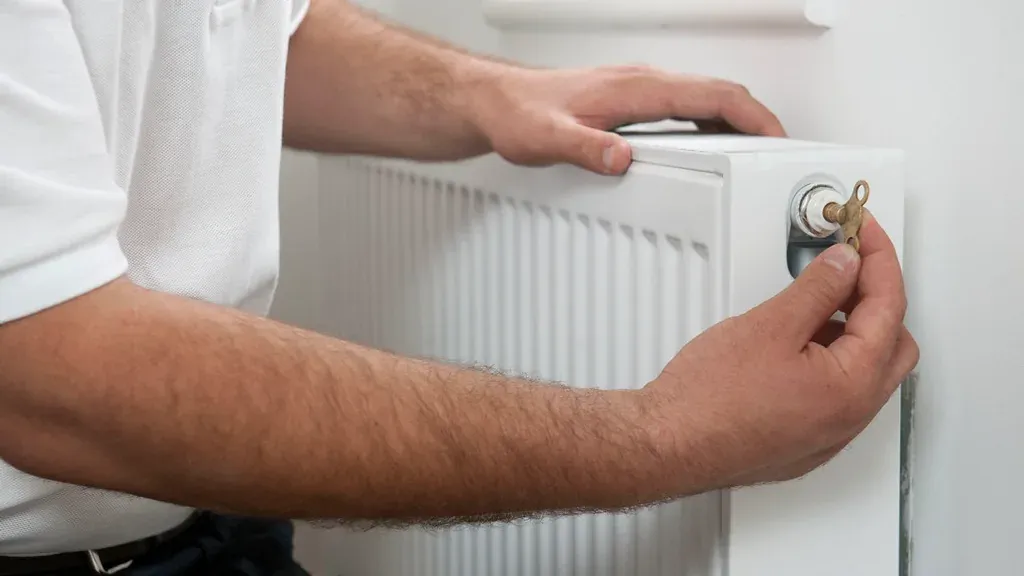
This guide is for people with a gas furnace who want heat during a winter outage and nothing more complicated than that. A gas furnace already makes its own heat; the only thing the grid supplies is the blower, the igniter and the control board, which is why a modest battery goes a long way here compared with backing up a whole house. We compared four units on the specifications that decide the outcome: continuous inverter output, capacity, recharge speed and weight. We did not test these units or connect them to a furnace, and every review states what its recommendation rests on. What you get here is the arithmetic that turns watt-hours into hours of heat, using a stated blower draw and a stated duty cycle rather than a manufacturer runtime chart.
What is the best portable power station for a gas furnace?
The OUPES Mega 1 suits most households. Its 2000W continuous rating covers every blower motor a residential gas furnace is likely to carry, and it refills to 80% in 36 minutes, so a short return of grid power puts most of the charge back. If your outages run all night with no grid window, the Anker SOLIX S2000 holds nearly twice the energy at 35.7 lb.
Key takeaways
- A gas furnace only needs power for the blower, igniter and control board, so 1000Wh to 2000Wh is genuinely useful here
- Blower draw ranges from about 300W on a modern ECM motor to 800W on an older PSC one, and the rating plate is the only way to know which you have
- Continuous inverter output decides whether the blower starts; surge and boost figures do not apply to motors
- A furnace runs on a duty cycle, so hours of heat depend on how often it cycles, not on constant-draw runtime charts
- Recharge speed converts a short grid window into more hours of heat, which matters more in winter than total capacity for many homes
Our picks at a glance
Every unit below wins a specific situation rather than a place in a ranking. Pick the row that matches how you will actually use it.
-
Best for short, repeated winter outages

OUPES Mega 1
Homes where winter power drops out for two or three hours at a time and comes back long enough to top the unit up before the next cut.
-
Best watt-hours per pound for a full night of heat
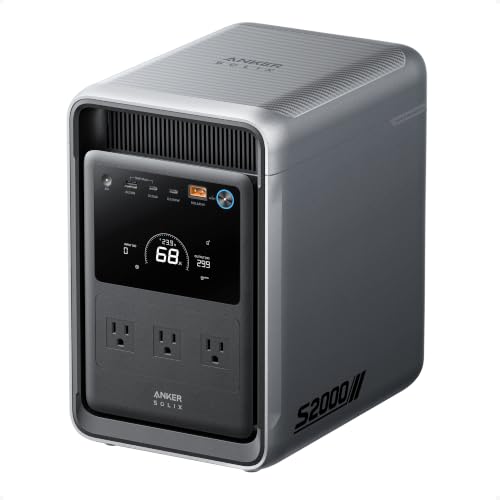
Anker SOLIX S2000
Cold-climate homes that lose power for a whole night and want one unit that covers the furnace until morning without needing a grid window.
-
Best for expanding past a single night

EcoFlow DELTA 3 Plus
Buyers who want to cover this winter cheaply and add capacity only if the outages turn out worse than expected.
-
Best for the furnace and the fridge at the same time

BLUETTI Elite 200 V2
Households that want one unit to keep the furnace, the refrigerator and the internet running through a multi-day winter storm.
How they compare
Scroll the table sideways to see every column.
| Product | Where to buy | Award | Capacity | AC output | AC recharge time | UPS switchover | Weight | Rated cycle life | Best for |
|---|---|---|---|---|---|---|---|---|---|
| OUPES Mega 1 | Best for short, repeated winter outages | 1024Wh | 2000W (4500W surge) | 36 minutes to 80% on AC, 26 minutes with AC and solar together | Under 20ms | 27.8 lb (12.6 kg) | 3,500+ cycles to 80% | Homes where winter power drops out for two or three hours at a time and comes back long enough to top the unit up before the next cut. | |
| Anker SOLIX S2000 | Best watt-hours per pound for a full night of heat | 2010Wh | 1500W (3000W peak) | -- | Under 10ms | 35.7 lb (16.2 kg) | 10,000 cycles | Cold-climate homes that lose power for a whole night and want one unit that covers the furnace until morning without needing a grid window. | |
| EcoFlow DELTA 3 Plus | Best for expanding past a single night | 1024Wh | 1800W | 40 minutes to 80% on 1500W AC input | 10ms | 27 lb (12.2 kg) | 4,000 cycles to 80% | Buyers who want to cover this winter cheaply and add capacity only if the outages turn out worse than expected. | |
| BLUETTI Elite 200 V2 | Best for the furnace and the fridge at the same time | 2073.6Wh | 2600W continuous (3900W Power Lifting) | 0-80% in 1 hour on Turbo mode (1800W AC), full in 1.6 hours on Standard mode | -- | 53.35 lb (24.2 kg) | Over 6,000 cycles | Households that want one unit to keep the furnace, the refrigerator and the internet running through a multi-day winter storm. |
The full reviews
Best for short, repeated winter outages
OUPES Mega 1
OUPES
Winter outages usually arrive as a broken line rather than one clean block, and the Mega 1 is built for that pattern. It gets back to 80% in 36 minutes, which is the shortest grid window any unit here needs, and its 2000W continuous rating covers every blower motor a residential gas furnace is likely to carry.
What we like about the OUPES Mega 1
- 2000W continuous output covers a PSC blower at the top of its range with headroom left for the igniter
- 36 minutes to 80% on AC means a half-hour grid window puts most of the charge back
- 27.8 lb makes it a one-hand carry down basement stairs to the furnace
- Under 20ms UPS switchover keeps a smart thermostat and the furnace control board from rebooting
- Expandable to 5120Wh with two B2 batteries if a single winter proves the capacity short
Where it falls short for the OUPES Mega 1
- At 1024Wh it holds roughly 3.8 hours of heat with a 600W blower on a 40% duty cycle, so a full overnight outage in deep cold will run it flat
- OUPES publishes no maximum solar input for this unit, so an outage that outlasts one charge leaves you with no figure to size panels against, unlike the 400W and 1000W the Anker and the BLUETTI state
- Expanding to 5120Wh means two extra battery boxes and a permanent floor footprint next to the furnace, not a portable setup
- The 26-minute combined recharge only applies with solar connected, which is exactly what an overcast winter storm removes
Key specifications
- Capacity
- 1024Wh
- AC output
- 2000W (4500W surge)
- AC recharge time
- 36 minutes to 80% on AC, 26 minutes with AC and solar together
- UPS switchover
- Under 20ms
- Weight
- 27.8 lb (12.6 kg)
- Expandable
- Yes, to 5120Wh with two B2 extra batteries
Most furnace-backup buying advice starts with capacity. For a gas furnace it should start with how often your power comes back, because that is what decides whether 1024Wh is generous or nowhere near enough.
Why recharge speed beats capacity for this job
A gas furnace is a small, steady load. It is not a fridge that must stay cold for a weekend; it is a blower that needs to run for a few minutes at a time whenever the house drops below the setpoint. If the grid returns for half an hour every few hours, a fast-charging 1024Wh unit outperforms a slow 2000Wh one, because it keeps refilling.
Here is the arithmetic. Charging to 80% puts about 819Wh into the pack. Allow roughly 10% for inverter overhead on the way back out and you have about 737Wh delivered. Against a 600W blower running 40% of the time, which averages 240W across the hour, that is a little over three hours of heat banked from 36 minutes plugged in. No other unit here turns a short grid window into that much heat that quickly.
Where the continuous rating matters and the surge figure does not
The listing leads with 4500W surge. Set that aside. Surge headroom lasts a fraction of a second and does nothing to tell you whether the unit can hold a load. The number that matters is 2000W continuous, and it is the highest sustained rating in this shortlist apart from the BLUETTI.
That matters because blower draw varies enormously. A modern ECM blower on heat may sit near 300W. An older PSC blower in a larger furnace can pull 800W on high speed, and adds a hot surface igniter draw at the start of each cycle. 2000W covers both with room to spare, which is why we do not qualify this recommendation by furnace age.
Where it runs out
A 1024Wh pack is a three-to-four hour answer with a mid-range blower, or roughly seven and a half hours if your furnace has an efficient ECM motor drawing nearer 300W. Neither figure covers a full winter night at the low end.
If your outages are measured in nights rather than hours, the Anker SOLIX S2000 holds nearly double the energy for eight more pounds, and that is the better trade. The Mega 1 earns its place when the grid is unreliable rather than absent.
- Best for
- Homes where winter power drops out for two or three hours at a time and comes back long enough to top the unit up before the next cut.
- Choose something else if
- Your outages routinely run a full night or longer with no grid window in between, because 1024Wh will not carry a blower that far in deep cold.
Best watt-hours per pound for a full night of heat
Anker SOLIX S2000
Anker
The S2000 is the only unit here that carries a full winter night of blower runtime without becoming a two-person lift. 2010Wh in 35.7 lb works out to 56 watt-hours per pound, well clear of everything else on this page, and the trade for it is a 1500W inverter that leaves less starting headroom than the rest.
What we like about the Anker SOLIX S2000
- 2010Wh at 35.7 lb is 56 watt-hours per pound, the best ratio in this shortlist by a wide margin
- Holds roughly 7.5 hours of heat with a 600W blower on a 40% duty cycle, enough to cover a night
- Under 10ms UPS switchover is fast enough that a networked thermostat never sees the cut
- Compact 8.19 x 11.1 x 12.7 in footprint fits beside a furnace without blocking the service panel
- 10,000 rated cycles means the pack outlives the furnace even under daily use
Where it falls short for the Anker SOLIX S2000
- The 1500W continuous rating is 500W below the OUPES Mega 1 and leaves thin margin for an older PSC blower running near 800W alongside a hot surface igniter
- Anker publishes no AC recharge time for this unit, so you cannot plan around short grid windows the way you can with the other three
- 400W maximum solar input against the 1000W the BLUETTI Elite 200 V2 accepts means a multi-day ice storm refills slowly even on a clear day
- No expansion battery is published for this unit, so 2010Wh is the ceiling and a winter that proves it short means buying a second power station rather than an add-on pack
Key specifications
- Capacity
- 2010Wh
- AC output
- 1500W (3000W peak)
- Weight
- 35.7 lb (16.2 kg)
- UPS switchover
- Under 10ms
- Rated cycle life
- 10,000 cycles
- Max solar input
- 400W
Furnace backup is one of the few jobs where a power station gets carried once and then sits still for months. That makes weight matter less than it does for camping, but it still decides whether the unit lives next to the furnace or stays in a garage where it is no use at two in the morning.
The number that wins this category
Divide capacity by weight and the picture is stark. The S2000 delivers 2010Wh in 35.7 lb, or 56 watt-hours per pound. The BLUETTI Elite 200 V2 holds a near-identical 2073.6Wh but weighs 53.35 lb, which is 39 watt-hours per pound. Both cover the same night; only one is a single-hand carry down a set of basement stairs.
In practice that is the whole argument. If you want a night of heat and you also want to be able to move the unit without planning for it, this is the shortest route.
What a night of heat actually costs
Assume a 600W blower on a 40% duty cycle, which averages 240W across the hour. After about 10% inverter overhead, 2010Wh delivers roughly 1809Wh, or about seven and a half hours. On a furnace with an efficient ECM blower nearer 300W, the same pack stretches past fifteen hours.
That is the difference between waking up cold and not noticing the outage happened. The 1024Wh units on this page cannot reach it without a mid-night recharge.
The compromise you are accepting
1500W continuous is the catch. It is enough for the great majority of residential gas furnaces, but it is not the comfortable margin the OUPES Mega 1 offers. If your furnace is twenty years old with a PSC blower, check the rating plate before choosing this one.
The other gap is planning. Anker publishes no AC recharge time here, so if your outage pattern involves short returns of grid power, you are buying without the one figure that decides how useful those windows are. Buy the S2000 to ride out a night on a single charge, not to play the refill game.
- Best for
- Cold-climate homes that lose power for a whole night and want one unit that covers the furnace until morning without needing a grid window.
- Choose something else if
- Your furnace has an older high-draw PSC blower, because 1500W continuous leaves little margin once the igniter and control board are added on top.
Best for expanding past a single night
EcoFlow DELTA 3 Plus
EcoFlow
Start small and grow is a rational way to buy furnace backup, because most people have no idea how long their outages will actually last until they live through one. The DELTA 3 Plus is the unit built for that: 1024Wh today, up to 5kWh later, with a 10ms switchover that keeps the thermostat and the control board from restarting.
What we like about the EcoFlow DELTA 3 Plus
- Expands to 5kWh using DELTA 3, DELTA Pro 3 or DELTA 2 Max packs, so the first purchase is not the final decision
- 10ms UPS switchover holds a networked thermostat and control board through the transition without a restart
- 1800W continuous covers a mid-range PSC blower with the igniter running at the same time
- 27 lb is the lightest unit on this page, so it moves between the furnace and anywhere else it is needed
- 4,000 cycles to 80% under a 5-year warranty covers far more winters than a backup unit will ever see
Where it falls short for the EcoFlow DELTA 3 Plus
- The base 1024Wh pack holds only about 3.8 hours of heat with a 600W blower on a 40% duty cycle, so the expansion is not optional if you face overnight outages
- Every expansion battery is a separate purchase and a separate box, and the 5kWh ceiling arrives as a floor-standing stack rather than one portable unit
- At 1800W continuous it sits below the OUPES Mega 1, which matters only at the top of the blower range but is a real gap there
- 40 minutes to 80% requires a 1500W AC input, and older basement circuits shared with the furnace may not tolerate that draw
Key specifications
- Capacity
- 1024Wh
- AC output
- 1800W
- AC recharge time
- 40 minutes to 80% on 1500W AC input
- UPS switchover
- 10ms
- Expandable
- Yes, up to 5kWh with DELTA 3, DELTA Pro 3 or DELTA 2 Max battery packs
- Weight
- 27 lb (12.2 kg)
Nobody buying their first furnace backup unit knows how big it needs to be. The honest answer is that you find out during the first serious outage, which is exactly the wrong time to discover you underbought. The DELTA 3 Plus is the answer to that problem.
Buying in stages rather than guessing
1024Wh is roughly three and a half to four hours of heat with a mid-range blower, or close to eight with an efficient ECM motor. If your area loses power for an afternoon, that is the whole job done. If it turns out the outages run overnight and into the next day, you add a battery pack rather than replacing the unit.
The 5kWh ceiling is the point. On the same 40% duty cycle and 10% inverter overhead used throughout this page, a full 5kWh stack is roughly 18 hours of heat with a 600W blower, or more than a day and a half with an efficient ECM one, and you get there without the base unit becoming redundant. Very few units in this size class offer that path, and the ones that do usually lock you into a single proprietary pack.
The switchover nobody thinks about until it bites
10ms is short enough that nothing in the heating system registers a gap, and only the Anker SOLIX S2000 publishes a figure in the same class. For a fridge that is irrelevant, and we say so in our general home backup guide. For a furnace it is worth more than it looks, because modern heating systems increasingly run through a networked thermostat and a control board that both restart on a power gap. A restart is not damage, but it does mean a delay before heat resumes, and it means anything you had scheduled has to re-establish itself.
What to watch before you commit
Two things. The first is that 40-minute recharge, which assumes 1500W of AC input. If the only outlet near your furnace is on an old shared basement circuit, you may not get that rate, and the recharge advantage over the OUPES Mega 1 disappears.
The second is honesty about total outlay. A staged purchase feels cheaper because it is spread out, but a fully expanded stack is not one portable unit any more. If you already know you need a night of heat, the Anker SOLIX S2000 gets there in a single box.
- Best for
- Buyers who want to cover this winter cheaply and add capacity only if the outages turn out worse than expected.
- Choose something else if
- You already know your outages last all night, because the base capacity will not get you there and you will pay twice to arrive at it.
Best for the furnace and the fridge at the same time
BLUETTI Elite 200 V2
BLUETTI
Nobody heats a house and then leaves the food to spoil. The Elite 200 V2 is the only unit here whose 2600W continuous rating comfortably absorbs a furnace blower and a refrigerator compressor starting on top of each other, and its 2073.6Wh pack has the energy to keep both going. It pays for that with 53.35 lb of mass.
What we like about the BLUETTI Elite 200 V2
- 2600W continuous is the highest sustained rating here and swallows a blower and a fridge compressor start at once
- 2073.6Wh covers roughly 7.8 hours of heat with a 600W blower on a 40% duty cycle, before you add other loads
- Recharges 0-80% in one hour on Turbo, which puts back more energy per hour of grid than anything else on this page
- A full solar recharge in 2.4 hours with 1000W of panels makes multi-day outages survivable without the grid
- Over 6,000 rated cycles means the pack is not the limiting factor over the life of the unit
Where it falls short for the BLUETTI Elite 200 V2
- At 53.35 lb it is 17.65 lb heavier than the Anker SOLIX S2000 for only 63.6Wh more capacity, which is a poor trade if it ever has to move
- BLUETTI publishes no UPS switchover figure for this unit, so you cannot assume a networked thermostat or control board rides through the cut without restarting
- The 3900W Power Lifting figure reaches its number by lowering output voltage, which works on resistive loads and does nothing for a blower motor, so 2600W is the only rating that applies here
- Turbo mode's one-hour recharge draws 1800W from the wall, more than some basement circuits will supply alongside whatever else is running
Key specifications
- Capacity
- 2073.6Wh
- AC output
- 2600W continuous (3900W Power Lifting)
- AC recharge time
- 0-80% in 1 hour on Turbo mode (1800W AC), full in 1.6 hours on Standard mode
- Solar input
- Full charge in 2.4 hours with 1000W panels
- Rated cycle life
- Over 6,000 cycles
- Weight
- 53.35 lb (24.2 kg)
The single-appliance framing that dominates this category falls apart about four hours into a real winter outage, when someone opens the fridge. The Elite 200 V2 is the unit on this page sized for the whole problem rather than one part of it.
Why the continuous rating decides this
2600W continuous is a large number in a portable unit, and it is the honest one. The 3900W Power Lifting figure is not: like EcoFlow’s X-Boost, it gets there by reducing output voltage so current stays inside limits. Lower voltage is fine for a kettle, which simply heats more slowly. It is useless for a motor, which needs voltage to develop torque, and a furnace blower and a fridge compressor are both motors.
So the applicable figure is 2600W, and it is enough that a compressor kicking in while the blower is already running is a non-event. On the 1500W and 1800W units here that same coincidence is the most likely cause of a trip.
Two loads, one battery, honest arithmetic
Take a 600W blower running 40% of the time, averaging 240W, plus a full-size fridge averaging around 150W across its duty cycle. That is 390W combined. After roughly 10% inverter overhead, 2073.6Wh delivers about 1866Wh, or a little under five hours of both together.
Furnace alone, the same pack gives about 7.8 hours. Add solar and the picture changes completely: a full recharge in 2.4 hours with 1000W of panels means a clear day resets the whole budget, which is the case for buying this over the smaller units when a storm knocks power out for days rather than hours.
The weight is the real decision
53.35 lb is the honest cost. The Anker SOLIX S2000 holds almost the same energy, 63.6Wh less, at 35.7 lb, so if the only load is the furnace, the Elite is carrying seventeen extra pounds for nothing. Buy this one because you want the 2600W inverter and the fast solar recharge, and accept that once it is positioned it is going to stay there.
- Best for
- Households that want one unit to keep the furnace, the refrigerator and the internet running through a multi-day winter storm.
- Choose something else if
- The unit will need to be carried up or down stairs by one person, or you only ever intend to run the furnace and nothing else.
How we researched this guide
Four units were shortlisted from published manufacturer specifications and compared on continuous inverter output, capacity, recharge time and weight, then measured against the 300W to 800W draw range found on residential gas furnace rating plates. None of these units were tested by us or connected to a furnace, and each review states which sources it relies on and names meaningful drawbacks for every recommendation.
The full process is on our how we test portable power stations page, including what counts as hands-on use.
- Units evaluated
- 4
- Used hands-on
- 0
- Assessed from documentation and owner reports
- 4
Evaluation methods used: specification comparison
Which one should you buy?
Match your situation on the left to the recommendation on the right.
-
Your power drops for two or three hours and returns before the next cut
Recommendation: Buy the OUPES Mega 1 for its 36-minute recharge to 80%
-
You need heat through a whole night on one charge and will move the unit yourself
Recommendation: Buy the Anker SOLIX S2000, 2010Wh at 35.7 lb
-
You want to cover this winter now and add capacity only if it proves too small
Recommendation: Buy the EcoFlow DELTA 3 Plus, which expands to 5kWh with additional packs
-
You want the furnace and the refrigerator running on the same unit
Recommendation: Buy the BLUETTI Elite 200 V2 for its 2600W continuous inverter
-
Storms in your area cut power for days at a time
Recommendation: Buy the BLUETTI Elite 200 V2 and pair it with panels for its 2.4-hour solar recharge
-
Your furnace has an older PSC blower drawing near 800W
Recommendation: Buy the OUPES Mega 1 or the BLUETTI Elite 200 V2, the only two here rated at 2000W or more continuous
Mistakes buyers make
- Sizing by capacity alone and buying a unit whose continuous rating cannot hold an older blower motor at full speed
- Reading the surge figure as usable power, when it lasts a fraction of a second and cannot sustain any load
- Assuming a furnace draws its blower wattage continuously, which understates runtime badly on a well-insulated house
- Buying for a whole night of heat without checking whether the grid actually stays down that long in your area
- Planning to hard-wire a power station into a furnace circuit without an electrician and a transfer switch
- Storing the unit in an unheated garage over winter, where a LiFePO4 pack may refuse to charge and will deliver less than its rating
Our final recommendation
If you want one answer rather than a shortlist, this is the unit that suits the widest range of readers in this category.
Best for short, repeated winter outages
Homes where winter power drops out for two or three hours at a time and comes back long enough to top the unit up before the next cut.
Questions buyers ask
How many watts does a gas furnace actually use?
Almost all of it is the blower. A modern variable-speed ECM blower may draw around 300W on a heating call, while an older single-speed PSC blower in a larger furnace can reach 800W. The hot surface igniter adds a short high draw at the start of each cycle, and the control board is negligible. Your furnace's rating plate lists the blower motor's amperage, and amps multiplied by 120 gives you the figure to plan on.
Will a 1000Wh power station run my furnace all night?
Usually not in deep cold. With a 600W blower cycling 40% of the time, a 1024Wh unit delivers roughly three and a half to four hours of heat. If your furnace has an efficient ECM blower nearer 300W, the same pack stretches to about seven and a half hours, which does cover a night. The blower type is what decides it, not the battery.
Can I plug my furnace into a power station without an electrician?
Only if your furnace is already connected by a cord and plug, which some are. If it is hard-wired into a junction box, which is the more common arrangement, connecting it safely requires a transfer switch or an interlock installed by a licensed electrician. Do not improvise this. Back-feeding a circuit is dangerous to you and to line workers.
Does my gas furnace still make heat without electricity?
No, not in any practical sense. A modern sealed-combustion furnace will not ignite at all without power, because the control board, the inducer fan and the igniter all need it. Even on the rare older unit with a standing pilot, the blower cannot distribute heat, so the house will not warm up.
Why is cycle life almost irrelevant for a furnace backup unit?
Because a backup unit is barely used. If you run it down fully twenty times a winter, which is a lot, the 3,500 cycles on the OUPES Mega 1 lasts 175 winters. The 10,000 cycles on the Anker SOLIX S2000 only earns its keep if the unit also does daily duty for camping or peak shaving. Judge these units on output and recharge speed.
About the author