We Compared 4 Portable Power Stations for Space Heaters and Electric Blankets

Off-grid power editor
Published
Updated
Last fact-checked
This guide is for anyone trying to stay warm without the grid: a winter outage, a cabin with no furnace, a tent in October. Resistive heating is the most punishing load you can hand a battery, and almost every buyer in this category is surprised by how quickly it disappears. We compared four units on capacity, continuous inverter output, recharge rate and weight, then divided the watt-hours by the load in watts so the runtimes are stated in minutes rather than implied by a chart. We did not test these units ourselves, and every review says exactly what its recommendation rests on. What you will get here is the honest number for a 1500W heater on each unit, the fifteen-to-one gap between a heater and an electric blanket, and a clear line showing which of these can hold a full-size heater at all.
What is the best portable power station for a space heater or an electric blanket?
For a full-size 1500W space heater, the EcoFlow DELTA Pro is the only unit here that runs one past two hours, because its 3600Wh pack is roughly twice the size of anything else on this page. If your real goal is an electric blanket rather than a heated room, buy the 24 lb Anker SOLIX C800X instead and save most of the weight and capacity you would never convert into heat.
Key takeaways
- A 1500W space heater consumes 1500Wh per hour, so even a 2000Wh unit delivers barely over an hour of heat
- An electric blanket draws roughly 100W against a heater's 1500W, which is a fifteen-to-one difference and usually the better buy
- Continuous inverter rating decides whether a heater runs at all; a 1200W unit will not hold a 1500W element no matter what the surge figure says
- Turning a heater to its 750W low setting roughly doubles the runtime, which matters more than buying a bigger battery
- Recharge rate is worth comparing against heater draw, because a few units put energy back faster than a heater takes it out
Our picks at a glance
Every unit below wins a specific situation rather than a place in a ranking. Pick the row that matches how you will actually use it.
-
Best for heating a cabin or workshop with a full-size 1500W heater
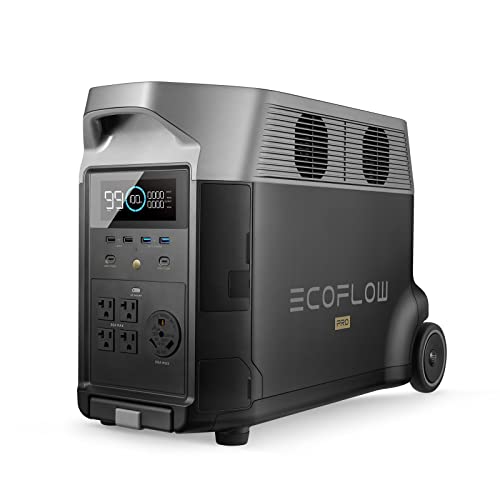
EcoFlow DELTA Pro
Cabins, workshops and outage plans where a full-size 1500W heater has to run at full output for an evening and the unit never has to be carried anywhere.
-
Best for all-evening heat at a low setting

BLUETTI Elite 200 V2
Rooms kept warm through a long evening with a heater on low or an oil-filled radiator cycling on a thermostat, in a spot where the unit can stay put.
-
Best for a heater plus everything else in the room
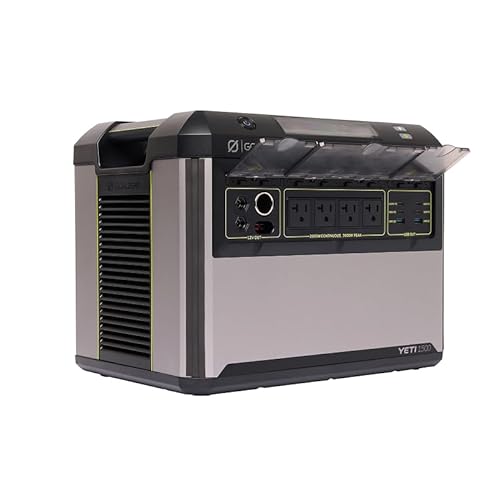
Goal Zero Yeti 1500 (6th Gen)
A single room during an outage where one unit has to run heat, lighting, a router and several devices at the same time without a power strip.
-
Best for an electric blanket overnight

Anker SOLIX C800X
Sleeping warm without a furnace: an electric blanket, a heated mattress pad and a phone through the night in a bedroom, tent or camper.
How they compare
Scroll the table sideways to see every column.
| Product | Where to buy | Award | Capacity | AC output | Weight | AC recharge time | Battery chemistry | Dimensions | Best for |
|---|---|---|---|---|---|---|---|---|---|
| EcoFlow DELTA Pro | Best for heating a cabin or workshop with a full-size 1500W heater | 3600Wh | 3600W (4500W X-Boost) | 99 lb (44.9 kg) | 1.8 hours on a 240V outlet, 2.7 hours on a 1800W wall outlet | LiFePO4 | 16.4 x 25 x 11.2 in | Cabins, workshops and outage plans where a full-size 1500W heater has to run at full output for an evening and the unit never has to be carried anywhere. | |
| BLUETTI Elite 200 V2 | Best for all-evening heat at a low setting | 2073.6Wh | 2600W continuous (3900W Power Lifting) | 53.35 lb (24.2 kg) | 0-80% in 1 hour on Turbo mode (1800W AC), full in 1.6 hours on Standard mode | LiFePO4 | 13.78 x 9.84 x 12.74 in | Rooms kept warm through a long evening with a heater on low or an oil-filled radiator cycling on a thermostat, in a spot where the unit can stay put. | |
| Goal Zero Yeti 1500 (6th Gen) | Best for a heater plus everything else in the room | 1505Wh | 2000W (3600W surge) | 52.9 lb (24.0 kg) | Under 1 hour from 0% to 80% from the wall | LiFePO4 | 12 x 11.38 x 15.75 in | A single room during an outage where one unit has to run heat, lighting, a router and several devices at the same time without a power strip. | |
| Anker SOLIX C800X | Best for an electric blanket overnight | 768Wh | 1200W (1600W SurgePad) | 24.0 lb (10.9 kg) | -- | -- | 14.61 x 8.07 x 9.96 in | Sleeping warm without a furnace: an electric blanket, a heated mattress pad and a phone through the night in a bedroom, tent or camper. |
The full reviews
Best for heating a cabin or workshop with a full-size 1500W heater
EcoFlow DELTA Pro
EcoFlow
Nothing on this page changes the physics of resistive heat, but the DELTA Pro at least gets past the two-hour mark on a heater running flat out. Its 3600Wh pack is the largest here and its 3600W inverter never notices the load. The cost is 99 lb and a chassis you position once and leave alone.
What we like about the EcoFlow DELTA Pro
- 3600Wh is the largest pack on this page and the only one that carries a 1500W heater past two hours
- The 3600W continuous inverter has 2100W of headroom over a 1500W heater, so lamps, a laptop and a kettle can share the unit
- 36.4Wh per pound means the 99 lb is mostly cells rather than casing, second only to the BLUETTI Elite 200 V2's 38.9Wh per pound, and the BLUETTI holds 1526.4Wh less in total
- Expandable from 3.6kWh to 25kWh, which is the only path on this page to heating through a second night
- LiFePO4 cells suit a pack that will be deep-cycled every night of a cold snap
Where it falls short for the EcoFlow DELTA Pro
- Even 3600Wh only delivers about 2 hours 10 minutes of full-power heat after inverter losses, so a whole night at 1500W is out of reach without expansion batteries
- At 99 lb it is more than four times the weight of the Anker SOLIX C800X, and moving it between a garage and a bedroom is a two-person job or a stair-free route
- Refilling takes 2.7 hours from a standard 1800W wall outlet, an average of about 1333W, which is slower than a 1500W heater takes energy out and the slowest of the three units here that publish an AC recharge time; the 1.8-hour figure needs a 240V outlet most rooms do not have
- No cycle life is published in the specification we worked from, unlike the BLUETTI's 6,000 cycles and the Yeti 1500's 4,000, so you cannot check service life before committing to the heaviest unit here
Key specifications
- Capacity
- 3600Wh
- AC output
- 3600W (4500W X-Boost)
- AC recharge time
- 1.8 hours on a 240V outlet, 2.7 hours on a 1800W wall outlet
- Expandable
- Yes, from 3.6kWh to 25kWh with extra batteries or smart generators
- Weight
- 99 lb (44.9 kg)
Resistive heat is the hardest job you can give a battery. A 1500W heater pulls ten times what a laptop does and does not stop to think about it. The DELTA Pro is on this page because it is the only unit that turns that load into something measured in hours rather than minutes.
The number that matters
3600Wh sounds enormous until you divide it. Allow roughly 10% for inverter conversion and you have about 3240Wh to spend. A heater held at 1500W spends it in 2 hours 10 minutes.
That is the honest headline, and it is still the best on this page. The 2073.6Wh BLUETTI manages about 1 hour 15 minutes on the same maths. The Goal Zero gets under an hour.
Drop the heater to its 750W low setting and the DELTA Pro stretches to about 4 hours 20 minutes. Put the same heater on a thermostat in a small, well-insulated room where it runs half the time, and you are looking at a similar figure in elapsed hours. That is the difference between an evening of warmth and a token gesture.
Why the inverter is a non-issue here
3600W continuous means a 1500W heater uses 42% of the available output. Nothing on this page has that much slack. You can run the heater, a lamp, a laptop and a phone charger and still not approach the limit, which matters more than it sounds during an outage when one unit is doing every job in the house.
Where it stops being practical
99 lb. There are wheels and a pull handle, but this is a machine you site once. If the plan involves carrying heat upstairs to a bedroom, buy something else and use a blanket instead of a heater.
The second limit is refilling. From a normal wall outlet it takes 2.7 hours to recover, which works out to roughly 1333W of average charge rate against a heater that draws 1500W. The unit loses ground if you try to do both at once. It refills between sessions, not during them.
Who should buy it
Anyone who genuinely needs a full-size heater at full output away from the grid: a cabin, a workshop, a garage conversion, or a house where a winter outage means one room has to stay habitable. Everyone else is buying capacity they will never turn into heat, and would do better with a smaller unit and an electric blanket.
- Best for
- Cabins, workshops and outage plans where a full-size 1500W heater has to run at full output for an evening and the unit never has to be carried anywhere.
- Choose something else if
- You will move the unit between rooms or into a vehicle, or you only ever intend to power an electric blanket, which needs a fraction of this capacity.
Best for all-evening heat at a low setting
BLUETTI Elite 200 V2
BLUETTI
The Elite 200 V2 is the unit to buy if you accept that battery heat works best turned down rather than turned up. Its Turbo recharge puts energy back faster than a 1500W heater takes it out, and over 6,000 rated cycles suit a pack that gets emptied every night of a cold snap. It is heavy, and full-blast heat still only lasts about an hour and a quarter.
What we like about the BLUETTI Elite 200 V2
- Recharges 0-80% in one hour on Turbo, roughly 1659Wh per hour, which is faster than a 1500W heater drains it
- 38.9Wh per pound is the best capacity-to-weight ratio on this page, and 568.6Wh more than the Goal Zero Yeti 1500 for less than half a pound extra
- 2600W continuous leaves 1100W spare above a 1500W heater, so nothing trips when a kettle or a fan heater cycles on top
- Over 6,000 rated cycles means nightly deep discharges through a heating season barely touch the pack's usable life
- A full solar recharge in 2.4 hours with 1000W of panels resets the whole budget on a clear day
Where it falls short for the BLUETTI Elite 200 V2
- After inverter losses the 2073.6Wh pack holds about 1 hour 15 minutes of full-power 1500W heat, so this is a low-setting unit whatever the capacity number suggests
- At 53.35 lb it is more than twice the weight of the Anker SOLIX C800X, which rules it out for anyone who wants heat carried to a bedroom
- Turbo mode draws 1800W from the wall, which fills a standard 15A circuit on its own and cannot share that circuit with the heater it is recharging for
- BLUETTI publishes no UPS switchover figure for this unit, so a heater on a smart plug or a controller may not ride through a grid cut without restarting
Key specifications
- Capacity
- 2073.6Wh
- AC output
- 2600W continuous (3900W Power Lifting)
- AC recharge time
- 0-80% in 1 hour on Turbo mode (1800W AC), full in 1.6 hours on Standard mode
- Rated cycle life
- Over 6,000 cycles
- Weight
- 53.35 lb (24.2 kg)
Most people shopping for a battery to run a heater are looking at the wrong number. They compare watt-hours and pick the biggest. The more useful question is how much energy you can put back per hour of grid, because that decides whether the heat lasts one evening or several.
Recharge rate against heater draw
Turbo mode takes this pack from 0 to 80% in one hour. Eighty per cent of 2073.6Wh is 1659Wh, so it absorbs energy at roughly 1659W. A 1500W heater consumes at 1500W.
The Elite 200 V2 is therefore one of the few units on this page that refills faster than a heater empties it. Over a day of intermittent grid, that ratio matters far more than the raw capacity figure. It is also why it beats the much larger EcoFlow DELTA Pro, which recovers at roughly 1333W from an ordinary wall outlet.
The catch sits in the same sentence. Turbo pulls 1800W from the wall. On a standard 15A circuit that is the whole circuit. You cannot recharge on Turbo and run the heater from the same outlet.
Turn the heater down and the maths changes
At full 1500W, allowing 10% for inverter conversion, 2073.6Wh gives about 1 hour 15 minutes. That is not a night of heat and no amount of framing makes it one.
Run the same heater on its 750W low setting and you get roughly two and a half hours. Use an oil-filled radiator that averages 600W across its thermostat cycle and you get a little over three. This is the correct way to use a battery for warmth: lower output for longer, in a small room with the door shut.
The pack outlives the use case
Over 6,000 rated cycles is unusually high, and it is the specification that suits this job best. If you drain the unit once a night for a 120-night heating season, the cell rating covers decades of that pattern. Nothing else on this page is designed to be abused this way.
Who should choose something else
If you need genuine full-power heat for more than an hour, the DELTA Pro is the only unit here that delivers it. If the heat has to be portable, 53.35 lb ends the conversation and an electric blanket on the C800X is the better answer.
- Best for
- Rooms kept warm through a long evening with a heater on low or an oil-filled radiator cycling on a thermostat, in a spot where the unit can stay put.
- Choose something else if
- You need full 1500W output for more than about an hour, or the unit has to be carried up stairs by one person.
Best for a heater plus everything else in the room
Goal Zero Yeti 1500 (6th Gen)
Goal Zero
Heat is rarely the only thing you need during a cold outage. The Yeti 1500 pairs 500W of headroom above a 1500W heater with a 14-output panel spanning AC, USB, 6mm and HPP, including a 12V outlet that runs a DC heated blanket without touching the inverter. Its weakness is the pack: 1505Wh in a 52.9 lb case is the poorest energy-per-pound here.
What we like about the Goal Zero Yeti 1500 (6th Gen)
- 2000W continuous leaves 500W spare above a 1500W heater, enough for lamps, a router and a laptop on the same unit
- The port list covers 4 AC outlets, 6 USB including a 140W USB-C, a 12V vehicle outlet, an HPP output and 2 x 6mm outlets, so nothing needs a power strip
- A 12V heated blanket runs straight off the vehicle outlet and skips inverter conversion losses entirely, which makes it the cheapest warmth per watt-hour on this page
- Recharges 0-80% from the wall in under an hour, roughly matching the time a 1500W heater takes to empty it
- 4,000 rated cycles and LiFePO4 chemistry suit a pack that gets flattened most winter nights
Where it falls short for the Goal Zero Yeti 1500 (6th Gen)
- 1505Wh in a 52.9 lb case works out to 28.4Wh per pound, and the BLUETTI Elite 200 V2 carries 568.6Wh more for less than half a pound extra, which makes this the weakest weight trade on the page
- After inverter losses a 1500W heater empties it in roughly 54 minutes, so full-power heat is a single hour and no more
- Goal Zero publishes no expansion battery for this unit, so 1505Wh is a permanent ceiling rather than a starting point
- No UPS switchover figure is published, so a heater controlled by a smart plug or a thermostat board may restart when the grid drops
Key specifications
- Capacity
- 1505Wh
- AC output
- 2000W (3600W surge)
- AC recharge time
- Under 1 hour from 0% to 80% from the wall
- Rated cycle life
- 4,000 cycles
- Weight
- 52.9 lb (24.0 kg)
The single-appliance framing that dominates this category collapses about twenty minutes into a real winter outage, when someone wants the internet back. The Yeti 1500 is the unit on this page built for that version of the problem.
Headroom, not capacity
2000W continuous against a 1500W heater leaves 500W. That is enough for LED lighting, a router, a laptop and a couple of phones charging, all while the heater runs. The 3600W surge rating covers the moment a fan heater’s blower spins up on top of its element.
None of that is exotic, but it is the difference between one unit doing the whole job and a shortlist of appliances you cycle through one at a time.
The 12V shortcut most buyers miss
An AC electric blanket goes through the inverter and pays roughly 10% conversion overhead. A 12V heated blanket plugged into the vehicle outlet does not. On a 45W DC blanket, the maths is 1505Wh divided by 45W, or around 33 hours, and the inverter can stay switched off entirely.
That is a different order of problem from a space heater. It is also the honest answer for anyone whose real goal is staying warm in bed rather than heating air.
Where the arithmetic turns against it
Divide 1505Wh by 52.9 lb and you get 28.4Wh per pound. The BLUETTI Elite 200 V2 on this page is 53.35 lb and holds 2073.6Wh, which is 38.9Wh per pound. You are carrying almost identical weight for 568.6Wh less energy.
At full heater output that gap is decisive: about 54 minutes here against about an hour and a quarter there. Goal Zero publishes no expansion battery either, so 1505Wh is where this unit stops for good.
Who should buy it
People who want one box that runs the room, value the port count and the aluminium case, and accept that heat is a short-term job. Anyone choosing purely on hours of warmth per pound carried should look at the BLUETTI instead.
- Best for
- A single room during an outage where one unit has to run heat, lighting, a router and several devices at the same time without a power strip.
- Choose something else if
- You are choosing on capacity per pound, or you need more than an hour of full-power heat with no chance to recharge.
Best for an electric blanket overnight
Anker SOLIX C800X
Anker
The C800X is the answer to the question most people are really asking when they search for a battery to run a heater: how do I stay warm in bed without the grid. At 24 lb and 768Wh it carries to a bedroom or a tent and holds a blanket through a full night. It cannot run a 1500W space heater at all, and that is deliberate.
What we like about the Anker SOLIX C800X
- 768Wh runs a 100W electric blanket for close to seven hours, or around eleven with a thermostat cycling it at roughly 60W average
- At 24 lb it is a quarter the weight of the EcoFlow DELTA Pro and can be carried upstairs, into a tent or into a truck by one person
- 32Wh per pound beats the 52.9 lb Goal Zero Yeti 1500, so the small size is not paid for in efficiency
- 10 ports mean the blanket, a phone, a lamp and a CPAP-style device can share one unit overnight
- A 5-year warranty on a unit likely to be deep-cycled every night of a cold snap
Where it falls short for the Anker SOLIX C800X
- The 1200W continuous inverter is 300W short of a standard 1500W space heater, so a full-size heater will overload it rather than run slowly, and SurgePad's 1600W is a brief surge allowance rather than a rating you can hold
- Even on a heater's 750W low setting, 768Wh gives roughly 55 minutes after inverter losses, which is not enough to heat a room for any useful period
- Solar input caps at 300W, the lowest here, so a full recharge needs about 2.6 hours of perfect sun and considerably longer in the winter light you will actually have
- Anker publishes no AC recharge time or cycle life for this unit, so you cannot plan grid top-ups or pack lifespan from the specification sheet
Key specifications
- Capacity
- 768Wh
- AC output
- 1200W (1600W SurgePad)
- Weight
- 24.0 lb (10.9 kg)
- Max solar input
- 300W
Every other unit on this page is an answer to “how do I run a space heater”. This one is the answer to a better question, which is how much heat you actually need.
Blanket energy versus heater energy
A 1500W space heater warms the air in a room, and it costs 1500Wh for every hour it does so. An electric blanket warms you directly. A typical dual-control blanket draws around 100W on its highest setting and considerably less once a thermostat starts cycling it.
That is a fifteen-to-one difference, and it decides the whole purchase. Against 768Wh, allowing 10% for inverter conversion, you have about 691Wh to spend:
- 100W blanket held on high: close to seven hours
- 60W average with the thermostat cycling: around eleven hours
- 750W heater on low: about 55 minutes
The first two get you through a night. The third does not get you through a film.
Why the 1200W inverter is the point, not the flaw
The C800X will not run a standard 1500W heater at full output. Not slowly, and not on SurgePad, whose 1600W is a brief surge allowance rather than a rating you can sit on. Turn the same heater down to its 750W low setting and the 1200W inverter does hold it, but only for about 55 minutes, so the problem simply moves from output to capacity.
That limit is worth knowing before you buy rather than after. If a heater is genuinely required, the EcoFlow DELTA Pro is the only unit here that carries one past two hours. If it is not, you are being offered a 24 lb box instead of a 99 lb one for the same night’s sleep.
What the weight buys
24 lb is the whole argument. It goes up a staircase, into a tent, onto a back seat. 768Wh across 24 lb is 32Wh per pound, better than the 52.9 lb Goal Zero on this page, so the portability is not paid for with a wasteful pack.
Where it runs out
Solar tops out at 300W, which is a fine match for a small pack in summer and a poor one in December, when the panels that matter are pointing at a low grey sky. Anker also publishes no AC recharge time or cycle life for this unit, so plan grid top-ups conservatively.
- Best for
- Sleeping warm without a furnace: an electric blanket, a heated mattress pad and a phone through the night in a bedroom, tent or camper.
- Choose something else if
- You want to heat the air in a room, or you own a 1500W space heater and expect this unit to run it at any setting for long.
How we researched this guide
Four units were compared using published manufacturer specifications and appliance rating plate wattages. Runtimes throughout are calculated by dividing rated capacity by load in watts with a nominal 10% inverter allowance, and are stated as calculations rather than measurements. None of these units were tested by us, and every review states which sources it relies on.
The full process is on our how we test portable power stations page, including what counts as hands-on use.
- Units evaluated
- 4
- Used hands-on
- 0
- Assessed from documentation and owner reports
- 4
Evaluation methods used: specification comparison
Which one should you buy?
Match your situation on the left to the recommendation on the right.
-
You need a full-size 1500W heater at full output for a whole evening
Recommendation: Buy the EcoFlow DELTA Pro, the only unit here that gets past two hours and the only one with an expansion path beyond 3.6kWh
-
You want a room kept warm on a low setting or an oil-filled radiator
Recommendation: Buy the BLUETTI Elite 200 V2, which recharges 0-80% in an hour and gives about two and a half hours at 750W
-
Your real goal is sleeping warm rather than heating the air in a room
Recommendation: Buy the Anker SOLIX C800X at 24 lb, which runs a 100W blanket for close to seven hours and carries upstairs
-
One unit has to run heat, lighting, a router and devices at the same time
Recommendation: Buy the Goal Zero Yeti 1500 for its 500W of headroom above a heater and its 14 outputs, including 4 AC and a 12V vehicle socket
-
You own a 12V heated blanket for a car or a camper
Recommendation: Buy the Goal Zero Yeti 1500 and run the blanket from its 12V vehicle outlet with the inverter switched off
Mistakes buyers make
- Buying a 2000Wh unit expecting a night of heat, when a 1500W heater will empty it in about seventy minutes
- Choosing on capacity alone and ending up with a 1200W inverter that cannot hold a 1500W heating element at all
- Assuming a boost or Power Lifting mode turns a small unit into a heater unit, when it works by lowering voltage and therefore lowers heat output too
- Trying to heat the air in a room when an electric blanket would use a fifteenth of the energy for the same night's comfort
- Planning to recharge the unit from the wall while the heater is still running, which most units cannot do faster than the heater drains them
- Leaving a lithium unit in an unheated garage all winter, where it holds less charge and may refuse to charge at all below freezing
Our final recommendation
If you want one answer rather than a shortlist, this is the unit that suits the widest range of readers in this category.
Best for heating a cabin or workshop with a full-size 1500W heater
Cabins, workshops and outage plans where a full-size 1500W heater has to run at full output for an evening and the unit never has to be carried anywhere.
Questions buyers ask
Can a portable power station really run a 1500W space heater?
Yes, if the continuous inverter rating is above 1500W. Three of the four units here clear that bar. The harder question is for how long: allowing about 10% for inverter conversion, a 3600Wh pack manages roughly 2 hours 10 minutes, a 2073.6Wh pack about 1 hour 15 minutes, and a 1505Wh pack around 54 minutes.
How long will one of these run an electric blanket overnight?
A dual-control blanket typically draws around 100W on high and less once its thermostat starts cycling. Against 768Wh of rated capacity that is close to seven hours held on high, or around eleven at a 60W average. Larger packs run one for a full night with plenty spare.
Do boost modes like X-Boost or Power Lifting let a smaller unit run a heater?
They lift the wattage figure by reducing output voltage so current stays inside limits. Unlike a motor, a resistive heater will run on lower voltage, but it produces proportionally less heat while doing so. You are not gaining capacity, you are running a weaker heater, and the watt-hours still run out at the same rate per watt drawn.
Is it safe to run a heater from a power station indoors overnight?
A battery unit produces no combustion exhaust, so unlike a fuel generator there is no carbon monoxide risk indoors. Keep the vents on the power station clear, follow the heater's own instructions on clearance and tip-over protection, and do not run either device buried under bedding or against furniture.
Why do my real runtimes come out lower than these figures?
Three reasons. Rated capacity is always higher than usable capacity, inverters consume a little power just being switched on, and lithium packs give up capacity in the cold, which is exactly when you are using them for heat. Treat every figure here as a ceiling rather than a promise.
About the author