We Compared 4 Portable Power Stations for Running a Refrigerator

Off-grid power editor
Published
Updated
Last fact-checked
This guide is for people buying a battery to do one job: keep a refrigerator or a freezer cold when the power goes. We shortlisted four units rated 1500W or higher, because that is the practical floor for starting a compressor, and then did the arithmetic that product listings leave out. None of these units were tested by us, and every review says exactly what its judgement rests on. What you get instead is the working: rated watt-hours, the share of them that actually reaches the outlet, a stated compressor duty cycle, and the resulting hours of cold at both an optimistic and a pessimistic estimate of your fridge. You will also find out what a short window of restored grid power is worth in hours, which is the question that decides three of these four purchases.
What is the best portable power station for a refrigerator?
The Anker SOLIX S2000 suits most households. It stores 2010Wh in 35.7 lb, which covers a full-size fridge overnight even on pessimistic assumptions, and its sub-10ms switchover lets it stay plugged in permanently. If your grid drops for days rather than hours, the BLUETTI AC200L expands to 8192Wh and takes 1200W of solar.
Key takeaways
- The running watts printed on a fridge sticker are not the watts it needs to start; the compressor pulls far more for a fraction of a second
- Rated watt-hours are not delivered watt-hours; plan on roughly 85% of the label reaching the appliance
- A modern fridge and an old one can differ threefold in daily consumption, so one runtime number cannot answer for both
- Recharge speed converts short grid windows into hours of cold, which often matters more than raw capacity
- A chest freezer and a kitchen refrigerator are different purchases and should not be sized the same way
Our picks at a glance
Every unit below wins a specific situation rather than a place in a ranking. Pick the row that matches how you will actually use it.
-
Best for overnight fridge coverage
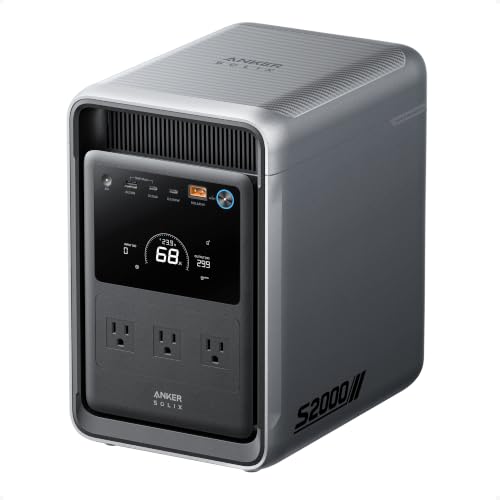
Anker SOLIX S2000
Covering a single full-size kitchen refrigerator through an overnight outage, or living permanently inline as that fridge's uninterruptible supply.
-
Best for back-to-back outages

OUPES Mega 1
Grids that fail repeatedly in short bursts, where the useful question is how much the unit banks during each short spell of restored power.
-
Best for outages that run past a day

BLUETTI AC200L
Multi-day outages where solar panels will be part of the plan and the unit can live permanently in a garage or utility room next to the appliance.
-
Best for a garage freezer or second fridge
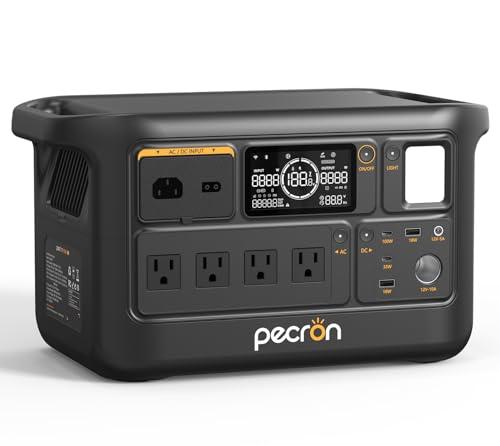
Pecron F1000LFP
A garage chest freezer, a basement second fridge or a beverage cooler that needs quiet, permanent protection in a space with no room to spare.
How they compare
Scroll the table sideways to see every column.
| Product | Where to buy | Award | Capacity | AC output | AC recharge time | UPS switchover | Max solar input | Weight | Battery chemistry | Best for |
|---|---|---|---|---|---|---|---|---|---|---|
| Anker SOLIX S2000 | Best for overnight fridge coverage | 2010Wh | 1500W (3000W peak) | -- | Under 10ms | 400W | 35.7 lb (16.2 kg) | LFP | Covering a single full-size kitchen refrigerator through an overnight outage, or living permanently inline as that fridge's uninterruptible supply. | |
| OUPES Mega 1 | Best for back-to-back outages | 1024Wh | 2000W (4500W surge) | 36 minutes to 80% on AC, 26 minutes with AC and solar together | Under 20ms | -- | 27.8 lb (12.6 kg) | LiFePO4 | Grids that fail repeatedly in short bursts, where the useful question is how much the unit banks during each short spell of restored power. | |
| BLUETTI AC200L | Best for outages that run past a day | 2048Wh | 2400W | 0-80% in 45 minutes (2400W AC input) | -- | 1200W | 61.41 lb (27.9 kg) | LiFePO4 | Multi-day outages where solar panels will be part of the plan and the unit can live permanently in a garage or utility room next to the appliance. | |
| Pecron F1000LFP | Best for a garage freezer or second fridge | 960Wh | 1500W pure sine wave | 50 minutes to 80%, 70 minutes to full at 1000W AC | Within 20ms | 600W | 23.9 lb (10.8 kg) | LiFePO4 | A garage chest freezer, a basement second fridge or a beverage cooler that needs quiet, permanent protection in a space with no room to spare. |
The full reviews
Best for overnight fridge coverage
Anker SOLIX S2000
Anker
The S2000 carries 2010Wh in 35.7 lb, which is the most stored energy per pound on this shortlist and enough to cover a kitchen fridge from dinner until well after breakfast. The catch is the inverter: 1500W continuous ties the Pecron for the lowest rating here, and it sits right on the line we would accept for a full-size compressor.
What we like about the Anker SOLIX S2000
- 2010Wh in 35.7 lb works out at 56Wh per pound, well ahead of anything else here
- Under 10ms UPS switchover is fast enough to leave inline permanently without the fridge noticing a cut
- Rated for 10,000 cycles, so daily use as a fridge UPS does not wear it out in a few years
- 3000W peak leaves double the continuous rating available for the compressor start
Where it falls short for the Anker SOLIX S2000
- 1500W continuous is the joint lowest rating on this shortlist, level with the Pecron and well under the OUPES Mega 1's 2000W and the AC200L's 2400W, so it leaves little margin if the fridge shares the outlet with anything else
- The specification set we compared publishes no AC recharge time, so you cannot plan around how much a short grid window is worth
- 400W is the lowest published solar input here, a third of the AC200L's 1200W, so panels slow the drain rather than replace a fridge's daily draw
- The specification set we compared lists no expansion battery, so 2010Wh is the ceiling, unlike the OUPES Mega 1 at 5120Wh or the AC200L at 8192Wh
- There is no 12V DC port, so a 12V compressor cooler has to run through the AC inverter and pay the conversion loss twice
Key specifications
- Capacity
- 2010Wh
- AC output
- 1500W (3000W peak)
- UPS switchover
- Under 10ms
- Rated cycle life
- 10,000 cycles
- Max solar input
- 400W
- Weight
- 35.7 lb (16.2 kg)
Most units in this class buy capacity with weight. The S2000 does not, and for a refrigerator that changes the calculation more than any other specification on the sheet.
The arithmetic that wins it this award
Start from 2010Wh. An inverter does not deliver its rated watt-hours to the outlet, so plan on roughly 85% reaching the fridge: about 1710Wh.
Now the fridge. A full-size compressor draws in the region of 150W while it is actually running, and it runs perhaps a third of the time in a cool room. That is a 50W average, or 1.2kWh a day. On that assumption the S2000 gives about 34 hours. Push the assumption to the pessimistic end, an older unit with a defrost heater averaging 150W across the whole cycle, and it gives about 11 hours.
Eleven hours is the number that matters, because that is the worst-case overnight figure. It covers a cut at 9pm through to the morning with margin left.
Weight per watt-hour is the real story
2010Wh divided by 35.7 lb is 56Wh per pound. The 2048Wh BLUETTI AC200L stores almost exactly the same energy and weighs 61.41 lb, which is 33Wh per pound.
That gap is the difference between a unit one person carries from the garage to the kitchen when the lights go out, and one that gets positioned once and left.
Where the 1500W rating bites
This is the concession. Every unit here is rated 1500W or more, but the S2000 sits exactly on that floor, level with the Pecron F1000LFP, while the OUPES Mega 1 offers 2000W and the AC200L 2400W. The 3000W peak gives the compressor its start, and unlike the Pecron that peak is at least published, so a fridge on its own is fine.
The problem is sharing. Plug a 1200W microwave into the same unit while the compressor is running and you are over. If your outage plan is a fridge and only a fridge, that never comes up. If the plan quietly grows to include coffee and reheating dinner, choose something with more headroom.
Left plugged in, not stored
The 10,000-cycle rating and the sub-10ms switchover point at the same use: leave it connected between the wall and the fridge all year, not in a cupboard waiting for a storm. A unit cycling daily against a 3,500-cycle rating is on a much shorter clock.
That is also the case against it for anyone who wants one battery for outages, camping and the job site. This is an appliance-shaped purchase.
- Best for
- Covering a single full-size kitchen refrigerator through an overnight outage, or living permanently inline as that fridge's uninterruptible supply.
- Choose something else if
- The fridge shares a circuit with a microwave, kettle or window air conditioner, because 1500W continuous will not carry two of those at once.
Best for back-to-back outages
OUPES Mega 1
OUPES
Where other units answer "how long will it last", the Mega 1 answers "how fast can I get it back". It reaches 80% in 36 minutes, so every short window of grid power is worth several more hours of cold. Against that, 1024Wh is half what the Anker and BLUETTI units hold, and on its own it will not see a fridge through a long night.
What we like about the OUPES Mega 1
- 36 minutes to 80% on AC turns one short grid window into roughly four and a half more hours of fridge
- 4500W surge against a 2000W continuous rating is the largest starting headroom on this shortlist
- 27.8 lb and 15.1 x 9.1 x 11.6 in, so it fits beside a fridge rather than in front of it
- Expandable to 5120Wh with two B2 batteries if a fridge-only plan later grows
Where it falls short for the OUPES Mega 1
- 1024Wh is half the Anker SOLIX S2000's 2010Wh and delivers roughly six hours on a pessimistic fridge assumption, so a full night is not guaranteed
- No maximum solar input is published in the specification set we compared, which makes it hard to plan a multi-day outage around panels
- Reaching the 5120Wh ceiling needs two separate expansion batteries, not one, so the upgrade path is a bigger commitment than it first looks
- 3,500 cycles to 80% is barely a third of the Anker SOLIX S2000's 10,000, which matters if you intend to leave it cycling inline every day
Key specifications
- Capacity
- 1024Wh
- AC output
- 2000W (4500W surge)
- AC recharge time
- 36 minutes to 80% on AC, 26 minutes with AC and solar together
- UPS switchover
- Under 20ms
- Expandable
- Yes, to 5120Wh with two B2 extra batteries
- Weight
- 27.8 lb (12.6 kg)
Buyers size these units for the outage they imagine: one clean block of darkness with a clear start and end. Real supply failures rarely behave like that, and the Mega 1 is built for the version that does not.
What 36 minutes is actually worth
Charging to 80% puts about 819Wh into the pack. Allow for the roughly 15% lost between the cells and the outlet and the fridge sees about 696Wh.
On the pessimistic assumption of a fridge averaging 150W across its duty cycle, those 36 minutes of grid buy about four and a half hours of cold. On a modern fridge nearer 50W average, they buy close to fourteen. A shorter window scales down in proportion: twenty minutes at that same charge rate is about 455Wh in, roughly 385Wh out, or two and a half hours at 150W.
Compare that with the BLUETTI AC200L, which needs 45 minutes to reach 80%. The BLUETTI banks more energy in that window because its tank is twice the size, but the Mega 1 is the one that finishes filling and is ready for the next cut.
The surge number, and why it is honest here
The 4500W figure is 2.25 times the 2000W continuous rating. Surge headroom of that ratio is what a compressor asks for, since a motor pulls hard for a fraction of a second on start and then settles to a fraction of that draw.
Treat the 2000W as the number that governs everything else you plug in. Surge covers the instant of starting, not a second appliance running alongside.
The capacity ceiling is real
1024Wh is 870Wh delivered. At 150W average that is under six hours. At 50W it is seventeen. Most kitchens land between those, which means the Mega 1 is a comfortable evening unit and a marginal overnight one.
If the grid comes back at any point, the recharge speed erases that gap. If it does not, the Anker SOLIX S2000 stores nearly twice as much for eight more pounds, and that is the trade to weigh.
Who should skip it
Anyone planning for a storm that takes the neighbourhood out for two days. The expansion path to 5120Wh exists, but it needs two batteries to get there, and a unit chosen for its refill speed makes little sense when there is nothing to refill from.
- Best for
- Grids that fail repeatedly in short bursts, where the useful question is how much the unit banks during each short spell of restored power.
- Choose something else if
- Your outages are single long blocks with no grid and no sun, because 1024Wh alone runs out before a full-size fridge gets through the night.
Best for outages that run past a day
BLUETTI AC200L
BLUETTI
This is the pick when the fridge has to survive longer than one night. 2048Wh expands to 8192Wh, and the 1200W solar input is large enough that panels can replace a fridge's daily draw rather than merely slow the decline. You pay for it in weight: at 61.41 lb it is placed once and stays there.
What we like about the BLUETTI AC200L
- Expandable to 8192Wh, which at a pessimistic 150W average is close to two full days of refrigeration
- 1200W solar input is triple the Anker SOLIX S2000 and enough to outpace a fridge's daily consumption in good sun
- 2400W continuous is the highest rating here, so the fridge can share the unit with a second large appliance
- 0-80% in 45 minutes on 2400W AC input, so it also recovers quickly when the grid returns
Where it falls short for the BLUETTI AC200L
- At 61.41 lb it stores 33Wh per pound against the S2000's 56Wh, so it is over 70% heavier for 38Wh more base capacity
- No UPS switchover time is published in the specification set we compared, so we cannot recommend it as an inline supply for a fridge with sensitive electronics
- The 4-year warranty is the shortest of the four units here, on the heaviest and most expansion-dependent purchase
- Two people or a hand truck are realistically needed to move it, which rules out carrying it up a flight of stairs during an outage
Key specifications
- Capacity
- 2048Wh
- AC output
- 2400W
- AC recharge time
- 0-80% in 45 minutes (2400W AC input)
- Max solar input
- 1200W
- Expandable
- Yes, to 8192Wh with expansion batteries
- Weight
- 61.41 lb (27.9 kg)
Everything about the AC200L points at the same reader: someone whose power does not come back the same day, and who has already accepted that the battery is going to live in one place.
The number that separates it from the shortlist
Base capacity is unremarkable. 2048Wh delivers roughly 1740Wh at the outlet, which is around 11 to 12 hours on a pessimistic 150W fridge average, barely ahead of the S2000.
The expansion ceiling is where it separates. 8192Wh delivers close to 6960Wh, which is about 46 hours on that same pessimistic figure and comfortably past five days if your fridge is nearer 50W average. Nothing else here approaches that without a stack of extra units.
Solar changes the shape of a long outage
1200W of panel input is the specification that turns a battery into a supply rather than a countdown.
Assume five usable sun hours and 70% of rated panel output, both fair for a sensible day and a decent array: that is about 4.2kWh returned. A pessimistic full-size fridge consumes about 3.6kWh a day. The maths closes. On the same assumptions the Anker’s 400W input returns about 1.4kWh, which slows the drain but never reverses it.
This is the whole argument for the AC200L. If you have no panels and no intention of buying any, the argument mostly disappears.
What 61.41 lb costs you
Two units on this page store almost the same energy: 2048Wh here, 2010Wh in the S2000. One weighs 61.41 lb and the other 35.7 lb.
Placed in a garage beside a chest freezer, that difference is irrelevant. Carried from a basement to a kitchen at 2am, it is the whole experience. Decide where it will live before buying, not after.
The unresolved question
The specification set we compared does not publish a switchover time. For a refrigerator that genuinely does not matter, because a compressor does not care about a gap of a few milliseconds and simply restarts.
It matters if you intended to protect a fridge with a networked control board, a medical refrigerator, or a chest freezer with a monitored alarm. For those, the S2000’s stated sub-10ms figure or the Pecron’s 20ms figure is the safer choice.
- Best for
- Multi-day outages where solar panels will be part of the plan and the unit can live permanently in a garage or utility room next to the appliance.
- Choose something else if
- You need to carry the unit between floors or rooms, or your fridge runs a control board you are unwilling to expose to a switchover gap.
Best for a garage freezer or second fridge
Pecron F1000LFP
Pecron
A chest freezer or a beverage fridge does not need 2000Wh of battery; it needs something small enough to live behind the appliance permanently. At 23.9 lb and 8.5 in wide the F1000LFP is the only unit here that disappears into that gap, and it still clears the 1500W bar. What it does not do is publish a surge figure.
What we like about the Pecron F1000LFP
- 23.9 lb and a 15.0 x 8.5 x 8.4 in footprint, so it sits behind or beside an appliance instead of in the walkway
- 1500W pure sine wave output, which is the practical floor for a compressor and safe for the control electronics on a modern freezer
- Within 20ms switchover means it can stay inline year-round without the appliance registering a cut
- 600W solar input against only 960Wh, so a modest array refills it inside a morning
Where it falls short for the Pecron F1000LFP
- The specification lists 1500W continuous with no published surge or peak figure, so there is no stated headroom for a stiff compressor start and no way to check it before buying
- 960Wh is the smallest capacity on this shortlist and gives roughly five and a half hours on a pessimistic full-size fridge assumption
- No cycle life is published in the specification set we compared, which is the figure that matters most for a unit intended to sit inline and cycle daily
- The 2+3 year warranty structure is conditional rather than a flat five years like the Anker and OUPES units
Key specifications
- Capacity
- 960Wh
- AC output
- 1500W pure sine wave
- AC recharge time
- 50 minutes to 80%, 70 minutes to full at 1000W AC
- UPS switchover
- Within 20ms
- Max solar input
- 600W
- Dimensions
- 15.0 x 8.5 x 8.4 in
The other three units on this page are chosen for a kitchen refrigerator. This one is chosen for the appliance nobody thinks about until the food in it spoils.
Why a freezer is a different problem
A chest freezer is well insulated, kept shut for days at a time, and typically draws less across its duty cycle than a fridge whose door opens twenty times an evening.
Take 960Wh, allow the roughly 15% lost through the inverter, and 816Wh reaches the appliance. Against a 50W average that is over sixteen hours. Against the pessimistic 150W average of a large old kitchen fridge it is five and a half. Same battery, three times the difference, and the appliance decides which scenario you are in.
Size is the specification here
15.0 x 8.5 x 8.4 in and 23.9 lb is what makes this work. Garage freezers sit against a wall in a space measured to the inch, and the reason people abandon backup plans for them is that the battery ends up somewhere inconvenient and eventually gets unplugged.
Combined with the 20ms switchover, this is a unit you install once behind the appliance and forget, rather than one you fetch during a storm. At 40Wh per pound it also carries better than the 61.41 lb AC200L if it does need to move.
The missing number
The specification gives 1500W continuous pure sine and no peak. The OUPES Mega 1 publishes 4500W surge, the Anker S2000 publishes 3000W peak, and this one publishes nothing.
For a small compressor with a modest inrush that is unlikely to matter. For a 20-year-old full-size refrigerator it is a genuine unknown, and an unknown is a poor thing to discover at the start of an outage. If you cannot find a starting figure for your appliance, buy headroom you can see on paper.
Solar closes the gap
600W of panel input against a 960Wh pack is a generous ratio. Assume five usable sun hours at 70% of rated output and that is roughly 2.1kWh returned in a day, against a freezer that might consume 1.2kWh. For a garage with a south-facing roof nearby, this small unit sustains that appliance indefinitely, which none of the arithmetic above would suggest.
- Best for
- A garage chest freezer, a basement second fridge or a beverage cooler that needs quiet, permanent protection in a space with no room to spare.
- Choose something else if
- The appliance is a large old kitchen refrigerator, because there is no published surge rating to check the start against and 960Wh will not cover a full night.
How we researched this guide
Four units rated 1500W or higher were compared on published manufacturer specifications for capacity, continuous and surge output, recharge time, switchover time and solar input. None were tested by us. All runtime figures on this page are our own arithmetic from rated capacity and a stated duty cycle, and every review names the sources behind its judgement.
The full process is on our how we test portable power stations page, including what counts as hands-on use.
- Units evaluated
- 4
- Used hands-on
- 0
- Assessed from documentation and owner reports
- 4
Evaluation methods used: specification comparison, documentation and owner-report research
Which one should you buy?
Match your situation on the left to the recommendation on the right.
-
You want one unit to cover the kitchen fridge overnight
Recommendation: Buy the Anker SOLIX S2000 for 2010Wh at 35.7 lb, the best capacity-to-weight ratio here
-
Your power drops repeatedly for short stretches rather than all day
Recommendation: Buy the OUPES Mega 1, which reaches 80% in 36 minutes and banks about four and a half hours of fridge in that time
-
You expect outages lasting more than a day and you own or will buy solar panels
Recommendation: Buy the BLUETTI AC200L for its 8192Wh expansion ceiling and 1200W solar input
-
You are protecting a garage chest freezer or a basement second fridge
Recommendation: Buy the Pecron F1000LFP, which is 23.9 lb and 8.5 in wide so it lives behind the appliance
-
Your refrigerator is old, large or has an unknown starting draw
Recommendation: Choose a unit with a published surge figure, which means the OUPES Mega 1 at 4500W or the Anker SOLIX S2000 at 3000W peak
-
The fridge will share the unit with a microwave or kettle
Recommendation: Buy the BLUETTI AC200L, the only unit here rated 2400W continuous
Mistakes buyers make
- Sizing from the running wattage on the appliance sticker and buying an inverter with no headroom for the compressor start
- Reading rated watt-hours as delivered watt-hours, which overstates real runtime by roughly 15% before the fridge is even considered
- Treating a manufacturer runtime chart as a measurement when it assumes a constant modest draw rather than a compressor cycling on and off
- Buying capacity for a multi-day outage without buying the solar input that would let you use it more than once
- Choosing a unit too large or too heavy to live permanently beside the appliance, so it ends up in a cupboard and is flat when it is needed
- Opening the fridge repeatedly during an outage, which raises the duty cycle and destroys the runtime the arithmetic promised
Our final recommendation
If you want one answer rather than a shortlist, this is the unit that suits the widest range of readers in this category.
Best for overnight fridge coverage
Covering a single full-size kitchen refrigerator through an overnight outage, or living permanently inline as that fridge's uninterruptible supply.
Questions buyers ask
Will a 1000W power station run my refrigerator?
It will usually carry the running load and may still fail the start. The moment the compressor kicks in it draws several times its running figure for a fraction of a second, and an inverter with no margin trips instead of supplying it. That is why every unit here is rated 1500W or more.
Can I leave a power station connected to my fridge all the time?
Yes, if it supports pass-through with a fast switchover and is rated for enough cycles. The Anker SOLIX S2000 is the strongest case here at under 10ms and 10,000 cycles. A unit rated for a few thousand cycles will wear noticeably faster in that role than one kept in a cupboard for storms.
How long does food stay safe once the fridge stops?
Longer than most people assume, provided the door stays shut. A closed refrigerator holds temperature for several hours and a full freezer for a day or more. The practical implication is that you should not panic-check the contents, because each opening costs you more runtime than it saves.
Do I need a pure sine wave inverter for a refrigerator?
Yes. Modern compressors and their control boards are designed for the clean waveform the grid supplies, and a modified sine wave can make a motor run hotter and less efficiently. The Pecron F1000LFP is the only unit here whose published specification states pure sine wave outright, so confirm the waveform on the listing before you buy any of the others.
Does cold weather reduce how long these run my garage freezer?
Yes. All lithium packs deliver less in the cold, and LiFePO4 cells also refuse to charge below freezing to protect themselves. A unit living in an unheated garage through winter will fall short of the hours calculated here and may not accept a charge until it warms.
About the author