We Compared 4 Portable Power Stations for Coffee Makers
Off-grid power editor
Published
Updated
Last fact-checked
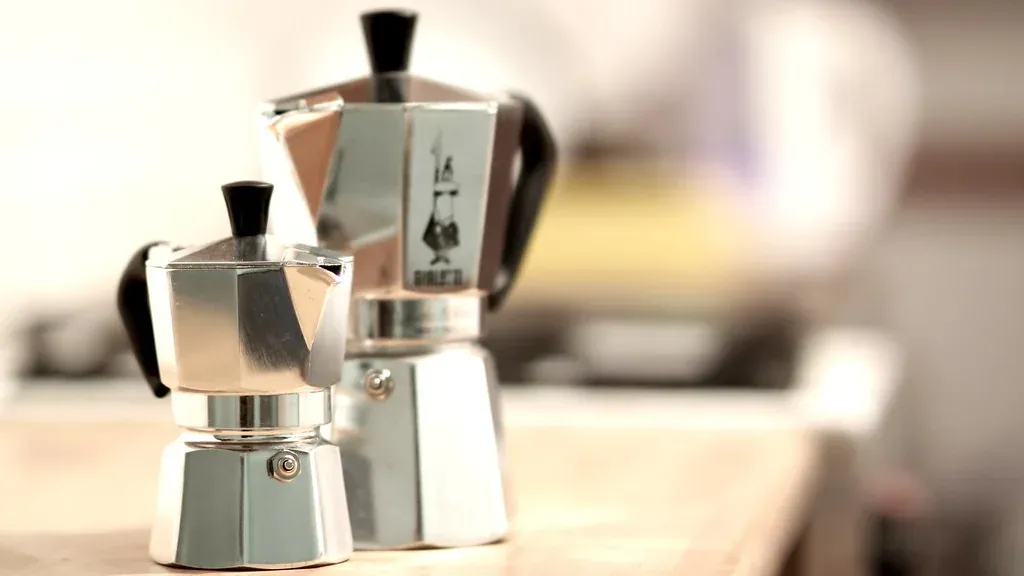
This guide is for anyone who has turned their coffee maker around, read the wattage on the label, and wondered which battery can actually run it. That is a better starting point than most appliance questions, because a coffee maker is the simplest load in the house: purely resistive, fully declared on its nameplate, and finished in under ten minutes. We compared four mid-size power stations on the three things that decide the outcome, which are continuous inverter output, stored watt-hours converted into actual pots, and weight if the coffee is happening away from a wall socket. We did not brew on any of these units, and every review states exactly what its recommendation rests on. What you get here is the maths behind cups per charge, and the reason the warming plate matters more than the brew.
What is the best portable power station for a coffee maker?
The EcoFlow DELTA 3 Plus suits the most people. Its 1800W continuous rating clears a 1500W single-serve machine with 300W to spare without needing a boost mode, its 1024Wh brews about six drip pots, and it refills to 80% in 40 minutes. If you are carrying the unit rather than leaving it on a counter, the 23.9 lb Pecron F1000LFP is the better call, provided your brewer is rated below 1500W.
Key takeaways
- A coffee maker is a resistive load with no start-up surge, so the number on its label is the number you size for
- A 10-cup drip brew costs roughly 150Wh from the pack, so a 1024Wh unit makes about six pots before it needs charging
- Leaving an 80W warming plate on for two hours after each brew costs more energy than the brew itself and cuts six pots to three
- Boost modes such as X-Boost and Power Lifting genuinely do work on a heating element, unlike on a fridge, because lower voltage only means a slower boil
- Buying an inverter rated exactly at your brewer's nameplate wattage leaves no margin for a thermostat overshoot
Our picks at a glance
Every unit below wins a specific situation rather than a place in a ranking. Pick the row that matches how you will actually use it.
-
Best for everyday drip and pod brewing

EcoFlow DELTA 3 Plus
Households that want one battery to keep the normal morning routine running through an outage, brewing a pot or a dozen single cups before it needs the grid back.
-
Best for a drip brewer plus a second breakfast appliance

OUPES Mega 1
Camp kitchens and outage mornings built around a 900W to 1200W drip brewer that is never the only thing drawing power, where tripping the inverter halfway through breakfast is the failure you are trying to avoid.
-
Best when coffee shares the pack with everything else off-grid

BLUETTI Elite 200 V2
Group camps, hunting cabins and multi-day outages where coffee is one of a dozen things drawing on the same pack and there is no grid to top it up from.
-
Best for carrying camp coffee in on foot
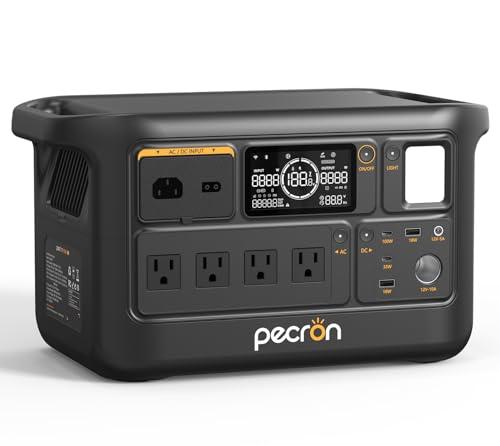
Pecron F1000LFP
Campers, tailgaters and van owners who carry the power station themselves and are brewing with a drip machine or a moka-style setup rather than a maximum-wattage pod brewer.
How they compare
Scroll the table sideways to see every column.
| Product | Where to buy | Award | Capacity | AC output | AC recharge time | Weight | Dimensions | Rated cycle life | Best for |
|---|---|---|---|---|---|---|---|---|---|
| EcoFlow DELTA 3 Plus | Best for everyday drip and pod brewing | 1024Wh | 1800W | 40 minutes to 80% on 1500W AC input | 27 lb (12.2 kg) | 16 x 8 x 11 in | 4,000 cycles to 80% | Households that want one battery to keep the normal morning routine running through an outage, brewing a pot or a dozen single cups before it needs the grid back. | |
| OUPES Mega 1 | Best for a drip brewer plus a second breakfast appliance | 1024Wh | 2000W (4500W surge) | 36 minutes to 80% on AC, 26 minutes with AC and solar together | 27.8 lb (12.6 kg) | 15.1 x 9.1 x 11.6 in | 3,500+ cycles to 80% | Camp kitchens and outage mornings built around a 900W to 1200W drip brewer that is never the only thing drawing power, where tripping the inverter halfway through breakfast is the failure you are trying to avoid. | |
| BLUETTI Elite 200 V2 | Best when coffee shares the pack with everything else off-grid | 2073.6Wh | 2600W continuous (3900W Power Lifting) | 0-80% in 1 hour on Turbo mode (1800W AC), full in 1.6 hours on Standard mode | 53.35 lb (24.2 kg) | 13.78 x 9.84 x 12.74 in | Over 6,000 cycles | Group camps, hunting cabins and multi-day outages where coffee is one of a dozen things drawing on the same pack and there is no grid to top it up from. | |
| Pecron F1000LFP | Best for carrying camp coffee in on foot | 960Wh | 1500W pure sine wave | 50 minutes to 80%, 70 minutes to full at 1000W AC | 23.9 lb (10.8 kg) | 15.0 x 8.5 x 8.4 in | -- | Campers, tailgaters and van owners who carry the power station themselves and are brewing with a drip machine or a moka-style setup rather than a maximum-wattage pod brewer. |
The full reviews
Best for everyday drip and pod brewing
EcoFlow DELTA 3 Plus
EcoFlow
The DELTA 3 Plus is the unit we would put on a kitchen counter and leave there. Its 1800W continuous rating clears the 1500W nameplate on a full-size pod machine with 300W to spare, and a 40-minute refill to 80% means the morning after an outage starts with a full battery. Capacity, not output, is where it runs short.
What we like about the EcoFlow DELTA 3 Plus
- 1800W continuous clears a 1500W pod machine by 300W without relying on any boost mode
- 40 minutes to 80% on 1500W AC input recovers roughly 8 drip pots per hour of charging
- 10ms UPS switchover is fast enough to leave a programmable brewer plugged through it without resetting the clock
- 27 lb and a 16 x 8 x 11 in footprint fit beside a coffee maker rather than under the table
Where it falls short for the EcoFlow DELTA 3 Plus
- At 1024Wh it brews about 6 drip pots, but only 3 if you leave an 80W warming plate on for two hours after each one
- The 300W of headroom over a 1500W brewer disappears the moment a toaster joins the same outlet, and the unit trips rather than throttles
- Expansion to 5kWh requires DELTA 3, DELTA Pro 3 or DELTA 2 Max battery packs, so an existing battery from another brand or an older EcoFlow line will not attach
Key specifications
- AC output
- 1800W
- Capacity
- 1024Wh
- AC recharge time
- 40 minutes to 80% on 1500W AC input
- UPS switchover
- 10ms
- Weight
- 27 lb (12.2 kg)
- Expandable
- Yes, up to 5kWh with DELTA 3, DELTA Pro 3 or DELTA 2 Max battery packs
A coffee maker is the easiest appliance in the house to size a battery for, and the one most people get wrong. It is purely resistive. There is no compressor, no start-up surge, no inrush current several times the running draw. Whatever the label says the machine pulls, that is what it pulls, for the few minutes the element is hot.
That makes the DELTA 3 Plus almost boringly correct for the job.
The output question, settled
The largest single-serve pod machines are rated 1500W. Drip brewers usually sit between 900W and 1200W. A domestic espresso machine is typically around 1350W. The 1800W continuous rating covers every one of those outright, with no boost mode involved.
That last part matters more than it sounds. EcoFlow’s X-Boost and BLUETTI’s Power Lifting both reach a higher headline figure by dropping output voltage. On a motor that is useless, because voltage is what develops torque. On a heating element it genuinely works, because a lower voltage simply means a slower boil. The DELTA 3 Plus does not need that trick for a coffee maker, so you never find out how much slower your brew got.
What 1024Wh actually buys
Assume a 10-cup drip brewer with a 1000W element that runs for eight minutes. That is 133Wh at the outlet, or roughly 150Wh drawn from the pack once inverter losses are counted at about 90% efficiency.
1024Wh divided by 150Wh is a little under seven. Call it six pots, honestly.
Run the same maths on a pod machine at 1500W for two and a half minutes per cup and you get about 70Wh from the pack per cup, or roughly fourteen cups.
Where the number collapses
The warming plate. A typical one draws about 80W, and two hours of it after each brew costs around 178Wh from the pack, more than the brew itself.
Do that after every pot and six pots becomes three. This is the single largest variable in the whole category and no runtime chart mentions it. Pour into a vacuum carafe and switch the plate off, and you get the full six.
Who should pick something else
Anyone planning to brew and toast simultaneously should take the OUPES Mega 1 for its 2000W rating, and should know that this only works behind a 900W to 1200W drip brewer. A 1500W pod machine plus an 800W toaster is 2300W and neither unit will carry it. Anyone whose battery is also running a fridge and lights for days at a time should look at the 2073.6Wh Elite 200 V2, because no amount of fast recharging helps when there is no grid to recharge from.
- Best for
- Households that want one battery to keep the normal morning routine running through an outage, brewing a pot or a dozen single cups before it needs the grid back.
- Choose something else if
- You leave the warming plate on all morning, or you want to run the coffee maker and a second heating appliance such as a toaster at the same time.
Best for a drip brewer plus a second breakfast appliance
OUPES Mega 1
OUPES
Two heating appliances at once is where most mid-size units stop, and the Mega 1 goes furthest on this shortlist. Its 2000W continuous rating covers a 1000W drip brewer and an 800W toaster together with 200W still in hand, which an 1800W inverter does not. You pay for that in weight rather than in stored energy.
What we like about the OUPES Mega 1
- 2000W continuous runs a 1000W drip brewer and an 800W toaster together, a pairing that leaves an 1800W inverter with no margin at all
- 36 minutes to 80% is the quickest refill as a share of capacity here, recovering roughly 23Wh for every minute on the wall
- 4500W surge rating means an appliance that briefly overshoots its label will not trip the inverter
- Rated for 3,500+ cycles to 80%, so a daily brew for nine years still sits inside the rated cycle life
Where it falls short for the OUPES Mega 1
- The two-appliance headroom does not extend to a 1500W pod machine, which leaves only 500W and rules out any toaster at 800W to 1200W, so this unit only doubles up behind a 900W to 1200W drip brewer
- The published ports list names USB-C, USB-A and 12V outputs but never states how many AC outlets there are, so a two-appliance breakfast may still need a power strip you have to supply
- At 1024Wh it stores no more than the lighter 27 lb DELTA 3 Plus, so a brewer and a toaster together pull the pack flat in about 28 minutes of combined element time
Key specifications
- AC output
- 2000W (4500W surge)
- Capacity
- 1024Wh
- AC recharge time
- 36 minutes to 80% on AC, 26 minutes with AC and solar together
- UPS switchover
- Under 20ms
- Weight
- 27.8 lb (12.6 kg)
- Expandable
- Yes, to 5120Wh with two B2 extra batteries
The Mega 1 answers a question the rest of this shortlist ducks: what happens when the coffee maker is not the only thing plugged in.
Why 2000W is a different category from 1800W
On paper, 200W is not much. In practice it is the difference between a two-appliance breakfast that fits and one that trips.
Start with the honest version, because the marketing version does not survive arithmetic. A toaster is typically 800W to 1200W. A kettle is usually 1500W on its own. So a 1500W pod machine plus a toaster is 2300W or more, and no unit on this shortlist below the 2600W Elite 200 V2 runs that pair, the Mega 1 included. Anyone selling you 2000W as coffee-plus-toast with a pod machine is skipping a sum.
Where the 200W does its work is behind a drip brewer. A 1000W drip machine and an 800W toaster is 1800W. On an 1800W inverter that is 100% of continuous with nothing in reserve, which is exactly the situation this guide tells you to avoid. On the Mega 1 it is 1800W of 2000W, leaving 200W of margin plus the surge rating underneath it. Drop to a 900W brewer with the same toaster and the margin widens to 300W.
The 4500W surge figure is a separate safety net. Coffee makers do not surge the way motors do, but cheap thermostats and older elements can briefly overshoot their label, and an inverter with that much peak headroom rides through it instead of cutting out mid-pot.
The arithmetic that limits it
Here is where honesty is required. The Mega 1 holds 1024Wh, exactly the same as the DELTA 3 Plus.
Using the same assumption as the rest of this guide, a 10-cup drip brewer with a 1000W element running eight minutes takes about 150Wh from the pack at roughly 90% inverter efficiency. That is about six pots. A 1500W pod machine at two and a half minutes a cup takes about 70Wh, so roughly fourteen cups.
Now run the coffee maker and a 1000W toaster together. Combined draw is around 2000W, and 1024Wh at 2000W is about 28 minutes of continuous element time once inverter losses are counted. Nobody toasts for 28 minutes, so in practice this is fine. But it does mean the two-appliance headline is about avoiding a trip, not about running a full kitchen.
Recharge is the quiet advantage
36 minutes to 80% works out to roughly 819Wh recovered in 36 minutes, or about 23Wh per minute. In coffee terms that is roughly nine drip pots restored per hour on the wall, against about eight for the DELTA 3 Plus and six for the Pecron F1000LFP.
If your outages come in bursts with grid windows between them, that difference compounds across a day.
Who should skip it
If the coffee maker is genuinely the only appliance, the DELTA 3 Plus is 0.8 lb lighter with identical capacity and a faster UPS switchover, and you lose nothing. If your brewer is a 1500W pod machine, the two-appliance case collapses and you are buying 200W you cannot use. And if coffee shares the pack with a fridge or lights for days at a time, six pots is not the constraint, total capacity is, and the Elite 200 V2 holds twice as much.
- Best for
- Camp kitchens and outage mornings built around a 900W to 1200W drip brewer that is never the only thing drawing power, where tripping the inverter halfway through breakfast is the failure you are trying to avoid.
- Choose something else if
- Your brewer is a 1500W pod machine, because the 500W left over will not carry a second heating appliance either, or you only ever brew coffee and nothing else, in which case the lighter DELTA 3 Plus stores exactly the same energy.
Best when coffee shares the pack with everything else off-grid
BLUETTI Elite 200 V2
BLUETTI
Coffee alone does not justify this unit, and the arithmetic says so plainly: six pots from a 1024Wh pack already covers a weekend of mornings. The Elite 200 V2 earns its place when the brew is one line item among lights, phones and a cool box across several gridless days, because 2073.6Wh absorbs all of that and still has thirteen pots in it. The cost is 53.35 lb, a two-hand carry every single time.
What we like about the BLUETTI Elite 200 V2
- 2073.6Wh brews roughly 13 drip pots or 29 single-serve cups, about twice anything else on this shortlist
- 2600W continuous runs a 1500W pod machine with 1100W spare, so a 1000W hot plate or percolator alongside it still sits inside the rating
- Turbo mode reaches 80% in an hour, recovering about 28Wh a minute, the fastest absolute refill here
- Rated for over 6,000 cycles, so a daily brew for sixteen years still sits inside the rated life
Where it falls short for the BLUETTI Elite 200 V2
- At 53.35 lb it weighs more than twice the 23.9 lb Pecron F1000LFP, and there is no scenario where you carry it to a campsite one-handed
- Turbo charging draws 1800W from the wall, effectively a whole 15A household circuit, so the one-hour refill cannot share a socket with the brewer or the toaster and drops to the 1.6-hour Standard mode if it has to
- The quoted 2.4-hour solar recharge assumes 1000W of panels, which is far more array than most camp or outage setups actually own
- No UPS switchover time is published, so it should not be treated as a pass-through battery for anything that must not lose power mid-cycle
Key specifications
- Capacity
- 2073.6Wh
- AC output
- 2600W continuous (3900W Power Lifting)
- AC recharge time
- 0-80% in 1 hour on Turbo mode (1800W AC), full in 1.6 hours on Standard mode
- Weight
- 53.35 lb (24.2 kg)
- Rated cycle life
- Over 6,000 cycles
- Dimensions
- 13.78 x 9.84 x 12.74 in
There is a point where fast recharging stops helping, and it arrives the moment there is no grid to recharge from. That is the case the Elite 200 V2 is built for.
Coffee alone does not need this much battery
Apply this guide’s standard assumption: a 10-cup drip brewer with a 1000W element running eight minutes draws about 133Wh at the outlet, or roughly 150Wh from the pack once inverter efficiency of around 90% is counted.
2073.6Wh divided by 150Wh is about thirteen pots. On a single-serve machine at roughly 70Wh a cup, the same battery covers about 29 cups.
Now be honest about what that means. Four people drinking three cups a day get through about twelve cups, which is a little over one 10-cup pot. Thirteen pots is therefore something like ten mornings of group coffee, and the 1024Wh units on this shortlist still manage six pots, or five mornings for the same four people. On coffee alone, every unit here clears a weekend.
So the reason to carry an extra 26.35 lb over the DELTA 3 Plus is not the coffee. It is everything else. A camp fridge averaging 30W across its duty cycle is about 720Wh a day, nearly five pots’ worth of energy before anyone brews anything. Add lights, phones and a fan and a 1024Wh pack is spending most of itself on the loads that run all night. The Elite absorbs those and still has the thirteen pots.
The output rating you will never test
2600W continuous is generous to the point of irrelevance for coffee. A domestic espresso machine is around 1350W. The biggest pod machines are 1500W. Even a 30-cup percolator sits near 1000W.
BLUETTI also advertises 3900W Power Lifting. On a resistive load that mode does work in a way it never does on a motor, because it reaches the higher figure by lowering voltage, and a heating element simply runs cooler and slower rather than failing to start. But you will not use it. There is nothing in a kitchen coffee setup that exceeds 2600W.
We mention it because the number appears on every retail listing and it should not be part of your decision here.
The weight is not a footnote
53.35 lb in a 13.78 x 9.84 x 12.74 in case is dense. That is 38.9Wh per pound, which is efficient by the numbers and still a two-hand lift with a straight back.
Against the Pecron F1000LFP at 23.9 lb and 40.2Wh per pound, the Elite carries more energy but less energy per pound, and it is the difference between a unit you sling into a car and a unit you plan the loading around.
Who should buy it
Groups. Cabins. Anyone whose outages are measured in days rather than hours and whose battery is running a fridge and a fan as well as a brewer. If coffee is the only thing plugged in, a 1024Wh unit gets you the same six pots for half the weight, and this is a great deal more battery than the job needs.
- Best for
- Group camps, hunting cabins and multi-day outages where coffee is one of a dozen things drawing on the same pack and there is no grid to top it up from.
- Choose something else if
- Coffee is the whole job. Paying for 2073.6Wh and 53.35 lb to brew six pots you would have got from a 1024Wh unit at half the weight is the wrong trade.
Best for carrying camp coffee in on foot
Pecron F1000LFP
Pecron
At 23.9 lb the F1000LFP is the only unit here you can carry any real distance, and it stores 40.2Wh for every one of those pounds, the best ratio on this shortlist. The catch is its 1500W inverter, which is exactly what a large pod machine is rated to draw and therefore leaves nothing in reserve.
What we like about the Pecron F1000LFP
- 23.9 lb and 40.2Wh per pound, the highest energy density on this shortlist and a genuine one-hand carry
- 1500W pure sine wave output runs a 900W to 1200W drip brewer with 300W to 600W of margin, and no modified-wave harshness on electronic controls
- 600W solar input is 0.63W for every watt-hour stored, so a modest array refills the whole 960Wh across a camp afternoon
- Four AC outlets and a 100W USB-C port cover a brewer, a grinder and phones without a splitter
Where it falls short for the Pecron F1000LFP
- The 1500W continuous rating is the exact nameplate draw of a full-size single-serve pod machine, so there is zero headroom and a brewer that overshoots its label will trip the inverter
- At 960Wh it is the smallest battery here and no expansion option is published, so a long weekend of camp coffee needs solar rather than a second pack
- 50 minutes to 80% recovers about 15Wh a minute, the slowest refill on this shortlist and roughly two-thirds the rate of the OUPES Mega 1
Key specifications
- AC output
- 1500W pure sine wave
- Capacity
- 960Wh
- Weight
- 23.9 lb (10.8 kg)
- AC recharge time
- 50 minutes to 80%, 70 minutes to full at 1000W AC
- UPS switchover
- Within 20ms
- Max solar input
- 600W
Every other unit on this shortlist assumes the power station stays where you put it. The F1000LFP is the one you move.
The density number
960Wh in 23.9 lb is 40.2Wh per pound. Run the same sum across the rest of this guide and you get 38.9Wh per pound for the Elite 200 V2, 37.9 for the DELTA 3 Plus and 36.8 for the OUPES Mega 1.
The F1000LFP wins that comparison, and more importantly it wins on absolute weight. 23.9 lb is a suitcase. 53.35 lb is a task. If the coffee is happening 200 yards from the car, this is the only realistic answer here.
What it brews
Using this guide’s standard assumption of a 1000W drip element running eight minutes, one 10-cup pot costs about 133Wh at the outlet and roughly 150Wh from the pack after inverter losses. 960Wh covers about six pots.
On a single-serve machine at roughly 70Wh a cup, that is about thirteen cups. For a two-person camp drinking two cups each morning, that is three days without any solar at all. Those four cups cost about 280Wh a day, so a pair of 200W panels feeding the 600W input replaces a full day of coffee in roughly an hour of decent sun, long before the 600W ceiling is anywhere near the limiting factor.
The headroom problem, stated plainly
1500W continuous is not a small inverter. It is simply the same number as the biggest pod machines print on their labels.
Running any inverter at 100% of its continuous rating is not where you want to live. Element thermostats cycle, ambient temperature affects derating, and a brewer that draws 1560W for two seconds on a cold start will trip a 1500W unit. The result is a half-brewed carafe and a reset clock.
With a 900W to 1200W drip brewer there is 300W to 600W of margin and none of this applies. With a 1500W pod machine, buy the DELTA 3 Plus instead and accept the extra 3.1 lb.
Pure sine wave is not a marketing line here
The specification names pure sine wave output explicitly. Modern brewers with digital timers, grinders and thermal-carafe electronics are sensitive to waveform quality, and a modified-sine inverter can make control boards behave oddly or buzz audibly. This is one of the few places where a spec-sheet phrase maps directly to whether the appliance works properly.
- Best for
- Campers, tailgaters and van owners who carry the power station themselves and are brewing with a drip machine or a moka-style setup rather than a maximum-wattage pod brewer.
- Choose something else if
- Your coffee maker is rated at 1500W, because you would be running the inverter at 100% of its continuous rating with no margin for a thermostat overshoot. A 1350W espresso machine is not much better, at 11% headroom against the 20% this guide treats as the minimum.
How we researched this guide
Four mid-size units were selected from a 27-product catalogue on published continuous output, capacity, recharge time and weight, then compared against the nameplate ratings of drip, pod and espresso coffee makers. None of these units were brewed on by us. Every runtime figure on this page is arithmetic from rated capacity using stated assumptions, not an observed result.
The full process is on our how we test portable power stations page, including what counts as hands-on use.
- Units evaluated
- 4
- Used hands-on
- 0
- Assessed from documentation and owner reports
- 4
Evaluation methods used: specification comparison, documentation and owner-report research, editorial selection
Which one should you buy?
Match your situation on the left to the recommendation on the right.
-
Your coffee maker is a full-size single-serve pod machine rated 1500W
Recommendation: Buy the EcoFlow DELTA 3 Plus for its 1800W continuous rating and 300W of real headroom
-
A drip brewer shares the battery with a toaster or a hot plate at breakfast
Recommendation: Buy the OUPES Mega 1, whose 2000W continuous rating covers a 1000W brewer and an 800W toaster together with margin left
-
Coffee for four is only part of the load and there is no grid for several days
Recommendation: Buy the BLUETTI Elite 200 V2 for 2073.6Wh, roughly 13 drip pots per charge with room left for lights and phones
-
You carry the power station yourself to a campsite or tailgate
Recommendation: Buy the 23.9 lb Pecron F1000LFP, but only with a brewer rated below 1500W
-
Your grid drops in short bursts and returns for an hour at a time
Recommendation: Buy the OUPES Mega 1 for its 36-minute refill to 80%, about nine pots of charge recovered per hour
Mistakes buyers make
- Sizing the inverter to exactly the coffee maker's nameplate wattage, which leaves nothing for a thermostat cycling above its rating on a cold start
- Reading the boost figure such as X-Boost or Power Lifting as continuous output, when it applies only while the unit lowers its output voltage
- Ignoring the warming plate, which quietly draws around 80W for hours and costs more than the brew cycle it follows
- Buying capacity for a job measured in minutes, when a coffee maker runs for eight minutes and the real question is output rather than watt-hours
- Assuming a power station bought for a fridge will also brew, when a 1000W inverter clears a 150W fridge and fails a 1500W pod machine
Our final recommendation
If you want one answer rather than a shortlist, this is the unit that suits the widest range of readers in this category.
Best for everyday drip and pod brewing
Households that want one battery to keep the normal morning routine running through an outage, brewing a pot or a dozen single cups before it needs the grid back.
Questions buyers ask
Can a 1000W power station run a coffee maker?
It depends entirely on the brewer. A 900W drip machine will run on a 1000W inverter with very little margin. A 1500W single-serve machine will not run at all and will trip the unit immediately. Check the label on the underside of your coffee maker before you shop, because that one number rules out roughly half the market.
Does a coffee maker have a start-up surge like a fridge?
No, and this is the reason coffee makers are easy to size. A heating element is a resistive load. It draws its rated wattage the moment it switches on and nothing more. A fridge compressor pulls several times its running draw for a fraction of a second, which is why fridges need inverter headroom that coffee makers do not.
Do boost modes like X-Boost or Power Lifting work on a coffee maker?
Yes, unusually. Both modes reach a higher wattage figure by lowering output voltage. On a motor that is useless because voltage develops torque. On a heating element it simply means the element runs cooler and the brew takes longer, so the appliance still works. None of the units here need that mode for a normal coffee maker.
Should I leave the warming plate on?
Not on battery. A warming plate draws around 80W continuously, so two hours costs roughly 178Wh from the pack against about 150Wh for the brew itself. Pour into an insulated carafe and switch the plate off, and a 1024Wh unit goes from about three pots to about six.
Is a bigger battery better if I only make coffee?
Usually not. Brewing is a short job, so output matters far more than watt-hours. A 2073.6Wh unit weighing 53.35 lb and a 1024Wh unit weighing 27 lb both brew your morning pot. The larger one only earns its weight if several people need coffee across several days with no grid to recharge from.
About the author