The 4 Best Portable Power Stations for Starlink

Off-grid power editor
Published
Updated
Last fact-checked
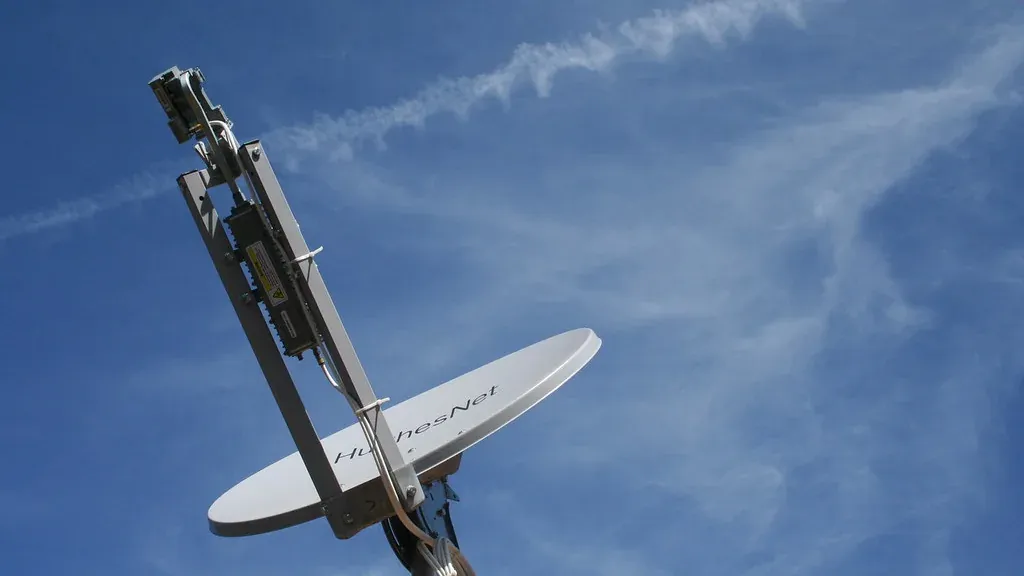
This guide is for Starlink subscribers who need the dish to keep running when the mains does not: rural homes on a weak grid, vehicle and cabin setups, and remote work sites. A dish is an unusually simple load to size for, because it draws somewhere between 50W and 100W continuously rather than cycling like a fridge. That makes capacity, not inverter power, the specification that decides everything. We compared four units on capacity, switchover speed, recharge rate and weight, and we did not test any of them ourselves; every review states exactly what its recommendation is based on. What you get here is the part retailers leave out: rated watt-hours converted into delivered hours of uptime across the whole draw band, the daily energy budget a dish creates, and how much solar input it takes to clear it.
What is the best portable power station for Starlink?
The Anker SOLIX S2000 suits most people. Its 2010Wh pack covers a full night online even at the top of Starlink's draw band, it switches over in under 10ms so the dish never reboots, and its 10,000-cycle rating survives daily cycling. If you are running on solar with no grid at all, the BLUETTI AC200L and its 1200W solar input is the better tool.
Key takeaways
- Capacity decides Starlink runtime, because a dish is a constant load rather than a compressor that cycles on and off
- Take about 15% off any rated capacity before you calculate hours, because the share lost to inverter conversion never reaches the equipment
- A dish at 75W spends roughly 1800Wh a day, and that single number tells you what size solar array you need
- Switchover time matters more for a dish than for household appliances, because losing power means a reboot and a reacquisition rather than a flicker
- Solar input ceiling, not battery size, is what decides whether a setup can run indefinitely off grid
Our picks at a glance
Every unit below wins a specific situation rather than a place in a ranking. Pick the row that matches how you will actually use it.
-
Best for running Starlink overnight
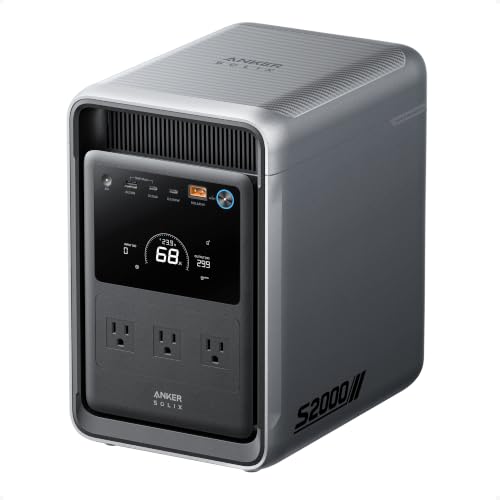
Anker SOLIX S2000
Rural homes and cabins that need the dish to survive a full overnight outage on stored energy alone, and that will cycle the battery most days.
-
Best for solar-only off-grid uptime

BLUETTI AC200L
Off-grid cabins, remote sites and long-stay setups where the dish has to keep running on solar with no mains connection to fall back on.
-
Best for riding out short grid cuts without dropping the link

EcoFlow DELTA 3 Plus
Homes and offices on a mains connection that fails often and briefly, where the priority is that the connection never drops rather than that it lasts days.
-
Best for carry-in and roaming setups

Jackery Explorer 500 v2
Roaming and portable setups where the dish runs for a session at a time and the unit has to be carried by hand between vehicle, camp and work spot.
How they compare
Scroll the table sideways to see every column.
| Product | Where to buy | Award | Capacity | AC output | Weight | UPS switchover | AC recharge time | Rated cycle life | Ports | Best for |
|---|---|---|---|---|---|---|---|---|---|---|
| Anker SOLIX S2000 | Best for running Starlink overnight | 2010Wh | 1500W (3000W peak) | 35.7 lb (16.2 kg) | Under 10ms | -- | 10,000 cycles | 8 outlets, front and rear, no 12V DC port | Rural homes and cabins that need the dish to survive a full overnight outage on stored energy alone, and that will cycle the battery most days. | |
| BLUETTI AC200L | Best for solar-only off-grid uptime | 2048Wh | 2400W | 61.41 lb (27.9 kg) | -- | 0-80% in 45 minutes (2400W AC input) | -- | 11 ports, including a 30A RV port and a 48V/8A DC port | Off-grid cabins, remote sites and long-stay setups where the dish has to keep running on solar with no mains connection to fall back on. | |
| EcoFlow DELTA 3 Plus | Best for riding out short grid cuts without dropping the link | 1024Wh | 1800W | 27 lb (12.2 kg) | 10ms | 40 minutes to 80% on 1500W AC input | 4,000 cycles to 80% | Runs 13 appliances at once | Homes and offices on a mains connection that fails often and briefly, where the priority is that the connection never drops rather than that it lasts days. | |
| Jackery Explorer 500 v2 | Best for carry-in and roaming setups | 512Wh | 500W (1000W surge) | 12.6 lb (5.7 kg) | 10ms | 52 minutes to 80% | 6,000 charge cycles | 2 AC sine wave outlets | Roaming and portable setups where the dish runs for a session at a time and the unit has to be carried by hand between vehicle, camp and work spot. |
The full reviews
Best for running Starlink overnight
Anker SOLIX S2000
Anker
Two thousand watt-hours in a 35.7 lb box is the cleanest way to buy a full night of dish uptime. Add sub-10ms switchover and a 10,000-cycle rating and this is a unit designed to be drained and refilled every day, which is exactly what a Starlink setup does to a battery.
What we like about the Anker SOLIX S2000
- 2010Wh covers a full night and most of the following morning at Starlink's mid-range draw
- 56 watt-hours per pound is the highest ratio on this shortlist, so the capacity costs the least weight
- Under 10ms switchover is shorter than one 60Hz cycle, so the dish and router never see an interruption
- 10,000-cycle rating means nightly full cycling still leaves decades of pack life
Where it falls short for the Anker SOLIX S2000
- The port list has no 12V DC output, so every watt reaches the dish through the inverter and you cannot bypass the conversion loss with a DC adapter
- 400W maximum solar input against a 2010Wh pack means over five hours of full-rated sun to refill from empty, the slowest capacity-to-solar ratio here
- At 35.7 lb it is a two-hand carry, not something you move around a campsite one-handed
- Anker publishes no AC recharge time for this unit, so on the very use case it suits best, bridging an outage and topping up when the grid returns, you cannot plan around a known refill window the way the DELTA 3 Plus's 40 minutes to 80% lets you
Key specifications
- Capacity
- 2010Wh
- AC output
- 1500W (3000W peak)
- Weight
- 35.7 lb (16.2 kg)
- UPS switchover
- Under 10ms
- Rated cycle life
- 10,000 cycles
- Max solar input
- 400W
Capacity is the whole argument for this unit, and with Starlink capacity is the only thing that decides how long you stay online.
What 2010Wh actually buys
A dish and router sitting somewhere in the 50-100W band is a constant load, not a cycling one, which makes the arithmetic unusually honest. Keep 85% of the rated capacity after inverter conversion and you have roughly 1709Wh reaching the equipment.
- At 50W: about 34 hours
- At 75W: about 23 hours
- At 100W: about 17 hours
Even at the top of the band, that is a full night plus the working morning after it. At the middle of the band it is close to a full day. No other unit here clears an overnight run across the whole band.
Why the switchover figure matters here
A fridge does not care about a 30ms gap. A satellite dish does, because losing power means a boot sequence and a reacquisition before traffic moves again, and you feel that as several minutes offline rather than several milliseconds.
Under 10ms is shorter than a single 60Hz mains cycle. Plugged in as a pass-through, this unit takes over a grid cut without the router registering anything. That turns an outage from an event into a non-event.
The cycle rating is not marketing here
Most power stations are bought for occasional use. A Starlink battery gets drained and refilled every single day it is off grid, so pack life is a real constraint rather than a spec-sheet line.
At 10,000 cycles, one full cycle a night works out to more than 27 years of nightly use. Against the 4,000-cycle DELTA 3 Plus, that is the difference between a unit you replace and one you do not.
Where it falls short
Two things. First, the solar ceiling. 2010Wh at a 400W maximum input needs just over five hours of full-rated sun to go from empty to full, and full-rated sun is not what a 400W array delivers on a real day. If solar is your only recharge source, the AC200L’s 1200W input is a different class of tool.
Second, the port layout has no 12V DC output. Every watt goes through the inverter, so the conversion loss in the arithmetic above is unavoidable rather than something you can engineer around.
Buy this if the grid comes back and you need to bridge the gap. Buy the AC200L if the grid is not coming back at all.
- Best for
- Rural homes and cabins that need the dish to survive a full overnight outage on stored energy alone, and that will cycle the battery most days.
- Choose something else if
- You want to refill mostly from solar during a short winter day, or you need a unit light enough to carry any real distance on foot.
Best for solar-only off-grid uptime
BLUETTI AC200L
BLUETTI
The 1200W solar ceiling is what separates this from every other unit in the guide. An hour and a half of full-rated sun covers a dish's entire day, which leaves enough margin on ordinary cloudy mornings to stay online indefinitely with no grid at all. You pay for that in weight.
What we like about the BLUETTI AC200L
- 1200W solar input refills the 2048Wh pack from empty in about 1.7 hours of full-rated sun
- Expansion to 8192Wh turns a one-night battery into a near four-day reserve at mid-band draw
- 2400W AC input takes it from 0 to 80% in 45 minutes when a generator or a grid window is available
- The 2400W inverter leaves enough headroom to run a dish alongside a laptop, lights and a water pump
Where it falls short for the BLUETTI AC200L
- At 61.41 lb it delivers only 33 watt-hours per pound, roughly 40% worse than the Anker SOLIX S2000 for effectively the same capacity, so this is a unit you install rather than carry
- The 4-year warranty is a year shorter than the other three units here, on the one unit most likely to be cycled daily for years
- Its 16.5 x 11 x 14.4 in footprint is over four times the box volume of the Jackery Explorer 500 v2, which rules it out of most vehicle setups
- Reaching the useful 8192Wh figure means buying expansion batteries, so the headline expansion number is not what arrives in the box
Key specifications
- Capacity
- 2048Wh
- AC output
- 2400W
- Weight
- 61.41 lb (27.9 kg)
- AC recharge time
- 0-80% in 45 minutes (2400W AC input)
- Max solar input
- 1200W
- Expandable
- Yes, to 8192Wh with expansion batteries
Every power station in this category advertises solar. Almost none of them can take in enough of it to matter. That is the specification this unit exists to win.
The daily budget, and what clears it
A dish running continuously at 75W spends 1800Wh a day. That is the number to size solar against, and it does not change whether your battery is large or small.
At a 1200W input ceiling, 1800Wh is 1.5 hours of full-rated sun. Real panels in real weather do not hold rated output, but a 1200W array against a 1800Wh daily budget has enough margin to clear it through overcast mornings and short winter days. Compare the 400W ceiling on the Anker SOLIX S2000: the same 1800Wh needs 4.5 hours at full rating, which is most of a usable winter day with no margin left over.
That margin is the whole difference between solar that supplements and solar that sustains.
Refilling from empty
Capacity divided by input tells you how fast the tank fills. This unit is 2048Wh against 1200W, or about 1.7 hours from empty at full rating. The S2000 is 2010Wh against 400W, or just over five hours.
Both hold roughly the same energy. Only one of them can put it back in a single good morning.
The expansion question
At 2048Wh you get about 23 hours at mid-band draw once inverter conversion is accounted for. Expanded to 8192Wh, that becomes roughly 93 hours, or close to four days of continuous uptime with no sun and no grid at all.
That is a genuine multi-day reserve, and it is the reason this unit belongs in a fixed off-grid install rather than a vehicle.
What it costs you
Weight, and warranty. 61.41 lb for 2048Wh is 33 watt-hours per pound. The S2000 carries almost the same energy at 56 watt-hours per pound. You are paying 25 extra pounds for the solar input, not for the capacity.
The four-year warranty is the quieter concern. This is the unit in the guide most likely to be cycled every single day, and it carries the shortest coverage of the four.
- Best for
- Off-grid cabins, remote sites and long-stay setups where the dish has to keep running on solar with no mains connection to fall back on.
- Choose something else if
- You need to lift the unit in and out of a vehicle regularly, or your only recharge source is a wall outlet you can reach every day anyway.
Best for riding out short grid cuts without dropping the link
EcoFlow DELTA 3 Plus
EcoFlow
This is the unit for a house that has power most of the time and loses it without warning. A 10ms handover keeps the dish from ever rebooting, and a 40-minute refill to 80% means a brief return of mains restores most of a day's uptime. What you give up is depth: at 1024Wh it holds half what either large unit in this guide does.
What we like about the EcoFlow DELTA 3 Plus
- 10ms switchover is under a single 60Hz mains cycle, so a grid cut never reaches the dish or router
- 40 minutes to 80% recovers about 819Wh, which is roughly nine hours of dish uptime bought back from one short grid window
- Charges at an average 1228W during that window, around 16 times the dish's mid-band draw, so the battery gains far faster than the load empties it
- 27 lb and a 16 x 8 x 11 in body fit behind a desk or in a cupboard next to the router
Where it falls short for the EcoFlow DELTA 3 Plus
- The 1024Wh pack delivers only about 8.7 hours at Starlink's 100W upper draw, so a cold-weather overnight outage can outlast it before morning
- Expansion to 5kWh requires buying a separate DELTA 3, DELTA Pro 3 or DELTA 2 Max battery pack, which more than doubles the space the system occupies
- The 4,000-cycle rating is the lowest published figure in this guide, and daily off-grid cycling would use it up considerably faster than the S2000 or the Explorer 500 v2
- No published solar input figure, so this is not the unit to build a panel-fed setup around
Key specifications
- Capacity
- 1024Wh
- AC output
- 1800W
- Weight
- 27 lb (12.2 kg)
- UPS switchover
- 10ms
- AC recharge time
- 40 minutes to 80% on 1500W AC input
- Rated cycle life
- 4,000 cycles to 80%
Most Starlink power questions are about how long you can run without the grid. This one answers a different question: what happens in the moment the grid goes away.
Why a millisecond figure changes the outcome
A dish that loses power does not simply resume. It goes through a boot sequence and has to reacquire before traffic moves, and you experience that as minutes offline rather than milliseconds. A call drops. An upload fails. A remote session dies.
A 60Hz mains cycle is 16.7ms long. A 10ms handover finishes inside one of them, which means the equipment downstream never sees an interruption at all. Run this as a pass-through between the wall and the dish and short cuts stop being something you notice.
Recovery speed is the second half of the argument
Grids that fail briefly usually come back briefly too. Twenty minutes on, an hour off, forty minutes on.
Forty minutes to 80% means about 819Wh going in, at an average rate near 1228W. The dish is drawing somewhere around 75W. The battery is therefore refilling about sixteen times faster than it is being emptied, and one short mains window banks roughly nine hours of delivered uptime once inverter conversion is taken off.
For an unreliable grid, that ratio matters far more than raw capacity.
Where the ceiling sits
1024Wh is half of what the two large units in this guide hold. After conversion loss it is about 870Wh reaching the equipment:
- At 50W: about 17 hours
- At 75W: about 11.6 hours
- At 100W: about 8.7 hours
At the top of Starlink’s draw band, an outage that starts at 10pm can outlast it before you wake up. That is a real limit, and it is the reason this is the grid-connected pick rather than the off-grid one.
Who should choose something else
Anyone whose power is not coming back. Expansion to 5kWh is possible, but it means a second box roughly the size of the first, and at that point the AC200L’s solar input and the S2000’s capacity per pound both make more sense for the space they occupy.
- Best for
- Homes and offices on a mains connection that fails often and briefly, where the priority is that the connection never drops rather than that it lasts days.
- Choose something else if
- You are permanently off grid, or your outages regularly run past eight hours with no mains window to recharge in.
Best for carry-in and roaming setups
Jackery Explorer 500 v2
Jackery
At 12.6 lb this is the only unit here you can carry to a ridge, a boat or a remote job site without planning the trip around it. It buys a working session rather than a working day, and that trade is the entire point of the product.
What we like about the Jackery Explorer 500 v2
- 12.6 lb is 23 lb lighter than the Anker SOLIX S2000, which is the difference between carrying it and loading it
- A 12.2 x 6.2 x 8.1 in body takes up under a quarter of the box volume of the BLUETTI AC200L
- 10ms switchover means it can sit inline at a base camp or in a vehicle without the dish rebooting when the source changes
- The 6,000-cycle rating is the second highest here, so weekend use will never wear the pack out
Where it falls short for the Jackery Explorer 500 v2
- 512Wh delivers roughly 4.4 hours at Starlink's 100W upper draw, so it cannot cover an overnight run without a recharge source
- The 500W continuous inverter has real headroom for a dish but not for a dish plus a kettle, a heater or a compressor
- Two AC outlets in total, so a dish plus a laptop charger already fills the unit and anything further needs a power strip
- At 41 watt-hours per pound it is less capacity-efficient than the S2000's 56, so scaling up by buying several of these is the wrong move
Key specifications
- Capacity
- 512Wh
- AC output
- 500W (1000W surge)
- Weight
- 12.6 lb (5.7 kg)
- UPS switchover
- 10ms
- AC recharge time
- 52 minutes to 80%
- Dimensions
- 12.2 x 6.2 x 8.1 in
Every other unit in this guide answers the question “how long”. This one answers “can I take it with me”, and it is the only one where the honest answer is yes.
What 12.6 lb removes from the decision
The S2000 holds four times the energy at 35.7 lb. The AC200L holds four times the energy at 61.41 lb. Both are things you load into a vehicle and then leave where you put them.
12.6 lb is a shoulder bag. Its 12.2 x 6.2 x 8.1 in body is about 613 cubic inches, against roughly 2614 for the AC200L, so it occupies under a quarter of the space. For anyone moving a dish between a truck, a camp and a work spot, that is the specification that decides the purchase, and no amount of extra capacity compensates for a unit that stays in the garage.
What you get in hours
512Wh, less about 15% for inverter conversion, is roughly 435Wh reaching the equipment:
- At 50W: about 8.7 hours
- At 75W: about 5.8 hours
- At 100W: about 4.4 hours
Read that as a working session, not a day. A morning of remote work, an evening of uploads, a run of calls from a site with no cell service. At the top of the draw band it is out before lunch.
The 52-minute charge to 80% recovers around 410Wh, which is about another 4.6 hours of delivered uptime. A vehicle stop or a generator hour genuinely resets the clock, so the small pack is far less limiting when you have somewhere to plug in each day.
Where the port count bites
Two AC outlets. A dish takes one. A laptop charger takes the other. Everything else needs a strip, and the 500W continuous rating means that strip cannot carry anything with a heating element in it.
If the same unit has to run a dish and a coffee maker, this is not it.
Don’t scale it by buying more
At 41 watt-hours per pound this is a less efficient way to carry energy than the S2000’s 56. Two of these weigh 25.2 lb and hold 1024Wh between them. The S2000 weighs 10.5 lb more than that pair and holds 986Wh more, in one box, behind one inverter, with one set of cables. Buy this because it is light, not as a way to build capacity.
- Best for
- Roaming and portable setups where the dish runs for a session at a time and the unit has to be carried by hand between vehicle, camp and work spot.
- Choose something else if
- You need the connection to survive an unattended night, or you plan to power anything beyond the dish and a laptop from the same unit.
How we researched this guide
Four units were compared using published manufacturer specifications and aggregated owner reports. Runtime figures throughout are calculated from rated capacity against a 50-100W continuous load with an assumed 85% inverter efficiency, applied identically to every unit. None of these units were tested by us, and every review states which sources it relies on.
The full process is on our how we test portable power stations page, including what counts as hands-on use.
- Units evaluated
- 4
- Used hands-on
- 0
- Assessed from documentation and owner reports
- 4
Evaluation methods used: specification comparison
Which one should you buy?
Match your situation on the left to the recommendation on the right.
-
Your grid fails for whole nights and comes back the next day
Recommendation: Buy the Anker SOLIX S2000, whose 2010Wh covers about 17 hours even at Starlink's 100W upper draw
-
You are permanently off grid and solar is your only recharge source
Recommendation: Buy the BLUETTI AC200L for its 1200W solar input, which refills the pack in about 1.7 hours of full-rated sun
-
Your power fails often but briefly and you cannot afford a dropped connection
Recommendation: Buy the EcoFlow DELTA 3 Plus for its 10ms switchover and 40-minute refill to 80%
-
You move the dish between a vehicle, a camp and a work site by hand
Recommendation: Buy the Jackery Explorer 500 v2 at 12.6 lb, accepting about 5.8 hours of runtime at mid-band draw
-
You need multiple days of uptime with no sun and no mains
Recommendation: Buy the BLUETTI AC200L and expand it toward 8192Wh, which covers close to four days at mid-band draw
Mistakes buyers make
- Sizing from rated watt-hours without deducting inverter conversion loss, which overstates real uptime by roughly 15%
- Calculating runtime at the bottom of the draw band and then being surprised when a cold, hard-working dish empties the pack hours early
- Buying a large battery with a small solar input, which produces a system that runs down over a week rather than holding steady
- Treating any unit with a solar port as solar-ready, when the input ceiling is what determines whether panels can clear the daily budget
- Ignoring switchover time because it does not matter for lamps and fridges, then losing the connection every time the grid blinks
- Buying an inverter rated for appliances you will never plug in, and paying for that headroom in weight you have to carry
Our final recommendation
If you want one answer rather than a shortlist, this is the unit that suits the widest range of readers in this category.
Best for running Starlink overnight
Rural homes and cabins that need the dish to survive a full overnight outage on stored energy alone, and that will cycle the battery most days.
Questions buyers ask
Do I need an inverter to run Starlink, or can I use DC?
The standard kit expects an AC outlet, so on all four of these units the power passes through the inverter. That is where the conversion loss in our arithmetic comes from. Some kits can be fed directly from DC with the right adapter, which avoids the loss, but only if your unit actually has a 12V DC output. The Anker SOLIX S2000 does not.
Will the dish reboot when the power station takes over?
Not on any unit in this guide with a published switchover figure. A 60Hz mains cycle lasts 16.7ms, and the DELTA 3 Plus, Explorer 500 v2 and S2000 all hand over faster than that, so the equipment never registers a gap. Units with no published figure, or with a figure above about 30ms, are the ones worth checking before you rely on them.
Can I leave a power station plugged in permanently?
Yes, and for a grid-connected setup that is the intended use. The concern is cycle wear rather than damage: a unit that charges and discharges every day works through its rated cycles far faster than one used a few weekends a year. That is why the 10,000-cycle S2000 and 6,000-cycle Explorer 500 v2 hold up better than the 4,000-cycle DELTA 3 Plus in permanent service.
How many solar panels do I need to keep the dish running?
Work backwards from your unit's input ceiling rather than from the panels. There is no point pairing a 1000W array with a unit that accepts 400W, because the extra output is simply refused. Match the array to the ceiling first, then check that the ceiling itself is high enough to cover a day's consumption within your available daylight.
Does cold weather change how long these last?
In two ways at once. Lithium packs deliver less than their rating in the cold, and LiFePO4 cells will refuse to charge below freezing to protect themselves. At the same time a dish works harder in winter, pushing it toward the top of its draw band. Both effects run against you, so size for the worst case rather than the average.
About the author