We Compared 4 Portable Power Stations for E-Bikes and Scooters

Off-grid power editor
Published
Updated
Last fact-checked
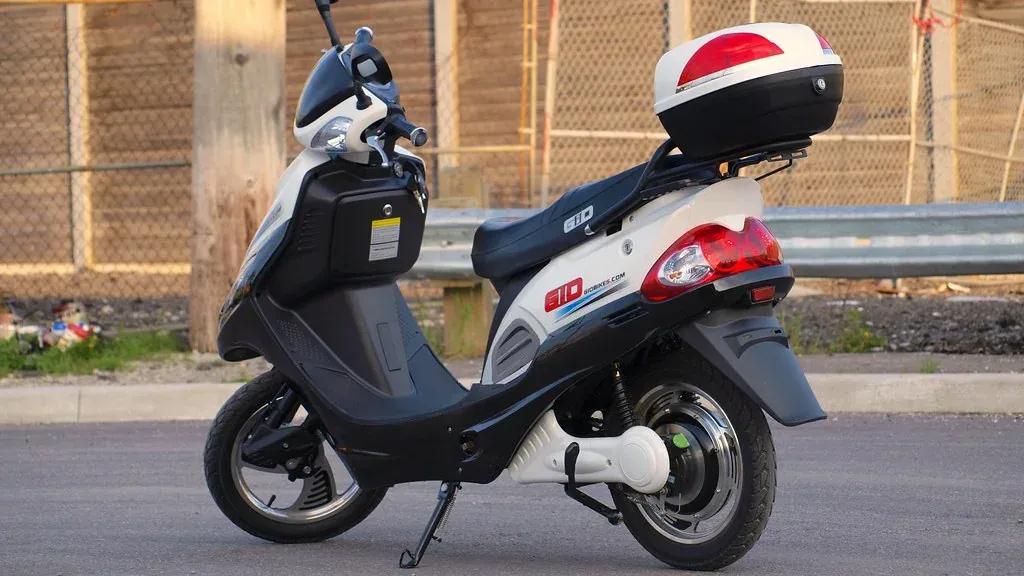
This guide is for riders who need to charge an e-bike or scooter somewhere without a wall socket: apartment blocks that ban indoor pack charging, trailhead car parks, campsites, offices and bikepacking routes. Charging a bike is an unusually clean sizing problem. A pack takes a fixed amount of energy once, it does not cycle like a fridge, and the charger draws so little that inverter ratings never decide anything. That leaves capacity as the only specification that separates these units, so this article spends its time converting pack ratings into the watt-hours a station actually gives up, then dividing. We compared four units on capacity, weight, recharge speed, solar input and rated cycle life. We did not test any of them, and every review states exactly what its recommendation rests on.
What is the best portable power station for an e-bike?
The ALLPOWERS R1500 LITE fits the widest range of riders. Its 1056Wh covers any pack in the usual 400Wh to 750Wh band once over, or two 400Wh commuter packs in the same night through its four AC outlets, and it refills itself in about an hour. If you have to carry the station rather than drive it, the 18.2 lb EcoFlow RIVER 2 Pro is the better buy.
Key takeaways
- A pack costs a station roughly 18% more than its rating, because the inverter and the charger each lose energy
- Inverter output never ranks these units, since a bike charger draws around 100W to 180W and the smallest unit here supplies 800W
- Watt-hours per pound, not weight, tells you which unit is actually efficient to carry
- Solar input matters relative to capacity, so a 600W ceiling on a 960Wh battery beats a 1000W ceiling on a 2048Wh one
- Cycle life never becomes the limit on this job, so the warranty period is the real ownership horizon
Our picks at a glance
Every unit below wins a specific situation rather than a place in a ranking. Pick the row that matches how you will actually use it.
-
Best for two-bike households

ALLPOWERS R1500 LITE
Households with two commuter e-bikes on 400Wh class packs that need both charged overnight from one unit, in a garage or on a balcony rather than carried anywhere.
-
Best for carrying to the bike

EcoFlow RIVER 2 Pro
Riders on 400Wh to 500Wh packs who need to carry the station themselves, into a flat, onto a train, or in a rucksack to a trailhead where the car cannot go.
-
Best for a riding weekend with no wall socket

EcoFlow DELTA 2 Max
Groups and families driving to ride, and bikepackers on 700Wh or larger touring packs who need more than one full charge before they see a socket again.
-
Best for refilling from solar
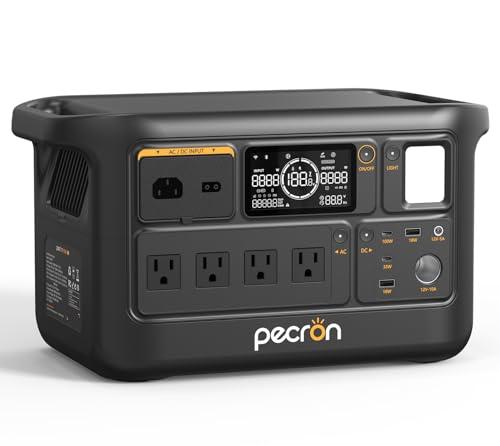
Pecron F1000LFP
Riders charging at a campsite, cabin or off-grid workshop who need panels rather than a socket to put the energy back between rides.
How they compare
Scroll the table sideways to see every column.
| Product | Where to buy | Award | Capacity | Weight | AC output | AC recharge time | Max solar input | Rated cycle life | Best for |
|---|---|---|---|---|---|---|---|---|---|
| ALLPOWERS R1500 LITE | Best for two-bike households | 1056Wh | 33 lb (15.0 kg) | 1600W (3200W surge) | About 1 hour, 1000W standard or 1200W fast AC charging | -- | 3,500+ cycles | Households with two commuter e-bikes on 400Wh class packs that need both charged overnight from one unit, in a garage or on a balcony rather than carried anywhere. | |
| EcoFlow RIVER 2 Pro | Best for carrying to the bike | 768Wh | 18.2 lb (8.3 kg) | 800W | 70 minutes to full | 220W | 3,000 cycles to 80% | Riders on 400Wh to 500Wh packs who need to carry the station themselves, into a flat, onto a train, or in a rucksack to a trailhead where the car cannot go. | |
| EcoFlow DELTA 2 Max | Best for a riding weekend with no wall socket | 2048Wh | 50.7 lb (23.0 kg) | 2400W (3400W X-Boost) | 1.1 hours to 80% on AC, 43 minutes with AC plus solar | 1000W | 3,000 cycles to 80% | Groups and families driving to ride, and bikepackers on 700Wh or larger touring packs who need more than one full charge before they see a socket again. | |
| Pecron F1000LFP | Best for refilling from solar | 960Wh | 23.9 lb (10.8 kg) | 1500W pure sine wave | 50 minutes to 80%, 70 minutes to full at 1000W AC | 600W | -- | Riders charging at a campsite, cabin or off-grid workshop who need panels rather than a socket to put the energy back between rides. |
The full reviews
Best for two-bike households
ALLPOWERS R1500 LITE
ALLPOWERS
At 1056Wh this is the smallest unit here that still empties into two commuter packs before it needs a wall socket, and its four AC outlets mean both chargers run at once instead of in shifts. The trade-off is 33 lb for that capacity, which is the worst watt-hours per pound on this shortlist.
What we like about the ALLPOWERS R1500 LITE
- 1056Wh covers two 400Wh commuter packs from empty with roughly 114Wh to spare after conversion loss
- Four AC outlets let two chargers run simultaneously, so a two-rider household does not queue overnight
- Refills itself in about an hour, which fits between an evening ride and the next morning
- 3,500+ rated cycles and a 5-year warranty outlast the charging routine this unit is bought for
Where it falls short for the ALLPOWERS R1500 LITE
- At 33 lb for 1056Wh it stores 32.0Wh per pound, the lowest of the four units here, and it weighs 14.8 lb more than the RIVER 2 Pro for only 288Wh more
- It does not fully refill two 500Wh packs; two of those need about 1180Wh from the station and this holds 1056Wh, so the second bike finishes short
- No maximum solar input is published for the XT60 port, so you cannot size a panel array against a stated ceiling before buying
Key specifications
- Capacity
- 1056Wh
- AC output
- 1600W (3200W surge)
- Weight
- 33 lb (15.0 kg)
- AC recharge time
- About 1 hour, 1000W standard or 1200W fast AC charging
- Rated cycle life
- 3,500+ cycles
- Warranty
- 5-year warranty
Charging two bikes is a different problem from charging one, and it is the problem this unit is shaped for.
Why two outlets are not enough
Most riders in a two-bike household charge in shifts: one pack overnight, the other the following night. That works until both bikes get ridden on the same day. Four AC outlets and a 1600W inverter mean two chargers, drawing perhaps 150W each, run together with an enormous margin. The inverter is never the constraint here. The battery is.
The arithmetic that sets the ceiling
An AC bike charger running off an inverter loses energy twice, once in the inversion and once in the charger itself. Allow roughly 15% between the station’s rated watt-hours and the energy that lands in the pack, and a 400Wh pack costs about 471Wh of the station’s 1056Wh. Two of them cost 942Wh, leaving around 114Wh spare. That is a genuine two-bike night.
Move up to 500Wh packs and the sum changes. Two of those need roughly 1180Wh, which is more than this unit holds. The first pack fills, leaving about 466Wh in the station, which puts roughly 396Wh into the second pack, so the second bike stops just under 80%. Riders on larger packs should size up rather than assume the outlet count solves it.
What it costs you to carry
This is where the unit gives ground. 1056Wh in a 33 lb body works out at 32.0Wh per pound. The EcoFlow RIVER 2 Pro manages 42.2Wh per pound and the DELTA 2 Max 40.4Wh per pound. Expressed the way a rider feels it, this unit asks you to lift about 18.4 lb for every 500Wh charge it delivers, against 14.0 lb for the RIVER 2 Pro.
None of that matters in a garage. It matters a great deal if the station is going in a car boot every weekend, and it is the reason this is the home pick rather than the travelling one.
Turnaround and lifespan
The roughly one-hour refill is the quietly useful part. Empty it into two packs after work, plug it in, and it is full again before bed. Over a commuting week that removes the planning entirely.
Lifespan is not a concern on this job. A rider charging 500Wh every day of the year moves about 182.5kWh, which is roughly 173 full equivalent cycles against a 3,500+ cycle rating. The 5-year warranty runs out long before the cells do.
Who should look elsewhere
Anyone on a single bike is buying capacity and weight they will not use, and anyone on a 750Wh touring pack is buying a unit that cannot fill it twice. Both of those riders are better served further down this list.
- Best for
- Households with two commuter e-bikes on 400Wh class packs that need both charged overnight from one unit, in a garage or on a balcony rather than carried anywhere.
- Choose something else if
- You ride a 750Wh touring pack, or you need to carry the station any real distance, because 33 lb is a two-hand load and buys less stored energy per pound than anything else here.
Best for carrying to the bike
EcoFlow RIVER 2 Pro
EcoFlow
The RIVER 2 Pro is the only unit on this list light enough to move by hand without planning around it, and 768Wh is still enough to fill a 500Wh pack from empty with headroom left. What it cannot do is cover the largest touring packs, and its solar ceiling is the lowest here.
What we like about the EcoFlow RIVER 2 Pro
- 768Wh in an 18.2 lb body is 42.2Wh per pound, the best stored energy per pound of the four
- Delivers one full 500Wh charge and still holds about 178Wh, roughly a quarter of its capacity, in reserve
- Refills itself in 70 minutes, so a lunch break and a socket puts it back to full
- 10.5 x 10.1 x 8.5 in is small enough to sit in a pannier-sized space rather than needing a boot
Where it falls short for the EcoFlow RIVER 2 Pro
- 768Wh cannot fill a 750Wh pack from empty, which needs about 882Wh from the station once conversion loss is counted, so touring riders finish around 87%
- The 220W maximum solar input means a full refill takes about 3.5 hours of perfect sun, more than double the Pecron F1000LFP's 1.6 hours, and realistically half a day on a real array
- No expansion battery is published for this model, unlike the DELTA 2 Max's stated 2kWh to 6kWh path, so 768Wh is a fixed ceiling you cannot buy your way past if your pack grows
Key specifications
- Capacity
- 768Wh
- Weight
- 18.2 lb (8.3 kg)
- AC output
- 800W
- AC recharge time
- 70 minutes to full
- Max solar input
- 220W
- Rated cycle life
- 3,000 cycles to 80%
Everything about this unit follows from one number: 18.2 lb. It is the only station here you pick up without thinking about it, and that changes where it can be used.
One full charge, honestly counted
An e-bike charger loses energy in the station’s inverter and again in its own conversion. Allow about 15% and a 500Wh pack draws roughly 590Wh from the station. Against 768Wh that leaves around 178Wh, so a full charge lands comfortably and there is still power for a phone, a light and a laptop afterwards.
For a 400Wh scooter or city-bike pack the sum is easier still: about 471Wh spent, leaving nearly 300Wh. This unit is not marginal on those packs, it is generous.
Where the maths stops working
A 750Wh touring pack needs roughly 882Wh from the station. This one holds 768Wh. There is no configuration in which it fills that pack from empty, and no expansion battery to fix it.
That is not a small caveat. It is the single fact that decides whether this unit is the right buy, and it is why bikepackers on large packs should skip to the DELTA 2 Max.
Weight per charge, not weight
Light units usually pay for it in capacity, and the honest measure is how much weight you carry per charge delivered. This unit asks for about 14.0 lb per 500Wh charge. The ALLPOWERS R1500 LITE asks 18.4 lb for the same charge, and the DELTA 2 Max 14.6 lb. So it is not merely the lightest unit here, it is the most efficient one to carry, which is unusual.
The solar limitation
220W is the lowest input ceiling on this list. Filling 768Wh at that rate takes about 3.5 hours in perfect conditions, and real panels rarely deliver their nameplate, so plan on most of a day. For a rider who returns to a socket every night, that is irrelevant. For anyone genuinely off-grid, it is disqualifying, and the Pecron F1000LFP handles that job far better.
Who it suits
Apartment riders who cannot charge a pack indoors and need to take the station out to the bike. Riders who travel by train or share a car. Anyone on a 400Wh or 500Wh pack who values not dreading the lift.
- Best for
- Riders on 400Wh to 500Wh packs who need to carry the station themselves, into a flat, onto a train, or in a rucksack to a trailhead where the car cannot go.
- Choose something else if
- Your pack is 700Wh or larger, or you plan to live off solar for days at a time, because 220W of input makes this the slowest unit here to bring back from empty without a wall socket.
Best for a riding weekend with no wall socket
EcoFlow DELTA 2 Max
EcoFlow
2048Wh is the point where charging stops being rationed. This unit covers three full 500Wh packs and most of a fourth, refills from 1000W of solar in about two hours of ideal sun, and takes expansion batteries to 6kWh if a riding group outgrows it. It is also 50.7 lb, which rules it out of anything you carry.
What we like about the EcoFlow DELTA 2 Max
- 2048Wh delivers three full 500Wh charges plus roughly half of a fourth, or two full 750Wh touring packs
- 1000W maximum solar input refills the whole 2048Wh in about two hours of perfect sun, the fastest absolute solar refill here
- Expandable from 2kWh to 6kWh, which takes a group of riders to around ten 500Wh charges without a socket
- 15 outlets and a 2400W inverter mean several chargers plus a compressor or a laptop run at the same time
Where it falls short for the EcoFlow DELTA 2 Max
- At 50.7 lb it is a two-person lift into a vehicle and cannot be carried to a trailhead, so it only works where the car parks
- Both published recharge figures are partial or assisted, 1.1 hours to 80% on AC and 43 minutes only with AC plus solar, and no AC-only time to 100% is stated, so the last fifth of the battery is an unknown wait before a day of riding
- EcoFlow states 2400W with 3400W X-Boost but does not say pure sine wave in the published AC specification, so a charger whose manual demands a sine waveform for warranty cover needs confirming with EcoFlow first, unlike the Pecron F1000LFP which states it outright
Key specifications
- Capacity
- 2048Wh
- AC output
- 2400W (3400W X-Boost)
- Weight
- 50.7 lb (23.0 kg)
- AC recharge time
- 1.1 hours to 80% on AC, 43 minutes with AC plus solar
- Max solar input
- 1000W
- Expandable
- Yes, from 2kWh to 6kWh with up to 2 extra batteries
This is the only unit here that changes what a trip looks like rather than just making it possible.
Three charges and a bit, not “several days”
Manufacturers like to publish runtime for a fixed low draw. Bike charging is simpler and stricter: a pack of a given size takes a fixed amount of energy, once.
Allowing about 15% for inverter and charger losses, a 500Wh pack costs the station roughly 590Wh. Against 2048Wh that is three full charges with about 278Wh left, enough for a fourth pack to reach roughly halfway. On 750Wh touring packs, each costs about 882Wh, so this unit delivers two full charges and no more. Three riders on large packs will still run it dry in a weekend.
Why the solar number is the real feature
1000W of input against 2048Wh means the whole battery comes back in roughly two hours of ideal sun. Compare that with the RIVER 2 Pro, which needs about 3.5 hours to restore a battery a third of the size, and the difference in a multi-day trip is not subtle. Real arrays deliver well under nameplate, so budget more than two hours, but the ratio holds however you derate it.
That is what makes this a genuinely off-grid unit rather than a large one. It can put back what a day of riding takes out.
The expansion path
Going from 2kWh to 6kWh with extra batteries takes the total to roughly ten 500Wh charges. Very few solo riders need that. A riding club, a rental fleet or a support vehicle for a group tour does, and there is nothing else on this shortlist with a comparable ceiling.
The weight problem is not negotiable
50.7 lb is 32.5 lb more than the RIVER 2 Pro. Per charge delivered it is efficient, about 14.6 lb for every 500Wh, but that only counts if you were carrying it anyway. In practice this unit lives in a vehicle or a shed, and every charge happens within an extension lead of where the car stopped.
If your riding never involves a vehicle, this is the wrong unit no matter how the watt-hours look.
Who should buy it
Two or more riders travelling together. Anyone on a 700Wh-plus pack. Anyone planning more than one night away from a socket. Solo commuters should read the smaller entries instead.
- Best for
- Groups and families driving to ride, and bikepackers on 700Wh or larger touring packs who need more than one full charge before they see a socket again.
- Choose something else if
- You have one commuter bike and a garage socket, or you ever need to move the station without a vehicle, because 50.7 lb is a fixed installation in practice.
Best for refilling from solar
Pecron F1000LFP
Pecron
600W of solar input against a 960Wh battery is the tightest input-to-capacity ratio on this list, which is what makes this the unit to buy if the station has to earn its own power back. It is also the only one whose AC output is explicitly specified as pure sine wave, and the only one with no published cycle life.
What we like about the Pecron F1000LFP
- 600W solar input refills the full 960Wh in about 1.6 hours of ideal sun, less than half the time the RIVER 2 Pro needs for a smaller battery
- 960Wh covers two full 400Wh scooter or city-bike packs with roughly 18Wh to spare
- 1500W pure sine wave output is stated outright, which removes the waveform question for a fussy charger
- 23.9 lb for 960Wh is 40.2Wh per pound, close to the best here while holding a quarter more energy than the RIVER 2 Pro
Where it falls short for the Pecron F1000LFP
- Pecron publishes no cycle life rating for this unit, so there is no manufacturer figure to compare against the 3,000 to 3,500 cycles the others state, and no way to judge how it ages under daily commuter charging
- 960Wh will not fill a 750Wh touring pack twice, or even one 750Wh pack and a 400Wh pack, because those need about 1353Wh together
- The warranty is quoted as 2+3 years rather than the flat 5 years the two EcoFlow units state, so confirm with Pecron what the extra three years depends on before you treat it as five, which matters more here than elsewhere because there is no cycle rating to fall back on
Key specifications
- Capacity
- 960Wh
- AC output
- 1500W pure sine wave
- Weight
- 23.9 lb (10.8 kg)
- AC recharge time
- 50 minutes to 80%, 70 minutes to full at 1000W AC
- Max solar input
- 600W
- UPS switchover
- Within 20ms
Every unit here can charge a bike. This is the one that can charge a bike, then put its own energy back without a building.
The ratio that decides an off-grid trip
The specification that matters when you are away from mains is not capacity and not inverter output. It is how quickly the station converts sunlight back into stored energy, relative to how much it stores.
At 600W of rated input against 960Wh, this unit theoretically refills in about 1.6 hours. The DELTA 2 Max takes around two hours for a much larger battery, and the RIVER 2 Pro about 3.5 hours for a smaller one. Real panels deliver well below nameplate, so treat all three as best cases, but the ordering does not change: this is the unit that recovers fastest relative to its own size.
For a rider doing a loop each day from the same camp, that is the whole game. Ride in the morning, charge the pack in the afternoon while the panels refill the station, repeat.
What it actually holds
Allowing about 15% for inverter and charger losses, a 400Wh pack costs roughly 471Wh. Two of them cost 942Wh against a 960Wh battery, so two scooter or city-bike packs fit with about 18Wh to spare, which is close enough to call it exactly two.
A 500Wh pack costs around 590Wh, so one full charge leaves 370Wh, enough to fill a second pack to about 63%. A 750Wh pack costs about 882Wh and leaves 78Wh, which is a phone and a light, not a second bike.
The gap in the specification sheet
Pecron does not publish a cycle rating for this unit. The other three here state 3,000 to 3,500 cycles or more, and for a commuter charging daily that figure is how you estimate the years you will get.
It is worth being clear about what this does and does not mean. It is not evidence the cells are poor. It is an absence of evidence, and on a purchase you expect to keep for years, an absence is a reason to weigh the 2+3 year warranty more heavily than you otherwise would.
The waveform advantage
This is the only unit on this list whose AC output specification says pure sine wave in as many words. Bike chargers are switch-mode supplies and most tolerate whatever they are given, but manufacturers routinely void warranties over non-sine input. If your charger’s manual is strict about it, buying the unit that states it removes an argument you would otherwise have to have with support.
Who should choose something else
Daily mains chargers who want a published lifespan figure, and anyone on a large touring pack who needs more than one refill.
- Best for
- Riders charging at a campsite, cabin or off-grid workshop who need panels rather than a socket to put the energy back between rides.
- Choose something else if
- You charge daily from mains and want a published cycle rating to judge lifespan by, or you ride a 750Wh touring pack that needs more than one full refill.
How we researched this guide
Four units were compared on published manufacturer specifications and on arithmetic derived from them: charges delivered per pack size, watt-hours per pound, weight carried per charge and solar refill time against rated input. None of these units were charged, ridden with or tested by us, and every review states which sources it relies on and what it does not cover.
The full process is on our how we test portable power stations page, including what counts as hands-on use.
- Units evaluated
- 4
- Used hands-on
- 0
- Assessed from documentation and owner reports
- 4
Evaluation methods used: specification comparison
Which one should you buy?
Match your situation on the left to the recommendation on the right.
-
You have two commuter bikes and both get ridden on the same days
Recommendation: Buy the ALLPOWERS R1500 LITE, whose 1056Wh and four AC outlets cover two 400Wh packs at once
-
You have to carry the station up stairs, onto a train or to a trailhead on foot
Recommendation: Buy the EcoFlow RIVER 2 Pro at 18.2 lb, the only unit here you move one-handed
-
You ride a 700Wh or larger touring pack and need more than one refill
Recommendation: Buy the EcoFlow DELTA 2 Max, the only unit here that fills a 750Wh pack twice
-
You are charging at a campsite or cabin with panels rather than a socket
Recommendation: Buy the Pecron F1000LFP, which puts 600W back into a 960Wh battery
-
You ride one 400Wh scooter or city-bike pack and charge from mains at home
Recommendation: Buy the EcoFlow RIVER 2 Pro, since 768Wh leaves nearly 300Wh spare after a full charge
Mistakes buyers make
- Buying a station whose watt-hour rating matches the pack rating exactly, then finding it stops the charge short because conversion losses were never counted
- Choosing on inverter wattage, which is oversized on every unit here and cannot make a bike charge any faster
- Comparing units on weight alone instead of weight per charge delivered, which reverses the ranking on two of these four
- Assuming a rated solar input means a full refill in that time, when real arrays deliver well below nameplate
- Planning a multi-day trip around a unit that cannot fill your pack even once, which no amount of solar fixes
Our final recommendation
If you want one answer rather than a shortlist, this is the unit that suits the widest range of readers in this category.
Best for two-bike households
Households with two commuter e-bikes on 400Wh class packs that need both charged overnight from one unit, in a garage or on a balcony rather than carried anywhere.
Questions buyers ask
How long does it take to charge an e-bike from a power station?
The same time it takes from a wall socket, because the charger sets the pace, not the station. Most e-bike chargers draw somewhere between 100W and 180W, so a 500Wh pack takes roughly three hours at the fast end of that range and about five at the slow end, before the taper near full. A larger station gives you more charges, never a faster one.
Can I charge the bike while the power station is plugged into the wall?
Only if the unit supports pass-through charging, which not every model does, and it is worth confirming with the maker before you rely on it. When you do have a socket available it is almost always better to plug the charger straight into the wall and leave the station full for when you do not.
Is it safe to charge an e-bike battery from a power station in a car or a tent?
Charge in open air where you can see the pack, never in a sealed vehicle or a zipped tent. Lithium packs give off heat while charging and a damaged or swollen pack should not be charged at all. Keep the station's vents clear too, since these units run cooling fans under load.
Will these charge an electric scooter as well as an e-bike?
Yes, and more times over. Scooter packs are usually smaller than e-bike packs, often in the 250Wh to 500Wh range, so a station that manages one and a half bike charges will typically manage two or three scooter charges. The sizing method in this guide is identical.
Does an e-bike charger need a pure sine wave inverter?
Most e-bike chargers are switch-mode supplies and tolerate a modified waveform, but plenty of manufacturers exclude non-sine input from their warranty. Of the four here, only the Pecron F1000LFP states pure sine wave output in its published AC specification, so check the others with the maker if your charger's manual is strict about it.
About the author