We Compared 4 Portable Power Stations for Projector Movie Nights

Off-grid power editor
Published
Updated
Last fact-checked
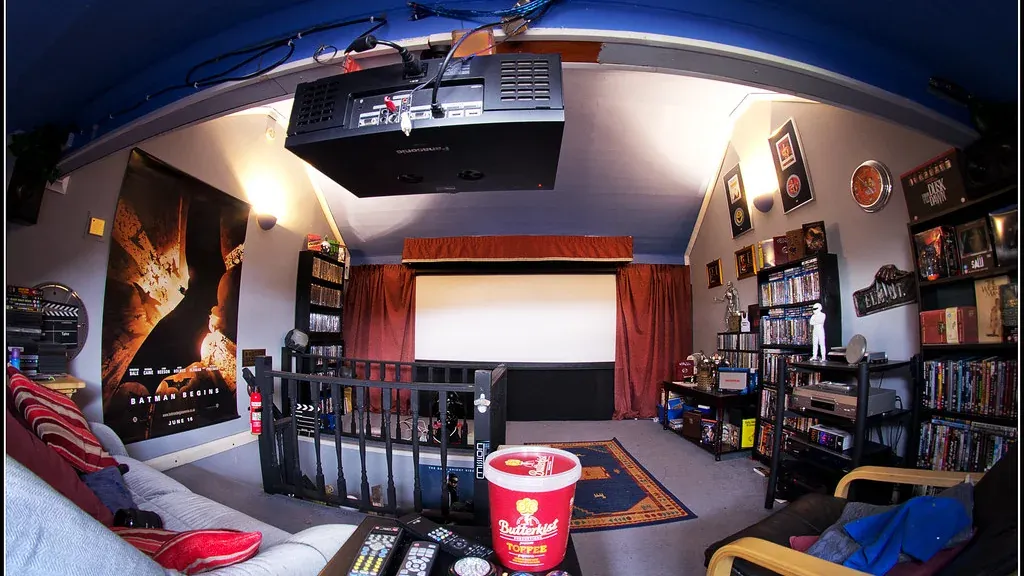
This guide is for anyone running a projector where there is no socket: a backyard screening, a campsite, a tailgate, a rooftop or a classroom with the nearest outlet three rooms away. A projector is one of the easiest loads to size for, because it draws a steady wattage for the whole film rather than cycling like a fridge. The hard part is everything plugged in beside it. We did not test these four units. We compared their published specifications and converted every rated capacity into delivered screening hours across four named rigs, using the same 85% inverter conversion assumption throughout. What you will get here is the arithmetic that decides whether your film finishes, an explanation of why the inflatable screen blower and not the projector sets the inverter you need, and watt-hours per pound for each pick, because this equipment gets carried.
What is the best portable power station for a projector?
The Pecron F1000LFP suits the widest range of projector setups. About 816Wh reaches the outlet, which finishes a two-hour film on a 350W home theater rig with charge to spare, and the 1500W pure sine wave inverter takes the receiver and subwoofer as well. If you carry your projector on foot, the 12.6 lb Jackery Explorer 500 v2 is the better answer.
Key takeaways
- Deduct roughly 15% from any rated capacity before working out how long a projector will run
- A two-hour film on a 350W home theater rig costs about 700Wh delivered, which rules out most sub-800Wh units
- The inverter rating you need is set by the screen blower and the powered speaker, never by the projector itself
- Switchover speed matters to a projector specifically, because a hard cut skips the cooldown fan cycle
- Watt-hours per pound runs from 32.0 to 42.2 across this shortlist, which decides what you will actually carry outside
Our picks at a glance
Every unit below wins a specific situation rather than a place in a ranking. Pick the row that matches how you will actually use it.
-
Best for a bright lamp-based home theater projector
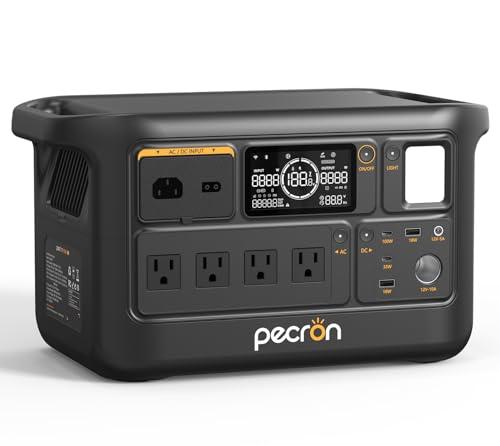
Pecron F1000LFP
Bright lamp-based or laser home theater projectors running with an AV receiver and a powered subwoofer, where the whole rig sits near 350W for a full film.
-
Best for a mainstream 1080p projector carried out to the garden

EcoFlow RIVER 2 Pro
Mainstream 1080p LED or laser projectors around 180W with a streaming stick and a speaker, carried out to a garden, a campsite or a friend's roof terrace.
-
Best for a full backyard cinema with an inflatable screen

ALLPOWERS R1500 LITE
Backyard cinema setups where an inflatable screen blower runs continuously alongside the projector and a powered PA speaker, on a lawn within carrying distance of the house.
-
Best for a pocket projector carried to a park or campsite

Jackery Explorer 500 v2
Pocket and travel projectors around 50W with a small Bluetooth speaker, carried on foot to a park, a campsite, a rooftop or a classroom with no free socket.
How they compare
Scroll the table sideways to see every column.
| Product | Where to buy | Award | Capacity | AC output | Weight | AC recharge time | UPS switchover | Ports | Best for |
|---|---|---|---|---|---|---|---|---|---|
| Pecron F1000LFP | Best for a bright lamp-based home theater projector | 960Wh | 1500W pure sine wave | 23.9 lb (10.8 kg) | 50 minutes to 80%, 70 minutes to full at 1000W AC | Within 20ms | 10 total, 4 AC outlets, 2x USB-A 18W, 1x USB-C 33W, 1x USB-C 100W, DC 5525, car port | Bright lamp-based or laser home theater projectors running with an AV receiver and a powered subwoofer, where the whole rig sits near 350W for a full film. | |
| EcoFlow RIVER 2 Pro | Best for a mainstream 1080p projector carried out to the garden | 768Wh | 800W | 18.2 lb (8.3 kg) | 70 minutes to full | -- | 11 outlets total | Mainstream 1080p LED or laser projectors around 180W with a streaming stick and a speaker, carried out to a garden, a campsite or a friend's roof terrace. | |
| ALLPOWERS R1500 LITE | Best for a full backyard cinema with an inflatable screen | 1056Wh | 1600W (3200W surge) | 33 lb (15.0 kg) | About 1 hour, 1000W standard or 1200W fast AC charging | 15ms | 4 AC outlets, 2x USB-C 100W, 2x USB-A 18W, 120W car outlet, XT60 solar input | Backyard cinema setups where an inflatable screen blower runs continuously alongside the projector and a powered PA speaker, on a lawn within carrying distance of the house. | |
| Jackery Explorer 500 v2 | Best for a pocket projector carried to a park or campsite | 512Wh | 500W (1000W surge) | 12.6 lb (5.7 kg) | 52 minutes to 80% | 10ms | 2 AC sine wave outlets | Pocket and travel projectors around 50W with a small Bluetooth speaker, carried on foot to a park, a campsite, a rooftop or a classroom with no free socket. |
The full reviews
Best for a bright lamp-based home theater projector
Pecron F1000LFP
Pecron
It finishes a two-hour film on a 350W projector rig with about 116Wh left, and it is the lighter of the only two units here that get there at all. The 1500W pure sine wave inverter and four AC outlets take the receiver and subwoofer as well, which is the combination a serious projector setup actually needs. The trade is a 15-inch footprint and a two-handed carry.
What we like about the Pecron F1000LFP
- 960Wh rated works out to roughly 816Wh at the outlet, enough to finish a two-hour film on a 350W home theater rig with about 116Wh spare
- 1500W pure sine wave is more than four times the draw of a 350W projector rig, so the receiver and subwoofer share the unit without argument
- Four AC outlets plus a 100W USB-C port cover the projector, the receiver, a powered subwoofer and a laptop with no power strip
- 600W maximum solar input is the highest figure on this shortlist and refills the full 960Wh in about 1.6 hours of full-rated sun
- Switchover within 20ms means a mains dropout does not become a hard cut, so the projector completes its cooldown on your terms
Where it falls short for the Pecron F1000LFP
- No rated cycle life is published, so there is no number to check nightly use against, unlike the 6,000 cycles quoted for the Explorer 500 v2
- At 23.9 lb with a 15.0-inch footprint it is a two-handed carry that takes more table than most projector shelves have spare
- The switchover is published as a within-20ms ceiling rather than a typical figure, and it is the loosest of the three quoted here, so a classroom projector bridged off mains is better served by the Explorer 500 v2 and its 10ms
- A full backyard rig with a screen blower lands near 580W, which drains the delivered 816Wh in about 1.4 hours and stops short of a feature film
Key specifications
- Capacity
- 960Wh
- AC output
- 1500W pure sine wave
- Weight
- 23.9 lb (10.8 kg)
- AC recharge time
- 50 minutes to 80%, 70 minutes to full at 1000W AC
- UPS switchover
- Within 20ms
- Max solar input
- 600W
- Ports
- 10 total, 4 AC outlets, 2x USB-A 18W, 1x USB-C 33W, 1x USB-C 100W, DC 5525, car port
A projector rig is unusual among battery loads because it is completely steady. There is no compressor cycling, no duty cycle to guess at. The projector draws what it draws for the length of the film, which makes the arithmetic unusually honest.
The two-hour film arithmetic
Assume 85% inverter conversion, the same figure used for every unit in this guide. 960Wh rated becomes about 816Wh at the socket.
A bright lamp-based projector with an AV receiver and a powered subwoofer sits near 350W. A two-hour film at that draw costs 700Wh. The F1000LFP finishes it with roughly 116Wh in hand, which is about 20 minutes of credits and pack-down.
One other unit clears that bar. The R1500 LITE delivers about 898Wh and finishes the same film with 198Wh in hand, a wider margin than this, for nine pounds more to carry. The remaining two do not get there at all. The RIVER 2 Pro delivers about 653Wh and finishes 47Wh short. The Explorer 500 v2 delivers about 435Wh and stops roughly 45 minutes before the end.
Drop the rig to a 180W living-room projector and streaming stick and the same 816Wh runs for about 4.5 hours, which is two films and an episode.
Why the inverter matters even though the load is small
350W is nowhere near 1500W, and that is the point. Headroom is not about the projector. It is about what the projector plugs in next to.
An AV receiver draws its rated wattage in bursts on loud passages rather than as a flat average, and a powered subwoofer does the same. A unit sized tightly to the average will trip on a loud scene. With 1500W continuous behind a 350W average, that never becomes a conversation.
The pure sine wave rating matters for the same equipment. Projector lamp ballasts and AV amplifiers both run switch-mode supplies that are happier on a clean waveform than on a modified one.
The recharge maths
50 minutes to 80% and 70 minutes to full at 1000W AC input. On the 180W living-room setup, one hour on the mains buys roughly 3.9 hours of screening. That ratio is what makes back-to-back nights workable without a second unit.
Off mains, 600W of solar input is the highest ceiling in this group, and it refills the whole 960Wh in about 1.6 hours of full-rated sun. Real skies will stretch that to most of a good afternoon, but it is still nearly three times the 220W ceiling on the RIVER 2 Pro.
Who should pick something else
Anyone whose projector is a pocket unit. 23.9 lb and 960Wh solves a problem a 50W projector does not have, and the Explorer 500 v2 does that job at half the weight. This unit earns its size only when the rig behind the projector is real.
- Best for
- Bright lamp-based or laser home theater projectors running with an AV receiver and a powered subwoofer, where the whole rig sits near 350W for a full film.
- Choose something else if
- You need to carry the unit any distance on foot, or your projector setup is a 50W pocket unit where 23.9 lb and 960Wh is far more equipment than the job needs.
Best for a mainstream 1080p projector carried out to the garden
EcoFlow RIVER 2 Pro
EcoFlow
768Wh inside an 18.2 lb box works out to 42.2Wh per pound, the best energy-to-weight figure on this shortlist. For a mainstream 1080p projector carried out to the garden and back every weekend, that ratio matters more than any single specification. It falls down on a big lamp-based rig, where it runs out just before the credits.
What we like about the EcoFlow RIVER 2 Pro
- 42.2Wh per pound is the best energy-to-weight ratio here, ahead of the Explorer 500 v2 at 40.6 and the R1500 LITE at 32.0
- About 653Wh reaches the outlet, which is roughly 3.6 hours on a 180W projector, streaming stick and speaker setup
- 70 minutes to full means a dinner break puts a whole double feature back into the pack
- 11 outlets on a 10.5 x 10.1 inch footprint is more sockets than the far larger R1500 LITE offers
- 3,000 cycles to 80% is roughly 57 years at one full cycle per weekly movie night
Where it falls short for the EcoFlow RIVER 2 Pro
- 653Wh delivered finishes about 47Wh short of a two-hour film on a 350W home theater rig, so a big projector setup will cut out during the last reel
- No UPS switchover time is published, so it cannot be relied on to carry a projector through a mains dropout without a hard cut
- The 220W solar ceiling means a full 768Wh refill needs 3.5 hours of full-rated sun and considerably longer under real skies
- No surge or peak output figure is published at all, so the 800W continuous rating is the only number available to size a screen blower's start-up inrush against, and nothing on the spec sheet rules out a shutdown at the moment the screen goes up
Key specifications
- Capacity
- 768Wh
- AC output
- 800W
- Weight
- 18.2 lb (8.3 kg)
- AC recharge time
- 70 minutes to full
- Ports
- 11 outlets total
- Rated cycle life
- 3,000 cycles to 80%
- Max solar input
- 220W
Projector power stations get carried. That is the whole difference between this category and home backup, where the unit sits in a cupboard and weight barely registers. Here it goes out to the lawn before the film and back to the garage after, twice a night if the weather turns.
Watt-hours per pound, in full
Divide rated capacity by weight and this shortlist separates cleanly:
- RIVER 2 Pro: 768Wh over 18.2 lb is 42.2Wh per pound
- Explorer 500 v2: 512Wh over 12.6 lb is 40.6Wh per pound
- F1000LFP: 960Wh over 23.9 lb is 40.2Wh per pound
- R1500 LITE: 1056Wh over 33 lb is 32.0Wh per pound
The Explorer 500 v2 is lighter in absolute terms and easier to carry one-handed. But per pound of effort, this unit returns the most stored energy of anything here, and it does it in a 10.5 by 10.1 inch box that takes up less table than the projector does.
What 653Wh actually covers
At 85% conversion, 768Wh rated becomes roughly 653Wh at the socket. Against three named rigs:
- 50W pocket projector and a small speaker: about 13 hours
- 180W 1080p projector, streaming stick and speaker: about 3.6 hours
- 350W lamp-based projector with a receiver: about 1.9 hours
The middle line is what this unit is for. Two films back to back, with enough left over to pack down with the lights on.
The bottom line is the honest problem. A two-hour film at 350W costs 700Wh. This delivers 653Wh. It gets you to roughly 1 hour 52 minutes and then stops, which is the worst possible moment for it to happen.
The recharge ratio is the quiet advantage
70 minutes to full, from empty. On the 180W setup that means every hour on the mains returns about 3.1 hours of screening. Plug it in while you eat and the second night is fully covered.
Solar is the weak side. 220W maximum means 3.5 hours of full-rated sun for a complete refill, against 600W on the F1000LFP. If your screenings happen at a campsite with no mains at all, that gap decides the purchase.
Who should pick something else
Anyone running a bright projector with an AV receiver under it. The arithmetic above is not close enough to gamble a film night on, and the F1000LFP exists for exactly that rig. The case for this unit is the walk out to the lawn and the 70-minute refill waiting for you afterwards, not the size of the pack.
- Best for
- Mainstream 1080p LED or laser projectors around 180W with a streaming stick and a speaker, carried out to a garden, a campsite or a friend's roof terrace.
- Choose something else if
- Your projector rig sits near 350W with a receiver attached, or you need a published switchover figure because the unit doubles as mains backup indoors.
Best for a full backyard cinema with an inflatable screen
ALLPOWERS R1500 LITE
ALLPOWERS
An inflatable screen needs a blower running for the whole film, and that motor, not the projector, is what breaks smaller units. 1600W continuous with 3200W surge starts it without drama and still leaves room for a projector and a PA speaker. You pay for that in weight: 33 lb and 16.3 inches tall.
What we like about the ALLPOWERS R1500 LITE
- 1600W continuous with 3200W surge starts a screen blower motor and still carries a projector and a powered PA speaker on top
- 1056Wh is the largest pack here and delivers about 898Wh, roughly 2.5 two-hour films on a 180W setup
- Four AC outlets plus two 100W USB-C ports run the projector, the blower, a speaker and two laptops at once
- About one hour to full is the best charge-to-runtime ratio on this list, returning around five hours of a 180W setup per hour on the mains
- 15ms switchover holds the projector through a mains dropout, and 3,500+ cycles is about 67 years of weekly screenings
Where it falls short for the ALLPOWERS R1500 LITE
- At 33 lb it returns only 32.0Wh per pound, the worst energy-to-weight figure here, and at 16.3 inches tall it will not slide under a garden table
- A full rig with the blower running lands near 580W and empties the delivered 898Wh in about 1.5 hours, so the 1600W inverter buys headroom rather than screening time
- No maximum solar input figure is published, so an off-grid recharge plan cannot be sized from the specification sheet
- The AC output is published as 1600W with 3200W surge and never states the waveform, so an AV receiver or a projector power supply that wants a clean sine wave has nothing on the spec sheet to confirm it, unlike the F1000LFP
Key specifications
- Capacity
- 1056Wh
- AC output
- 1600W (3200W surge)
- Weight
- 33 lb (15.0 kg)
- AC recharge time
- About 1 hour, 1000W standard or 1200W fast AC charging
- UPS switchover
- 15ms
- Ports
- 4 AC outlets, 2x USB-C 100W, 2x USB-A 18W, 120W car outlet, XT60 solar input
- Rated cycle life
- 3,500+ cycles
Every other unit in this guide is sized around a projector. This one is sized around the thing standing behind it.
The blower is the real load
An inflatable movie screen stays up because a blower runs the entire time. It is not a start-and-stop load like a compressor; it draws continuously from the moment you inflate the screen to the moment the film ends.
A typical garden-scale blower sits in the region of 150W to 200W running, with a brief inrush at start-up that is several times higher. Add a 300W projector and a 100W powered PA speaker and the rig sits near 580W all evening.
580W is inside the 800W ceiling on the RIVER 2 Pro and well outside the 500W ceiling on the Explorer 500 v2. It is nowhere near the 1600W on this unit, which is exactly the margin you want when the blower kicks in and the projector is already running.
What 3200W surge is and is not
The surge figure covers the instant a motor starts, when inrush current spikes and then collapses within a fraction of a second. It does not raise the continuous ceiling. Anything that runs for the length of a film is judged against 1600W, not 3200W.
That distinction is worth understanding before you assume a smaller unit with a big boost number can do this job. Boost modes on other units typically reach their headline wattage by lowering output voltage, which helps a heater and does nothing for a motor that needs voltage to make torque.
Where the capacity runs out
1056Wh rated delivers about 898Wh at 85% conversion. Against the rig above:
- Projector, blower and PA at 580W: about 1.5 hours
- Projector and speaker only at 180W: about 5.0 hours
- Pocket projector rig at 50W: about 18 hours
The first line is the one that matters, and it is short of a feature film. A two-hour screening with the blower running costs about 1160Wh delivered, which is more than this holds. The practical answer is to inflate the screen, run the blower on a low setting or intermittently once it is up, and treat the 1.5-hour figure as a worst case rather than a plan.
The recharge ratio saves it
About one hour to full is the strongest charge-to-runtime ratio here. On the 180W setup, an hour on the mains returns roughly five hours of screening. If your cinema is 30 feet from a garage socket, that changes what this unit is: not a single-charge solution, but one you can top up between the double feature.
Who should pick something else
Anyone without a blower. 33 lb and 32.0Wh per pound is a poor trade if the extra headroom sits idle, and the RIVER 2 Pro carries 768Wh in a little over half the weight. Buy this because your screen inflates, not because the number is bigger.
- Best for
- Backyard cinema setups where an inflatable screen blower runs continuously alongside the projector and a powered PA speaker, on a lawn within carrying distance of the house.
- Choose something else if
- You carry the unit any real distance, or your setup is a projector and a small speaker only, where 33 lb buys headroom you will never use.
Best for a pocket projector carried to a park or campsite
Jackery Explorer 500 v2
Jackery
12.6 lb is the difference between a power station you bring and one you leave at home. Matched to a pocket projector and a small speaker it runs all evening and then some, and its 10ms switchover is the fastest here. Matched to anything with a receiver behind it, the 500W ceiling and 435Wh delivered end the film early.
What we like about the Jackery Explorer 500 v2
- 12.6 lb in a 12.2 x 6.2 x 8.1 inch case is the only unit here you carry a mile without thinking about it
- About 435Wh reaches the outlet, which is roughly 8.7 hours on a 50W pocket projector and speaker
- 10ms switchover is the fastest figure on this shortlist and holds a projector through a mains dropout so the cooldown fan still runs
- 6,000 charge cycles is roughly 115 years at one full cycle per weekly screening, or 16 years of nightly use
- 52 minutes to 80% puts about 348Wh back, close to two hours of a 180W projector setup
Where it falls short for the Jackery Explorer 500 v2
- Two AC outlets is the entire allowance, so a projector and a powered speaker fill the unit and anything else needs a power strip
- 435Wh delivered runs a 350W home theater rig for about 1.2 hours, stopping a two-hour film roughly 45 minutes before the end
- 500W continuous will not carry a backyard rig with an inflatable screen blower, which lands near 580W and simply will not start
- No maximum solar input is published, so a campsite recharge cannot be planned from the specification sheet
Key specifications
- Capacity
- 512Wh
- AC output
- 500W (1000W surge)
- Weight
- 12.6 lb (5.7 kg)
- AC recharge time
- 52 minutes to 80%
- UPS switchover
- 10ms
- Rated cycle life
- 6,000 charge cycles
- Dimensions
- 12.2 x 6.2 x 8.1 in
The other three units in this guide are things you wheel or lug to the lawn. This one goes in the same bag as the projector, and that changes which screenings it is good at.
Size it to the projector class, not to the idea of a projector
Projectors span an enormous power range, so the honest approach is to name the setup. At 85% conversion, 512Wh rated becomes about 435Wh at the socket:
- 50W pocket projector and a small Bluetooth speaker: about 8.7 hours
- 180W 1080p projector, streaming stick and speaker: about 2.4 hours
- 350W lamp-based projector with an AV receiver: about 1.2 hours
The first line is why this unit is here. A travel projector runs an entire weekend of evenings from one charge, and the whole kit weighs less than the F1000LFP on its own.
The third line is why it is last on this list. A two-hour film at 350W costs 700Wh delivered, and 435Wh stops you about 45 minutes short. That is not a shortfall you notice at the end; it is one that ends the evening in the middle of the third act.
Where the 500W ceiling stops you
A 350W projector rig is inside the rating. A backyard rig with an inflatable screen is not. Blower, projector and PA together land near 580W, which is above the continuous rating, so the unit will not run that combination at all no matter how full it is.
The surge figure of 1000W covers the instant a motor starts, not the load it settles into. For anything running the length of a film, 500W is 500W.
The two-outlet limit bites in a quieter way. A projector and a powered speaker use both sockets, so a laptop, a second speaker or a phone charger means adding a strip and pushing everything through one of the two.
The switchover figure is genuinely useful here
10ms is the fastest on this shortlist, and it matters more for a projector than for most equipment. Lamp and laser projectors run a cooling fan for a period after shutdown. A hard power cut skips that cycle, which is exactly what you are trying to avoid.
If you are using this indoors as a mains bridge for a classroom or meeting-room projector, that 10ms figure is the specification to buy on.
Cycle life you will never reach
6,000 cycles is an unusual figure at this size. At one full cycle per weekly movie night, that is around 115 years. Even at a full cycle every single night it is over 16 years. In practice the pack will age out on calendar time long before you get near the cycle count, which is a comfortable position to be in.
- Best for
- Pocket and travel projectors around 50W with a small Bluetooth speaker, carried on foot to a park, a campsite, a rooftop or a classroom with no free socket.
- Choose something else if
- Your projector rig draws more than about 200W, or you need more than two AC sockets for a receiver, a subwoofer or a screen blower.
How we researched this guide
Four units were compared on published manufacturer specifications and documented load ranges for projector equipment. None of them were tested by us with a projector, screen or speaker, and every review states which sources its recommendation rests on. All runtime figures assume 85% inverter conversion.
The full process is on our how we test portable power stations page, including what counts as hands-on use.
- Units evaluated
- 4
- Used hands-on
- 0
- Assessed from documentation and owner reports
- 4
Evaluation methods used: specification comparison, documentation and owner-report research, editorial selection
Which one should you buy?
Match your situation on the left to the recommendation on the right.
-
You run a bright lamp-based or laser projector with an AV receiver
Recommendation: Buy the Pecron F1000LFP for its 816Wh delivered and 1500W pure sine wave output
-
Your screen inflates and a blower runs for the whole film
Recommendation: Buy the ALLPOWERS R1500 LITE, the only unit here with 1600W continuous and 3200W surge
-
You carry a pocket projector on foot to a park or a campsite
Recommendation: Buy the Jackery Explorer 500 v2 at 12.6 lb with 10ms switchover
-
You want the most screening hours for every pound you carry
Recommendation: Buy the EcoFlow RIVER 2 Pro at 42.2Wh per pound in an 18.2 lb case
-
You screen films off-grid and recharge from solar panels between nights
Recommendation: Buy the Pecron F1000LFP for its 600W solar ceiling, nearly three times the RIVER 2 Pro
Mistakes buyers make
- Sizing on the projector's rated wattage alone and forgetting the powered speaker, the streaming stick and the screen blower sharing the same unit
- Reading rated capacity as delivered energy, when inverter conversion takes roughly 15% before anything reaches the projector
- Buying a unit whose continuous rating clears the projector but not the blower motor holding an inflatable screen up
- Assuming a surge or boost mode raises the ceiling for a load that runs all evening, when it only covers the instant a motor starts
- Planning a double feature on a pack that barely finishes one film, then losing the picture during the third act
Our final recommendation
If you want one answer rather than a shortlist, this is the unit that suits the widest range of readers in this category.
Best for a bright lamp-based home theater projector
Bright lamp-based or laser home theater projectors running with an AV receiver and a powered subwoofer, where the whole rig sits near 350W for a full film.
Questions buyers ask
How many watts does a projector actually use?
It depends far more on the light source than on the brand. Pocket and travel projectors typically land between 30W and 60W. A mainstream 1080p LED or laser unit for a living room sits nearer 150W to 200W. A bright lamp-based home theater projector can reach 250W to 350W. The label on the power brick is the number to trust, not the marketing page.
Will a portable power station damage my projector?
No. Projector power supplies are switch-mode designs and run happily from the pure sine wave output these units produce. The Pecron F1000LFP states pure sine wave explicitly in its specifications. What can cause trouble is an abrupt loss of power rather than the waveform itself.
Do I need to let the projector cool down before disconnecting?
Yes. Lamp and laser projectors run a cooling fan for a period after you shut them down, and pulling the power mid-cycle skips it. Shut the projector down properly, wait for the fan to stop, then switch the power station off. This is also why the published switchover figures are worth reading.
Can one unit run a projector and an inflatable movie screen?
Yes, but only the larger ones. The blower keeping the screen up runs continuously, so a projector, a PA speaker and a blower together sit near 580W. That is above the 500W ceiling on the Explorer 500 v2 and comfortable on the 1600W R1500 LITE. Expect a shorter evening, because that draw empties any pack on this list inside two hours.
Will the cooling fan be loud during a quiet scene?
We have not measured fan noise on any of these units, so we will not claim a figure. What is predictable is when the fans work hardest: under heavy load and during fast charging. Charge before the film rather than during it, and keep the unit off the same table as the microphone or the speaker.
About the author