Car Camping Power Stations: 4 Compared Against a 550Wh Camp Day

Off-grid power editor
Published
Updated
Last fact-checked
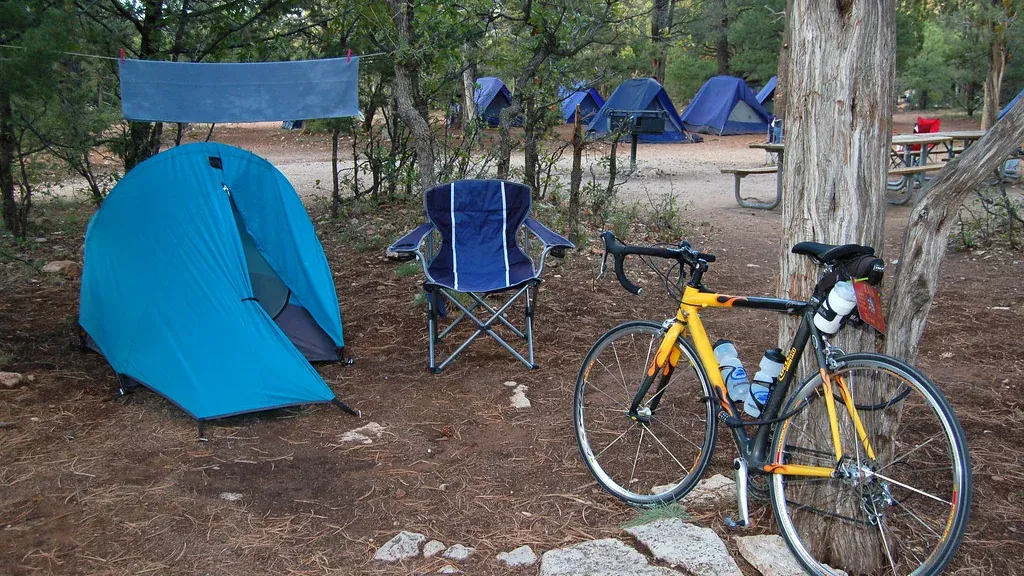
This guide is for people who drive to a campsite, sleep in or beside the car for two or three nights, and want a 12V fridge to survive the weekend without the engine running. Because the vehicle carries the unit, weight is a secondary concern here and we do not rank by it. We compared four units on the things that actually decide a trip: how much energy they hold, how much space they take in a loaded car, whether a fridge can run on DC, and how you put charge back at a site with no hookup. We did not test any of them, and every review says exactly what its recommendation rests on. What you get here is the arithmetic no retail listing will do for you. We build one realistic camping day in watt-hours, divide each capacity by it, and show what that leaves on the third morning.
What is the best portable power station for car camping?
The Goal Zero Yeti 1500 suits the most car campers. Its 1505Wh pack covers about 2.7 days of a realistic 550Wh camping day, further than anything else here, its 2000W inverter is the largest rating on the page and leaves 500W spare while a 1500W induction hob runs, and it publishes a 12V vehicle outlet so a compressor fridge can skip the inverter. It pays for that in 52.9 lb and the bulkiest case here at 2,151 cubic inches, both of which the car absorbs.
Key takeaways
- A realistic car camping day comes to about 550Wh, and the fridge is roughly 70% of it
- Dividing rated capacity by that figure gives 1.9 to 2.7 days across this shortlist, so none of the four clears three full days on one charge
- Running a 12V fridge through the inverter instead of a DC outlet costs about 200Wh across a three-night trip
- Watt-hours per cubic inch of packed volume varies by 43% here, and no manufacturer publishes it
- Two pots of drip coffee a day cost nearly as much energy as running the fridge all day
- Cycle life ratings are irrelevant at camping frequencies and should not influence the choice
Our picks at a glance
Every unit below wins a specific situation rather than a place in a ranking. Pick the row that matches how you will actually use it.
-
Best for cooking on electricity at camp
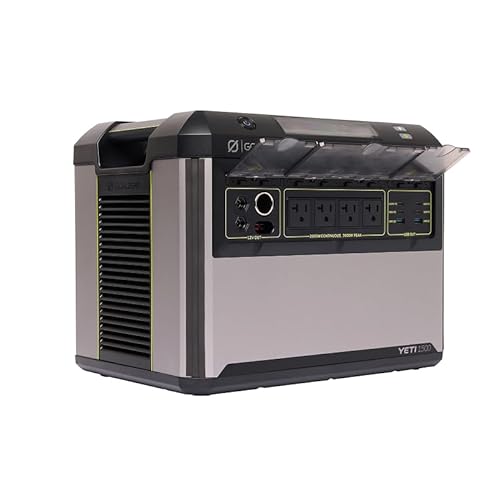
Goal Zero Yeti 1500 (6th Gen)
Campers who drive to a site for two nights, run a 12V fridge the whole time, and want to boil water or cook on electricity rather than gas, with enough margin left that a third night only needs a modest top-up.
-
Best for a car that is already full

EcoFlow DELTA 3 Plus
Two-night trips in a car with no spare floor space, where the unit has to share a footwell with luggage and still come out easily.
-
Best for recharging at camp from solar

BLUETTI AC180
Campers who stay put for three nights or more at a site with sun and are willing to carry folding panels and reposition them through the day.
-
Best for running a fridge and laptops with the inverter off

ALLPOWERS R1500 LITE
Two-night camps built around a 12V fridge and laptops, where you want the whole day to run on DC and the inverter reserved for cooking.
How they compare
Scroll the table sideways to see every column.
| Product | Where to buy | Award | Capacity | AC output | Weight | AC recharge time | Ports | Dimensions | Best for |
|---|---|---|---|---|---|---|---|---|---|
| Goal Zero Yeti 1500 (6th Gen) | Best for cooking on electricity at camp | 1505Wh | 2000W (3600W surge) | 52.9 lb (24.0 kg) | Under 1 hour from 0% to 80% from the wall | 4 AC outlets, 6 USB outlets (including a 140W USB-C), 12V vehicle outlet, HPP output, 2 x 6mm outlets | 12 x 11.38 x 15.75 in | Campers who drive to a site for two nights, run a 12V fridge the whole time, and want to boil water or cook on electricity rather than gas, with enough margin left that a third night only needs a modest top-up. | |
| EcoFlow DELTA 3 Plus | Best for a car that is already full | 1024Wh | 1800W | 27 lb (12.2 kg) | 40 minutes to 80% on 1500W AC input | Runs 13 appliances at once | 16 x 8 x 11 in | Two-night trips in a car with no spare floor space, where the unit has to share a footwell with luggage and still come out easily. | |
| BLUETTI AC180 | Best for recharging at camp from solar | 1152Wh | 1800W (2700W Power Lifting) | 35.3 lb (16.0 kg) | 45 minutes to 80% | 11 total, 4 AC outlets | -- | Campers who stay put for three nights or more at a site with sun and are willing to carry folding panels and reposition them through the day. | |
| ALLPOWERS R1500 LITE | Best for running a fridge and laptops with the inverter off | 1056Wh | 1600W (3200W surge) | 33 lb (15.0 kg) | About 1 hour, 1000W standard or 1200W fast AC charging | 4 AC outlets, 2x USB-C 100W, 2x USB-A 18W, 120W car outlet, XT60 solar input | 12.3 x 10.4 x 16.3 in | Two-night camps built around a 12V fridge and laptops, where you want the whole day to run on DC and the inverter reserved for cooking. |
The full reviews
Best for cooking on electricity at camp
Goal Zero Yeti 1500 (6th Gen)
Goal Zero
The Yeti 1500 is the only unit on this shortlist that can run a 1500W induction hob and still have 500W of inverter left for anything else, and its 1505Wh pack goes furthest before it needs charge back, though at 2.7 days it stops about 145Wh short of three full camping days. You pay for that in 52.9 lb of dead weight, which is fine in a boot and miserable anywhere else.
What we like about the Goal Zero Yeti 1500 (6th Gen)
- 1505Wh is the largest pack here, covering about 2.7 camping days at our 550Wh daily budget
- 2000W continuous with a 3600W surge figure is the highest rating here, leaving 500W spare over a 1500W induction hob where the 1800W units leave 300W and the R1500 LITE leaves 100W
- Publishes a 12V vehicle outlet, so a compressor fridge can run on DC instead of through the inverter
- 6 USB outlets including a 140W USB-C cover a car full of phones, cameras and a laptop without an adapter brick
- The aluminium case and rubber bumpers suit a unit that lives in a boot with folding chairs on top of it
Where it falls short for the Goal Zero Yeti 1500 (6th Gen)
- At 52.9 lb it stores 28.4 watt-hours per pound, the worst ratio of these four, and it is a two-hand lift over a tailgate
- The 12 x 11.38 x 15.75 in case is 2,151 cubic inches, the bulkiest here, and with no dimension under 11.38 in it will not lie flat in a shallow drawer or slide into a footwell
- No maximum solar input is published, so you cannot size a panel array from the spec sheet before buying
- Under an hour to 80% is a wall figure, and at 80% you are storing 1204Wh rather than the 1505Wh on the box
Key specifications
- Capacity
- 1505Wh
- AC output
- 2000W (3600W surge)
- Weight
- 52.9 lb (24.0 kg)
- Ports
- 4 AC outlets, 6 USB outlets (including a 140W USB-C), 12V vehicle outlet, HPP output, 2 x 6mm outlets
- AC recharge time
- Under 1 hour from 0% to 80% from the wall
- Rated cycle life
- 4,000 cycles
- Dimensions
- 12 x 11.38 x 15.75 in
Most car camping guides sort by weight. That is the wrong axis when a vehicle does the carrying. The Yeti 1500 wins here on the two numbers that decide a long weekend: how much energy it holds, and how big a load it can start.
Why the capacity matters more than the pounds
Our camping day budget, built in the buying guide, comes to about 550Wh: a 12V compressor fridge averaging roughly 16W across its duty cycle, two phones, five hours of lighting, one device top-up and a set of camera batteries.
Divide 1505Wh by 550Wh and you get 2.7 days. That is a Friday evening to a Sunday afternoon with margin, from a single charge, with no panel and no engine running. The 1152Wh, 1056Wh and 1024Wh units on this page come in at 2.1, 1.9 and 1.9 days respectively. On a weekend that difference is the whole argument.
Be clear about the limit, though. Three full camping days cost 1650Wh, so 1505Wh lands about 145Wh short. The Yeti gets nearest to a three-night trip; it does not cover one outright, and nothing on this shortlist does.
The inverter headroom nobody uses until they do
2000W continuous sounds like overkill for camping until someone brings an induction hob. A 1500W hob leaves 500W of headroom on the Yeti. The 1800W BLUETTI AC180 and EcoFlow DELTA 3 Plus leave 300W, and the 1600W ALLPOWERS R1500 LITE leaves 100W, which is not enough to also charge a laptop while dinner cooks.
The published 3600W surge figure applies at start-up, not to a sustained draw, so treat 2000W as the working ceiling. It is still the highest on this page.
The port panel is the underrated part
Four AC outlets and six USB outlets is a lot of simultaneous plugs for four people around one table, and the 140W USB-C port charges a modern laptop directly rather than through the inverter and a wall brick. Skipping that conversion step saves real watt-hours over three days.
The published 12V vehicle outlet is the more important one. A camping fridge designed for a car socket can run on DC instead of being converted up to 120V and back down again by its own adapter. We work through what that costs in the buying guide.
Where it stops making sense
At 28.4 watt-hours per pound this is the least energy-dense unit here. The EcoFlow DELTA 3 Plus stores 37.9. If your camping ever involves walking the unit to a pitch, or lifting it into a roof box, that gap is punishing.
It is also the biggest box here at 2,151 cubic inches, and its smallest dimension is 11.38 inches, so there is no orientation that makes it slim. Measure before you buy if it is going under a bed platform.
And 4,000 rated cycles is a number to ignore rather than admire. At twenty full cycles a year you would need two centuries to reach it.
- Best for
- Campers who drive to a site for two nights, run a 12V fridge the whole time, and want to boil water or cook on electricity rather than gas, with enough margin left that a third night only needs a modest top-up.
- Choose something else if
- You ever carry the unit more than a few paces from the vehicle, or your storage space is a drawer or a platform with less than 12 inches of clearance.
Best for a car that is already full
EcoFlow DELTA 3 Plus
EcoFlow
The DELTA 3 Plus fits 1024Wh into a 16 x 8 x 11 in case, which is the best use of packed volume on this page and the reason it survives a car that is already carrying a tent, a cooler and three people. The trade is capacity: it is the smallest pack here and a third night needs the expansion battery you were trying to avoid packing.
What we like about the EcoFlow DELTA 3 Plus
- 0.73 watt-hours per cubic inch of case volume, the densest packing on this shortlist
- The 8-inch width slides into a footwell or between kit rather than needing its own square of boot floor
- 27 lb is light enough for a one-handed lift, so it can move to the picnic table and back
- Recharges to 80% in 40 minutes on 1500W AC input, the fastest turnaround here
- Expands to 5kWh with a DELTA 3, DELTA Pro 3 or DELTA 2 Max battery pack, so a bigger trip does not mean a new unit
Where it falls short for the EcoFlow DELTA 3 Plus
- 1024Wh is the smallest pack here and covers about 1.9 days of our 550Wh camping budget, so a two-night weekend finishes with nothing spare and a three-night trip is a whole day short
- The expansion battery that fixes that is a second box in the car, which cancels the space advantage that made this the pick
- The published port line is "runs 13 appliances at once" with no itemised 12V DC outlet, so we cannot confirm a fridge can bypass the inverter
- No maximum solar input is published, so you cannot plan a panel array from the spec sheet
Key specifications
- Capacity
- 1024Wh
- AC output
- 1800W
- Weight
- 27 lb (12.2 kg)
- Dimensions
- 16 x 8 x 11 in
- AC recharge time
- 40 minutes to 80% on 1500W AC input
- Expandable
- Yes, up to 5kWh with DELTA 3, DELTA Pro 3 or DELTA 2 Max battery packs
- Warranty
- 5 years
Space in a loaded car is a harder constraint than weight, and it is the one no spec sheet ranks. The DELTA 3 Plus wins that comparison outright.
The volume arithmetic
Multiply the stated dimensions and you get packed volume in cubic inches:
- DELTA 3 Plus, 16 x 8 x 11 in: 1,408 cubic inches holding 1024Wh, or 0.73Wh per cubic inch
- Goal Zero Yeti 1500, 12 x 11.38 x 15.75 in: 2,151 cubic inches holding 1505Wh, or 0.70Wh per cubic inch
- ALLPOWERS R1500 LITE, 12.3 x 10.4 x 16.3 in: 2,085 cubic inches holding 1056Wh, or 0.51Wh per cubic inch
The gap that matters is the last one. The ALLPOWERS occupies 48% more space than the DELTA for 32Wh more energy. If your car is full, that is the difference between the unit fitting and the camp chairs staying home.
The 8-inch width is the practical part. It is the only dimension under nine inches on this page, and it is what lets the unit go in a footwell on its side rather than claiming a square of boot floor.
What 1024Wh actually covers
At the 550Wh camping day used across this guide, 1024Wh is 1.9 days. In plain terms: it will get you through Friday night and Saturday, and on Sunday morning the fridge is the last thing still drawing.
That just covers the two-night trip most people take, with no margin for a warm weekend or a fridge that cycles harder than our budget assumes. It is a full day short of three nights unless you add solar, and EcoFlow does not publish a maximum solar input for this unit, so you cannot size an array from the sheet.
The expansion path, and its catch
Adding a DELTA 3, DELTA Pro 3 or DELTA 2 Max battery pack takes the system to 5kWh. That is nine camping days at our budget and comfortably more than anyone needs for a weekend.
The catch is honest and worth stating plainly: that battery is another box in the car. If you bought this unit because it packs small, an expansion battery undoes the reason you bought it. Campers who know they will need three nights regularly should start with a bigger single pack instead.
The recharge speed is the quiet advantage
40 minutes to 80% on 1500W input means 819Wh recovered while you shower and load the car. Nobody plans a trip around that, but it is the specification that rescues the person who forgot to charge the unit the night before. The 10ms switchover and 4,000 rated cycles are real, but neither will change a camping purchase.
- Best for
- Two-night trips in a car with no spare floor space, where the unit has to share a footwell with luggage and still come out easily.
- Choose something else if
- You camp three nights or longer without a panel, or you need a documented 12V DC outlet so a compressor fridge can skip the inverter entirely.
Best for recharging at camp from solar
BLUETTI AC180
BLUETTI
The AC180 is the only unit on this shortlist that publishes a solar input ceiling, and at 500W it is high enough to accept a 400W folding array, which on a clear day returns roughly twice what our camping budget spends. That turns a two-night battery into an open-ended one, which is the single most useful thing a power station can do at a site with no hookup.
What we like about the BLUETTI AC180
- 500W maximum solar input, the only published ceiling on this shortlist, so a panel array can be sized before you buy
- 1152Wh covers about 2.1 days of our 550Wh camping budget without any recharging at all
- 45 minutes to 80% from the wall recovers 922Wh while you finish packing the car
- 1800W continuous leaves 300W of headroom over a 1500W kettle or hob
- 3,500 rated cycles to 80% on LiFePO4, which at camping frequencies is effectively permanent
Where it falls short for the BLUETTI AC180
- The spec sheet lists expandable as "No", so 1152Wh is a hard ceiling and the only way to add capacity is to buy a second unit
- Power Lifting reaches 2700W by lowering output voltage, so it applies to a kettle and never to the compressor in your camping fridge
- The published port list is "11 total, 4 AC outlets" with no itemised 12V DC socket, so on the one job this guide is about, running a compressor fridge without the inverter, you cannot confirm the unit does it before you buy
- No case dimensions are published, so you cannot check it fits a drawer or a bed platform before it arrives
Key specifications
- Capacity
- 1152Wh
- AC output
- 1800W (2700W Power Lifting)
- Weight
- 35.3 lb (16.0 kg)
- Max solar input
- 500W
- AC recharge time
- 45 minutes to 80%
- UPS switchover
- Under 20ms
- Expandable
- No
Every other unit on this page answers the question “how many nights does one charge last”. The AC180 answers a better one: how do you stop counting nights.
The solar arithmetic, with the assumptions on the table
500W is the published input ceiling, which means a 400W folding array is well within what the unit will accept.
Folding panels do not deliver their rating. Between panel angle, haze, dust and the fact that nobody repositions them every hour, assume roughly 55% of rated output across five usable midday hours. That gives 400W x 0.55 x 5 hours, or about 1,100Wh in a day.
The pack holds 1152Wh. Our camping day costs 550Wh. So on a clear day the array covers the day’s use twice over and still nets about 550Wh back into the pack, close to half its capacity. Two clear days in a row and you are full again. A two-night battery becomes a stay-as-long-as-you-like battery, which is what matters at a site with no hookup.
The same maths is why we do not recommend this unit for tree-covered sites. Halve the yield to 550Wh and solar exactly breaks even with consumption, leaving no margin to recover from a cloudy day.
Read the Power Lifting figure carefully
BLUETTI advertises 2700W against a continuous rating of 1800W. Power Lifting reaches that number by reducing output voltage so current stays inside limits.
For a resistive load, lower voltage just means a slower kettle. For a motor it means less torque, and a camping fridge is a motor. So for the appliance you most care about, 1800W is the figure that applies. That still leaves 300W over a 1500W hob, which is 200W more slack than the 1600W ALLPOWERS R1500 LITE has.
The ceiling that will not move
The spec sheet says expandable: No. The DELTA 3 Plus goes to 5kWh with an add-on battery, and the Yeti 1500 simply starts 353Wh larger. The AC180 does neither.
That is not a problem while the panels are working. It becomes one the first time you camp somewhere shaded for four nights, because your only options are a second unit or a shorter trip. If your camping is heading in the direction of longer, darker and later in the year, buy capacity instead of input.
What the rest of the sheet is worth
Under 20ms switchover is genuinely useful, but not at a campsite. It matters between trips, when the unit sits at home as an uninterruptible supply for a desk. 3,500 cycles to 80% is a number to stop worrying about: at twenty full cycles a year, that rating outlives the car you carry it in.
- Best for
- Campers who stay put for three nights or more at a site with sun and are willing to carry folding panels and reposition them through the day.
- Choose something else if
- You camp in dense tree cover or shoulder-season overcast, or you expect to expand capacity later, because this unit has no expansion battery option.
Best for running a fridge and laptops with the inverter off
ALLPOWERS R1500 LITE
ALLPOWERS
The R1500 LITE is the only unit here that publishes a wattage limit on its car outlet, and pairing that 120W DC socket with two 100W USB-C ports lets a fridge, two laptops and the phones all run without waking the inverter. It pays for that panel with the worst use of packed space on this page.
What we like about the ALLPOWERS R1500 LITE
- A published 120W car outlet gives a stated DC ceiling, comfortably above the 45W a compressor fridge draws while running
- Two 100W USB-C ports charge laptops directly, so the inverter can stay off all day
- Four AC outlets is the joint-highest AC count on this shortlist for the evening cooking hour
- A 3200W surge figure against a 1600W continuous rating is a 2:1 start-up margin, the widest here
- 3,500+ cycles of LiFePO4 backed by a 5-year warranty, and it refills in about an hour on 1200W fast AC charging
Where it falls short for the ALLPOWERS R1500 LITE
- The 12.3 x 10.4 x 16.3 in case is 2,085 cubic inches for 1056Wh, or 0.51Wh per cubic inch, so it takes 48% more space than the EcoFlow DELTA 3 Plus to store 32Wh more energy
- 1600W continuous is 400W below the Goal Zero Yeti 1500, leaving only 100W spare while a 1500W induction hob runs, so nothing else can be plugged in during cooking
- No maximum solar input is published, only an XT60 socket, so you cannot size a panel array from the spec sheet
- 1056Wh covers about 1.9 days of our 550Wh camping budget, which is a two-night unit, not a three-night one
Key specifications
- Capacity
- 1056Wh
- AC output
- 1600W (3200W surge)
- Weight
- 33 lb (15.0 kg)
- Ports
- 4 AC outlets, 2x USB-C 100W, 2x USB-A 18W, 120W car outlet, XT60 solar input
- AC recharge time
- About 1 hour, 1000W standard or 1200W fast AC charging
- Dimensions
- 12.3 x 10.4 x 16.3 in
- Warranty
- 5-year warranty
Nearly every camping power station review treats the inverter as the product. For a car camper running a compressor fridge, the inverter is the part you want to avoid using.
What running on DC actually saves
A 12V compressor fridge draws roughly 45W while the compressor runs, and in warm weather that is around 35% of the time, so call it 16W averaged, or about 380Wh a day.
Plug that fridge into an AC outlet through its own mains adapter and the energy makes two unnecessary trips: DC up to 120V through the inverter, then back down to 12V in the adapter. Inverters in this class typically land in the 85 to 90% efficiency range, and the adapter loses more on top. At 85%, that 380Wh becomes about 447Wh drawn from the pack.
Sixty-seven watt-hours a day sounds trivial. Across a three-night trip it is roughly 200Wh, which at our 550Wh camping day is a third of a day of everything else you own. And the inverter also spends energy simply staying awake all night to serve a 45W load, which none of these manufacturers publish a figure for.
The 120W car outlet on this unit is the escape route, and it is the only DC outlet on this shortlist with a published wattage limit, so you can confirm your fridge fits inside it before buying rather than after.
Two USB-C ports, and why they count
Both USB-C ports are rated 100W, which is enough for most 14-inch laptops directly over the cable. That is another AC conversion avoided, and it means two people can work or edit photos with the inverter switched off entirely.
Add the four AC outlets for the cooking hour and the port panel does more than its 1056Wh pack suggests.
The space it costs you
Multiply 12.3 by 10.4 by 16.3 and you get 2,085 cubic inches. The DELTA 3 Plus holds 1024Wh in 1,408. Same energy, half again the volume.
In a car already carrying a tent, chairs, a cooler and bedding, that is the con that decides it. If your boot has room, the port panel is worth the box. If it does not, this is the wrong unit and the argument stops there.
The cooking ceiling
1600W continuous means a 1500W induction hob leaves 100W. That is a phone charger, not a kettle and a laptop. The 3200W surge figure is a start-up allowance and does not extend the sustained ceiling. Campers who cook on electricity should read the Yeti 1500 section instead; campers who cook on gas will never notice.
- Best for
- Two-night camps built around a 12V fridge and laptops, where you want the whole day to run on DC and the inverter reserved for cooking.
- Choose something else if
- Boot space is tight, or you cook on an induction hob and need to charge anything else while dinner is on.
How we researched this guide
Four units were shortlisted from published manufacturer specifications and compared on capacity, inverter rating, port provision, packed volume and recharge time. None were tested by us. Every runtime figure on this page is rated capacity divided by a load budget we state openly, not a manufacturer runtime chart.
The full process is on our how we test portable power stations page, including what counts as hands-on use.
- Units evaluated
- 4
- Used hands-on
- 0
- Assessed from documentation and owner reports
- 4
Evaluation methods used: specification comparison
Which one should you buy?
Match your situation on the left to the recommendation on the right.
-
You cook on electricity rather than gas and want the longest single charge here
Recommendation: Buy the Goal Zero Yeti 1500 for its 1505Wh pack and 2000W continuous inverter
-
Your car is already full and the unit has to share a footwell
Recommendation: Buy the EcoFlow DELTA 3 Plus, 8 inches wide and 0.73 watt-hours per cubic inch
-
You stay put for several nights at an open, sunny site
Recommendation: Buy the BLUETTI AC180 and a 400W folding array, within its published 500W input ceiling
-
Your fridge and your laptops matter more than cooking
Recommendation: Buy the ALLPOWERS R1500 LITE for its 120W car outlet and two 100W USB-C ports
-
You know you will want more capacity within a year or two
Recommendation: Buy the EcoFlow DELTA 3 Plus, which expands to 5kWh, and skip the AC180, which does not expand at all
Mistakes buyers make
- Sizing on the number printed on the box instead of dividing it by a real daily load, which is how a two-night unit gets bought for a three-night trip
- Plugging a 12V compressor fridge into an AC outlet through its mains adapter when the unit has a DC socket, and paying an inverter conversion for no reason
- Assuming the drive to the site will recharge the unit, when a vehicle accessory socket supplies a small fraction of what these packs hold
- Comparing units on weight when the vehicle does the carrying, and ignoring packed volume, which is the constraint that actually bites in a loaded car
- Buying a unit with no published solar input ceiling and then trying to work out what panel array it accepts
- Choosing between packs on cycle life, a specification that will outlive the car at twenty trips a year
Our final recommendation
If you want one answer rather than a shortlist, this is the unit that suits the widest range of readers in this category.
Best for cooking on electricity at camp
Campers who drive to a site for two nights, run a 12V fridge the whole time, and want to boil water or cook on electricity rather than gas, with enough margin left that a third night only needs a modest top-up.
Questions buyers ask
Is it safe to run a portable power station inside a tent?
Yes. A battery unit produces no exhaust, so unlike a petrol generator there is no carbon monoxide risk and it can sit next to you overnight. Leave the vents clear and keep it off wet ground. The one thing to expect is fan noise while it charges or works hard, which is why most people charge before dark.
Do I really need solar panels for a two-night trip?
Usually not. Every unit here reaches a two-night weekend from a full charge, though the 1024Wh and 1056Wh packs get there with nothing to spare, so panels are close to dead weight on a Friday-to-Sunday trip. They start earning their space at three nights and become essential past four. If you buy them, check the unit publishes a maximum input first, because only the AC180 on this page does.
Will cold overnight temperatures drain the battery?
Cold does not drain a battery so much as hide it. LiFePO4 packs deliver less than their rating in low temperatures and generally refuse to charge below freezing to protect the cells. A unit that spends a frosty night in the boot may show less capacity in the morning and may not accept solar until it warms up. Your fridge also works harder in warm weather, not cold, so the two effects partly cancel across a season.
Can one of these run a CPAP machine all night at a campsite?
Yes, and it is one of the cheapest loads you can put on them. A CPAP without heated humidification typically draws 30 to 60W, so eight hours costs roughly 240 to 480Wh. Switch the humidifier on and that can double, which on a 1024Wh unit is most of the pack. Run it dry at camp if you can.
Is a 12V compressor fridge worth the power draw compared with a cooler and ice?
For two nights, a good cooler and a block of ice is cheaper and needs no battery at all. Past that, ice runs out and refills mean a drive. A compressor fridge costs about 380Wh a day, roughly a third of the smallest 1024Wh pack here and about 69% of the daily budget on this page, but it holds temperature indefinitely as long as you can put charge back. The fridge is the reason to buy a power station, not an accessory to it.
About the author