
We Compared 4 Power Stations for Running a Well Pump

Off-grid power editor
Published
Updated
Last fact-checked
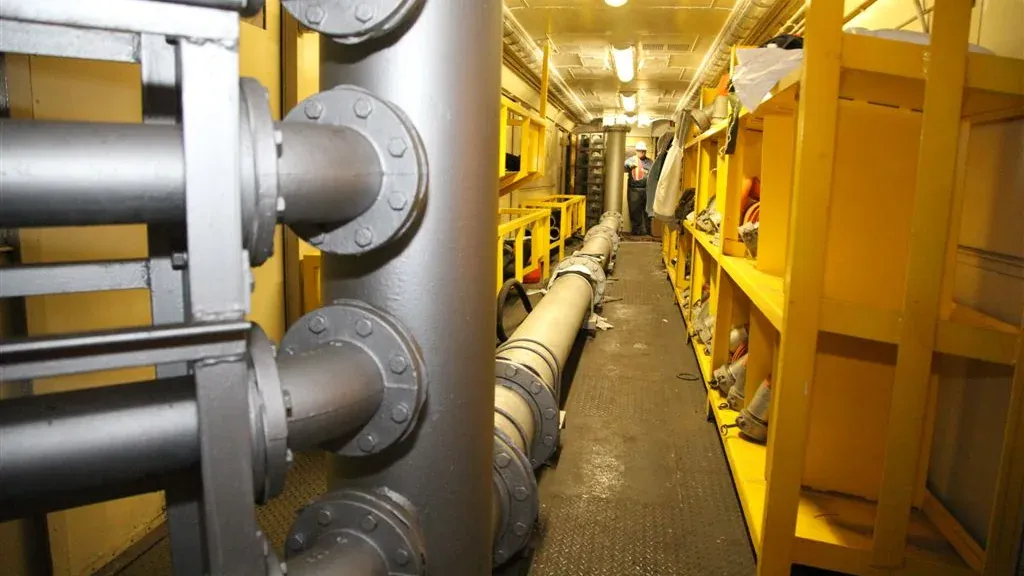
This guide is for households on a private well, where an outage does not only mean darkness. It means no water, no showers and no toilets. We compared four power stations on the specifications that decide whether a pump motor starts and keeps running: output voltage, continuous inverter rating, capacity and recharge speed. None of these units were tested by us against a real pump, and every review states exactly what its judgement rests on. What you will get here is the single question that eliminates most of the market before you look at any product, an explanation of why the largest surge figure on a spec sheet is often the least useful number on it, and capacity converted into gallons pumped rather than hours of runtime. A pump does not run for hours. It runs in short, hard bursts until the pressure tank is full, and that changes the arithmetic completely.
What is the best solar generator for a well pump?
The Anker SOLIX F3800 is the right answer for most private wells, because most drilled wells use a 240V submersible pump and it is the only unit here that outputs 240V split phase. If your pump is a 120V shallow-well jet pump, the BLUETTI Elite 200 V2 has the strongest genuine inverter rating in that class at 2600W continuous.
Key takeaways
- Check the pump breaker first; a double-pole breaker means 240V, and no 120V power station can run it at any capacity
- Surge modes such as Power Lifting hit their headline wattage by lowering voltage, which is exactly what a motor cannot tolerate
- Size against the continuous inverter rating and treat any surge figure as a tolerance for the first half-second only
- Watt-hours become useful when you convert them into gallons; at roughly 1.85Wh per gallon a 2000Wh pack is about 1,080 gallons
- Solar input is what turns a two-day battery into an indefinite water supply, and two of these four publish no solar figure at all
Our picks at a glance
Every unit below wins a specific situation rather than a place in a ranking. Pick the row that matches how you will actually use it.
-
Best for 240V submersible deep-well pumps

Anker SOLIX F3800
Households on a drilled deep well with a 240V submersible pump, who are willing to have the unit wired in and want water for a week rather than a day.
-
Best for a 1 HP 120V jet pump

BLUETTI Elite 200 V2
Shallow wells and convertible jet pumps rated up to 1 HP on 120V, where the owner wants several days of water from a single charge and a pack that will still be healthy in a decade.
-
Best surge headroom per pound carried

OUPES Mega 1
A 120V jet pump in a detached pump house or an outbuilding, where the unit has to be carried to the pump rather than the wiring brought to the unit.
-
Best for winter pump houses with freeze protection
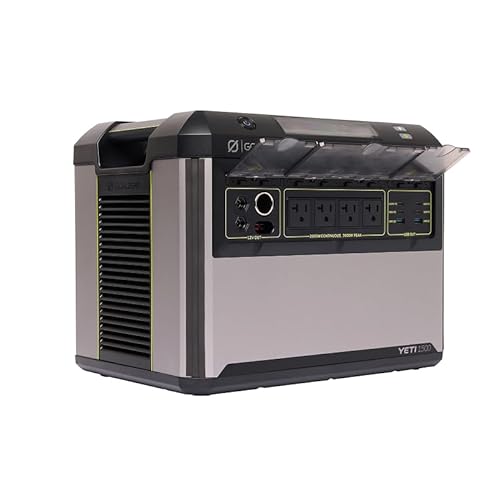
Goal Zero Yeti 1500 (6th Gen)
Unheated pump houses in cold climates, where one unit has to keep a 120V pump running and the pipework above freezing at the same time.
How they compare
Scroll the table sideways to see every column.
| Product | Where to buy | Award | AC output | Capacity | Weight | AC recharge time | Rated cycle life | Battery chemistry | Best for |
|---|---|---|---|---|---|---|---|---|---|
| Anker SOLIX F3800 | Best for 240V submersible deep-well pumps | 6000W | 3840Wh | 132 lb (60 kg) | About 1.5 hours to full | 3,000 cycles to 80% | LiFePO4 | Households on a drilled deep well with a 240V submersible pump, who are willing to have the unit wired in and want water for a week rather than a day. | |
| BLUETTI Elite 200 V2 | Best for a 1 HP 120V jet pump | 2600W continuous (3900W Power Lifting) | 2073.6Wh | 53.35 lb (24.2 kg) | 0-80% in 1 hour on Turbo mode (1800W AC), full in 1.6 hours on Standard mode | Over 6,000 cycles | LiFePO4 | Shallow wells and convertible jet pumps rated up to 1 HP on 120V, where the owner wants several days of water from a single charge and a pack that will still be healthy in a decade. | |
| OUPES Mega 1 | Best surge headroom per pound carried | 2000W (4500W surge) | 1024Wh | 27.8 lb (12.6 kg) | 36 minutes to 80% on AC, 26 minutes with AC and solar together | 3,500+ cycles to 80% | LiFePO4 | A 120V jet pump in a detached pump house or an outbuilding, where the unit has to be carried to the pump rather than the wiring brought to the unit. | |
| Goal Zero Yeti 1500 (6th Gen) | Best for winter pump houses with freeze protection | 2000W (3600W surge) | 1505Wh | 52.9 lb (24.0 kg) | Under 1 hour from 0% to 80% from the wall | 4,000 cycles | LiFePO4 | Unheated pump houses in cold climates, where one unit has to keep a 120V pump running and the pipework above freezing at the same time. |
The full reviews
Best for 240V submersible deep-well pumps
Anker SOLIX F3800
Anker
Most private wells in the US are deep wells with a 240V submersible motor at the bottom, and the F3800 is the only unit on this shortlist that outputs 240V split phase at all. Its 6000W AC rating is roughly four times what a 1 HP pump draws while running, so starting is not the question here. Getting 132 lb positioned and wired is.
What we like about the Anker SOLIX F3800
- 120V and 240V split-phase output is what a submersible deep-well motor needs, and no amount of capacity in a 120V unit substitutes for it
- 6000W AC output is about four times the running draw of a 1 HP pump, leaving the inrush current no realistic way to trip it
- 3840Wh is roughly 2,000 gallons pumped on our 1.85Wh-per-gallon assumption, which covers a week of ordinary household water use
- 2400W solar input can bank far more in a day of sun than a household well consumes, so a multi-day outage stops being a countdown
- Expandable to 26.9kWh if the well is one circuit among several you want covered
Where it falls short for the Anker SOLIX F3800
- At 132 lb this is not carried to a pump house; it lives where you first put it, and a well head across a yard or down a slope needs the wiring brought to the unit instead
- The 240V output does nothing until an electrician connects it to the pump circuit or a transfer switch, which is a separate job and a separate cost the product page never raises
- 3,000 rated cycles is the shortest on this shortlist, half the BLUETTI Elite 200 V2 figure, which matters if the well is your daily off-grid supply rather than an outage plan
- Buying 3840Wh and 6000W to run one 1 HP pump means most of the unit sits idle unless you have other loads to give it
Key specifications
- AC output
- 6000W
- Capacity
- 3840Wh
- Ports
- 13 total, including 30A RV and 120V/240V split phase
- Max solar input
- 2400W
- Expandable
- Yes, to 26.9kWh with expansion batteries
- Weight
- 132 lb (60 kg)
There is a question that decides this entire purchase and it has nothing to do with watt-hours. Is the pump 120V or 240V? If it is 240V, this is the only unit on the page that can help you, and the rest of the comparison is academic.
Why the other three cannot substitute
A submersible motor sitting at the bottom of a drilled well is almost always 240V split phase in a US household. A 120V inverter cannot produce that. Not with a bigger battery, not with an adapter, not with two units in parallel. The F3800 outputs both 120V and 240V split phase, which is why it opens this guide.
Check the pump control box or the breaker before anything else. A double-pole breaker means 240V and a one-item shortlist.
The surge question answers itself
A 1 HP submersible draws roughly 1500W while running once it is up to speed, and several times that for the fraction of a second the motor breaks away from standstill. Against that, the F3800 is rated 6000W AC continuous.
That ratio is why this review spends no time on surge multipliers. Four times the running draw as a continuous figure is more headroom than any inrush spike from a household pump is going to need. The units further down this page have to argue their surge ratings carefully. This one does not.
What 3840Wh means in gallons
Runtime in hours is the wrong unit for a pump, because a pump does not run continuously. It runs in bursts until the pressure tank is full.
Assume a 1000W pump moving 10 gallons a minute. One gallon costs 1.67Wh at the outlet, or about 1.85Wh drawn from the pack once you allow 10% for inverter losses. Divide 3840Wh by 1.85 and you get roughly 2,076 gallons on a full charge.
A four-person household using 300 gallons a day would take just under seven days to empty it. That is the number worth comparing, and it is the number the spec sheet never gives you.
Solar changes the shape of the problem
At the rated 2400W input across five peak sun hours you are looking at 12kWh before losses. Derate a quarter for heat, angle and controller inefficiency and roughly 9kWh a day lands in the pack. Household water at 300 gallons costs about 555Wh.
So a single ordinary day of sun replaces more than fifteen days of well use. Once the array is up, this stops being a battery you ration and becomes a supply you forget about. None of the 120V units here can make that claim, and two of them do not publish a solar input figure at all.
The part that is not on the spec sheet
Nothing above happens until someone wires the 240V output to the pump circuit. Until then you own a very heavy box with the right outlet on it. Decide where 132 lb is going to live, and get a quote for the connection, before you decide anything else.
- Best for
- Households on a drilled deep well with a 240V submersible pump, who are willing to have the unit wired in and want water for a week rather than a day.
- Choose something else if
- Your pump is a 120V shallow-well jet pump, because you would be paying for a split-phase inverter you will never switch on and 132 lb you cannot move.
Best for a 1 HP 120V jet pump
BLUETTI Elite 200 V2
BLUETTI
Among the 120V units here, the Elite 200 V2 has the largest inverter you can actually count on for a motor: 2600W continuous, with no voltage trickery involved. Pair that with 2073.6Wh and one charge is around 1,100 gallons, which is three or four days of household water. The catch is that there is no expansion battery, so that ceiling is permanent.
What we like about the BLUETTI Elite 200 V2
- 2600W continuous is the highest genuine 120V rating on this shortlist and covers a 1 HP jet pump drawing around 1500W with 1100W still spare
- 2073.6Wh works out at roughly 1,121 gallons per charge on our 1.85Wh-per-gallon assumption, or close to four days for a four-person household using 300 gallons a day
- Over 6,000 rated cycles is double the F3800 figure, which suits a well that cycles the pack every few days year-round
- A full charge from 1000W of panels in 2.4 hours means one clear afternoon replaces several days of pumping
- 38.9Wh per pound is the best energy density here, ahead of the Goal Zero Yeti 1500 at 28.4Wh per pound for almost identical weight
Where it falls short for the BLUETTI Elite 200 V2
- The 3900W Power Lifting figure is reached by lowering output voltage, and a motor needs voltage to make torque, so a pump only ever sees the 2600W rating and you must size against that number alone
- There is no expansion battery for this unit, so 2073.6Wh is a hard ceiling and adding capacity means buying a second complete station
- No 240V output, which rules it out entirely for the deep-well submersible pumps most drilled wells use
- The only solar figure BLUETTI publishes is a 2.4-hour charge from 1000W of panels, with no maximum input stated above that, so a larger permanent array for an off-grid well cannot be sized around anything on the spec sheet
Key specifications
- AC output
- 2600W continuous (3900W Power Lifting)
- Capacity
- 2073.6Wh
- Solar input
- Full charge in 2.4 hours with 1000W panels
- Rated cycle life
- Over 6,000 cycles
- AC recharge time
- 0-80% in 1 hour on Turbo mode (1800W AC), full in 1.6 hours on Standard mode
- Weight
- 53.35 lb (24.2 kg)
If your well is a shallow one with a jet pump sitting above ground, the F3800 is overkill and you are shopping in the 120V class. This is the strongest inverter in that class, and the reason is worth understanding because it is not the biggest number on the box.
The number to size against, and the number to ignore
BLUETTI publishes two figures: 2600W continuous and 3900W Power Lifting. Only one of them is relevant to you.
Power Lifting reaches its wattage by dropping output voltage so current stays inside the inverter’s limits. On a heater element or a kettle that simply means less heat and a longer wait. On a motor it means less torque at exactly the moment the motor needs the most, so it will not help a pump break away from standstill and may leave it stalled and drawing locked-rotor current.
Size against 2600W. A 1 HP jet pump running at roughly 1500W leaves 1100W spare for the pressure switch, a light and whatever else shares the unit.
Gallons, not hours
A pump does not run all day. It runs until the pressure tank is satisfied, stops, and waits. So hours of runtime tells you nothing.
Take a 1000W pump at 10 gallons a minute. Each gallon costs 1.67Wh at the outlet and about 1.85Wh from the pack after inverter losses. 2073.6Wh divided by 1.85 gives roughly 1,121 gallons.
At 300 gallons a day for a family of four that is just under four days of normal water use, or considerably longer if you are being careful about showers. Against the Yeti 1500 further down, which manages around 813 gallons for almost the same carrying weight, the gap is close to a full extra day.
Over 6,000 cycles is the quiet advantage
A well is not like a fridge. It empties the pack slowly, over days, then gets refilled. If a charge lasts the better part of four days, 6,000 cycles is a length of service that will outlast most of the plumbing around it.
At 2073.6Wh a cycle, that is roughly 12,400kWh of rated throughput, or on our gallon arithmetic something in the region of 6.7 million gallons. That is not a number you will ever reach. The point is that cycle life is not the constraint on this unit.
Where it stops
BLUETTI publishes no expansion battery for this unit. If your load ever grows past one pump and some lighting, you buy a whole second station and pay again for an inverter, a screen and a set of ports. Be certain your requirement is fixed before you commit, and if it is not, the F3800 with its expansion path is the safer end of the shortlist.
- Best for
- Shallow wells and convertible jet pumps rated up to 1 HP on 120V, where the owner wants several days of water from a single charge and a pack that will still be healthy in a decade.
- Choose something else if
- Your pump turns out to be a 240V submersible, or you expect to add an irrigation circuit or a second pump later, because there is no split-phase output here and BLUETTI publishes no expansion battery for this unit.
Best surge headroom per pound carried
OUPES Mega 1
OUPES
A pump start is a violent half-second followed by a quiet run, and the Mega 1 is built around exactly that shape: 4500W surge against 2000W continuous, in a 27.8 lb case you can carry out to the well house one-handed. What it cannot do is hold much water in reserve, because 1024Wh is under two days for a normal household.
What we like about the OUPES Mega 1
- 4500W surge against a 2000W continuous rating is a 2.25x headroom ratio, the largest starting margin on this shortlist
- 161W of surge capability per pound of unit, against 68W per pound for the Goal Zero Yeti 1500, so the starting ability travels with you
- 27.8 lb and 15.1 x 9.1 x 11.6 in means it can sit in the pump house next to the pressure switch instead of on a garage floor
- 36 minutes to 80% on AC puts roughly 440 gallons of pumping back into the pack during a single short grid window
- Under 20ms switchover keeps the pressure switch and any pump controller from seeing a hard restart when the grid drops
Where it falls short for the OUPES Mega 1
- 1024Wh is roughly 553 gallons on our 1.85Wh-per-gallon assumption, under two days for a four-person household, so this is a bridge across an outage rather than a supply
- No maximum solar input figure is published in the specification set we compared, which is a real problem when the search term is a solar generator and the outage lasts a week
- 2000W continuous leaves only 500W spare above a 1 HP jet pump drawing 1500W, so freeze protection or a heater cannot share the unit while the pump runs
- Reaching the 5120Wh ceiling takes two separate B2 batteries rather than one, and at that point the weight advantage that made it attractive is gone
Key specifications
- AC output
- 2000W (4500W surge)
- Capacity
- 1024Wh
- Weight
- 27.8 lb (12.6 kg)
- AC recharge time
- 36 minutes to 80% on AC, 26 minutes with AC and solar together
- UPS switchover
- Under 20ms
- Expandable
- Yes, to 5120Wh with two B2 extra batteries
Every other unit on this page asks you to bring the pump circuit to the battery. This one is light enough to go the other way, and that changes which problems it solves.
Surge is a ratio, not a wattage
A pump motor’s inrush lasts a fraction of a second and then collapses to a fraction of its peak. What matters is whether the inverter tolerates that spike without folding back, and the honest way to read that is the ratio between surge and continuous ratings.
The Mega 1 publishes 4500W against 2000W, a factor of 2.25. The Yeti 1500 offers 3600W against 2000W, a factor of 1.8. The BLUETTI Elite 200 V2’s higher headline figure comes from a voltage-lowering mode that does nothing for a motor at all. So on the specific job of surviving the moment a pump starts, this is the strongest 120V unit here despite having neither the biggest inverter nor the biggest battery.
Why the weight matters more than usual here
Wells are rarely convenient. The pump, the pressure switch and the tank often sit in a detached pump house, a crawl space or a barn corner a long way from the house panel.
Divide 4500W of surge by 27.8 lb and you get 161W per pound. The Yeti 1500’s 3600W surge across 52.9 lb gives 68W per pound. The F3800 publishes no surge figure at all, and even its 6000W continuous rating spread over 132 lb is only about 45W per pound, on a unit nobody is carrying anywhere. If the plan is to walk the unit out to the pump, plug it into the pressure switch circuit and walk it back to recharge, that ratio is the whole argument.
What 36 minutes is worth in water
A pump moving 10 gallons a minute at 1000W costs roughly 1.85Wh per gallon from the pack. Charging to 80% puts about 819Wh in, which is around 440 gallons.
For most households that is more than a full day of water recovered in half an hour of grid. Since rural outages tend to flicker back on and off rather than end cleanly, that recovery rate is often worth more than a bigger tank that fills slowly.
The reserve is thin, and the sun is missing
1024Wh divided by 1.85Wh per gallon is about 553 gallons. A four-person household at 300 gallons a day empties it in under two days, and there is no published solar input figure to plan a longer outage around.
If the grid where you live goes down for hours, this is a strong pick. If it goes down for a week and you were expecting panels to carry the well, the F3800 with its 2400W solar input is the unit that actually answers that.
- Best for
- A 120V jet pump in a detached pump house or an outbuilding, where the unit has to be carried to the pump rather than the wiring brought to the unit.
- Choose something else if
- You are planning for an outage measured in days with no grid to refill from, because 1024Wh runs the well dry well before the storm passes.
Best for winter pump houses with freeze protection
Goal Zero Yeti 1500 (6th Gen)
Goal Zero
In freezing weather the pump is only half the job; the pipes have to be kept above freezing too, and that means a second load running alongside. The Yeti 1500 has four AC outlets, a 12V vehicle outlet and 500W of headroom above a 1 HP pump, which is the combination that covers both. Its weakness is the pack itself, at 1505Wh in a 52.9 lb case.
What we like about the Goal Zero Yeti 1500 (6th Gen)
- Four AC outlets plus a 12V vehicle outlet let the pump, heat tape, a work light and a controller share one unit without a power strip in a damp pump house
- 2000W continuous with a 3600W surge rating leaves 500W spare above a 1 HP jet pump running at roughly 1500W
- 1505Wh is around 813 gallons per charge on our 1.85Wh-per-gallon assumption, comfortably more than two days of household water with no freeze load
- Recharges 0 to 80% from the wall in under an hour, which puts about 650 gallons of pumping back during a single grid window
- 4,000 rated LiFePO4 cycles suits a pack that gets worked hard every winter and left on float the rest of the year
Where it falls short for the Goal Zero Yeti 1500 (6th Gen)
- Freeze protection costs more energy than the pump does, because 100W of heat tape at a 30% winter duty cycle draws about 720Wh a day against roughly 555Wh for the pump itself, so running both takes this pack from just under three days of water down to a little over one
- 1505Wh in a 52.9 lb case is 28.4Wh per pound, the poorest energy density here, and the BLUETTI Elite 200 V2 carries 568.6Wh more for less than half a pound extra
- Goal Zero publishes no expansion battery for this unit, so 1505Wh is a permanent ceiling rather than a starting point
- No maximum solar input figure appears in the published specifications we compared, which makes it hard to plan an off-grid well around panels
Key specifications
- AC output
- 2000W (3600W surge)
- Capacity
- 1505Wh
- Ports
- 4 AC outlets, 6 USB outlets (including a 140W USB-C), 12V vehicle outlet, HPP output, 2 x 6mm outlets
- Rated cycle life
- 4,000 cycles
- AC recharge time
- Under 1 hour from 0% to 80% from the wall
- Weight
- 52.9 lb (24.0 kg)
Every guide to well pumps quietly assumes the weather is mild. In a January outage in a cold state the pump is the smaller problem, because a frozen supply line does not care how much surge headroom your inverter has.
Two loads, one box
Keeping a well running through a hard freeze usually means the pump plus heat tape on the exposed pipework, and often a light so you can see what you are doing at 6am in an unlit shed.
Four AC outlets and a 12V vehicle outlet cover that without a power strip trailing across a damp floor, and 2000W continuous leaves 500W above a 1 HP jet pump for the tape and the light. The 3600W surge rating handles the instant the pump motor breaks away while the tape is already drawing.
The cost of not freezing
Here is the arithmetic that decides whether this unit suits your winter.
The pump itself is cheap in energy terms: 300 gallons a day at roughly 1.85Wh per gallon is about 555Wh. Heat tape is not. Assume 100W of self-regulating tape on a 30% duty cycle in freezing weather and that is 720Wh a day, more than the pump consumes.
Together they come to about 1,275Wh a day against a rated 1505Wh. So in a real freeze this is a one-day unit, where without the tape the same pack covers nearly three. Knowing that before you buy is the difference between rationing water and being surprised by an empty pack at dawn.
What it gives up
Divide 1505Wh by 52.9 lb and you get 28.4Wh per pound, the weakest ratio on this page. The Elite 200 V2 weighs 53.35 lb and holds 2073.6Wh, which is the same carry for an extra 568.6Wh, or roughly another 300 gallons.
There is no expansion battery either, and no published solar input figure. If your plan is a permanent off-grid well fed by panels, this is not the shortlist entry for it.
Who it is right for
Someone with a 120V pump, a cold winter, an unheated pump house and a grid that comes back within a day. Under those conditions the port spread and the recharge speed do more useful work than another 500Wh of capacity would. Outside them, read the BLUETTI and the F3800 reviews instead.
- Best for
- Unheated pump houses in cold climates, where one unit has to keep a 120V pump running and the pipework above freezing at the same time.
- Choose something else if
- You want the most water per pound of unit, or you are planning to recharge the well from solar panels rather than from the grid.
How we researched this guide
Four units were compared on published manufacturer specifications, standard US well pump wiring and horsepower conventions, and our own arithmetic converting rated capacity into gallons pumped. None of these units were connected to a pump by us, and every review states which sources it relies on and what it does not cover.
The full process is on our how we test portable power stations page, including what counts as hands-on use.
- Units evaluated
- 4
- Used hands-on
- 0
- Assessed from documentation and owner reports
- 4
Evaluation methods used: documentation and owner-report research, specification comparison
Which one should you buy?
Match your situation on the left to the recommendation on the right.
-
Your pump breaker is a double-pole breaker, or the pump is submersible in a drilled well
Recommendation: Buy the Anker SOLIX F3800, the only unit here with 240V split-phase output
-
You have a 120V jet pump around 1 HP and want three or more days of water per charge
Recommendation: Buy the BLUETTI Elite 200 V2 for its 2600W continuous rating and 2073.6Wh pack
-
The pump sits in a detached pump house you have to walk to
Recommendation: Buy the OUPES Mega 1, which carries 4500W of surge capability in 27.8 lb
-
You need the pump and pipe heat tape running together through a freeze
Recommendation: Buy the Goal Zero Yeti 1500 for its four AC outlets and 500W of headroom above a 1 HP pump
-
You expect the outage to last longer than three days with no grid
Recommendation: Buy the Anker SOLIX F3800 and pair it with panels, using its 2400W solar input
Mistakes buyers make
- Buying a 120V power station for a 240V submersible pump, which no amount of capacity or parallel wiring will fix
- Sizing against a surge mode figure such as Power Lifting or X-Boost, which reaches its wattage by dropping voltage and cannot start a motor
- Planning in hours of runtime when a pump runs in short bursts, so hours tell you nothing about how much water you get
- Forgetting freeze protection, which in a cold pump house can draw more energy per day than the pump itself
- Assuming a unit can be recharged from panels without checking whether a maximum solar input is published at all
- Positioning a heavy unit before checking who is going to wire its output to the pump circuit
Our final recommendation
If you want one answer rather than a shortlist, this is the unit that suits the widest range of readers in this category.
Best for 240V submersible deep-well pumps
Households on a drilled deep well with a 240V submersible pump, who are willing to have the unit wired in and want water for a week rather than a day.
Questions buyers ask
How do I tell whether my well pump is 120V or 240V?
Look at the breaker in your panel. A single-pole breaker taking one slot is 120V. A double-pole breaker taking two adjacent slots is 240V. The pump control box or the nameplate on a jet pump will also state it. Drilled wells with a submersible motor are usually 240V; shallow wells with an above-ground jet pump are often 120V.
Can I run a 240V pump from two 120V power stations wired together?
No. Producing 240V split phase requires two legs held 180 degrees out of phase with each other, which two independent inverters do not do. Attempting it risks damaging both units and the pump. If the pump is 240V you need a unit that outputs 240V split phase, which on this shortlist means the Anker SOLIX F3800 alone.
How many gallons will one charge actually pump?
Assume a 1000W pump moving 10 gallons a minute. That is 1.67Wh per gallon at the outlet, or about 1.85Wh from the pack after inverter losses. On that basis the 3840Wh F3800 gives roughly 2,076 gallons, the 2073.6Wh Elite 200 V2 about 1,121, the 1505Wh Yeti 1500 about 813 and the 1024Wh Mega 1 about 553. A slower or larger pump changes those figures, so check your own flow rate and wattage.
Do I need a soft starter to run a well pump from a battery?
Not usually, if the inverter has enough headroom. A soft starter reduces the inrush current a motor pulls at start-up, which helps when the inverter is marginal. With a 2.25x surge ratio like the Mega 1's, or 6000W continuous like the F3800's, there is little left for a soft starter to solve. It is worth considering with a 1500W-class inverter and a 1 HP pump.
Will the pump keep working if the power station runs flat overnight?
No, and you will not get warning from the tap. A pressure tank holds a modest reserve, typically enough for a few minutes of flow, then pressure drops and nothing comes out until the pump runs again. Plan on filling containers early in an outage rather than relying on the tank as a buffer.
About the author