3600W Power Stations: We Compared 4 and Only One Holds It

Off-grid power editor
Published
Updated
Last fact-checked
This guide is for people who saw 3600W on a listing and want to know what it entitles them to. In this size class the same number appears in three unrelated places: as a continuous inverter rating, as a momentary surge rating, and as a boost mode that works by lowering voltage. Only one of our four picks can hold 3600W for any length of time, and we say which rating each of the others qualifies on. We compared them on continuous output, surge behaviour, rated capacity, watt-hours per pound, recharge speed and rated cycle life. None of these units were tested by us and every review states what its recommendation rests on. What you get here is the arithmetic the listings skip: hours from capacity divided by a stated load, amps at 120V, and cycle ratings turned into lifetime kilowatt-hours.
What is the best 3600 watt power station?
The EcoFlow DELTA Pro is the only unit here where 3600W is the continuous inverter rating rather than a spike, and it stores 3600Wh, which is exactly one hour at that load. If your 3600W requirement is a motor start-up rather than a sustained draw, the Goal Zero Yeti 1500 covers it at a quarter of the weight.
Key takeaways
- A continuous rating tells you what the unit can hold; a surge rating describes a fraction of a second at start-up, and the two are not interchangeable
- Boost modes such as X-Boost and Power Lifting reach their headline wattage by lowering output voltage, so they never help a motor
- A 3600W draw at 120V is about 30 amps, more than any single standard household circuit supplies
- Energy per pound runs from 28.4Wh to 38.9Wh across this shortlist, so two units of near-identical weight can differ by 569Wh
- Rated cycle life only matters if you cycle; for storm-season standby, a 3,500-cycle pack outlasts the house
Our picks at a glance
Every unit below wins a specific situation rather than a place in a ranking. Pick the row that matches how you will actually use it.
-
Best for a sustained 3600W draw
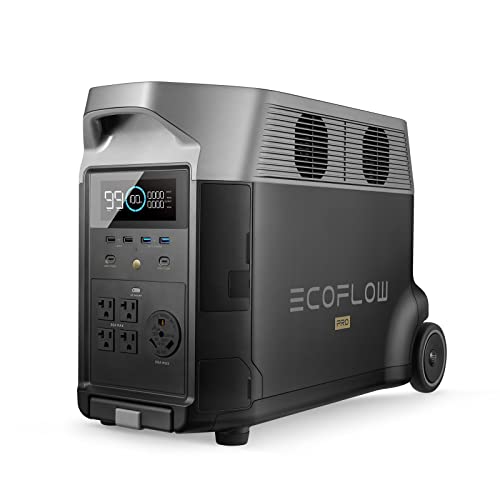
EcoFlow DELTA Pro
Workshops, event rigs and backup setups that need to hold a genuine 3600W load for a stretch rather than survive a momentary spike, and that have a permanent spot for a 99 lb cabinet on wheels.
-
Best for repeated peak loads over a long life

BLUETTI Elite 200 V2
Owners who will cycle a pack most days, such as off-grid cabins, market stalls and solar-first setups, and who need occasional headroom above 2600W for a kettle or a heater rather than for a motor.
-
Best for tools that spike to 3600W
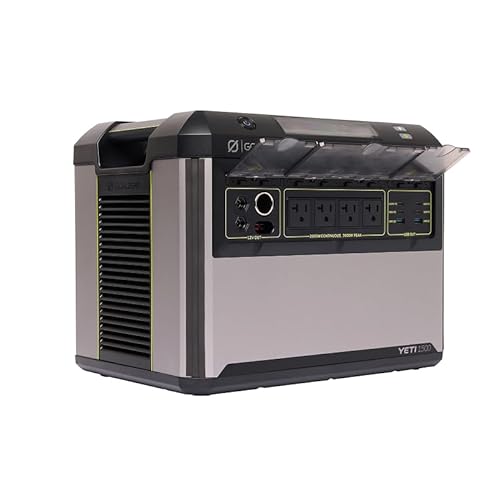
Goal Zero Yeti 1500 (6th Gen)
Trades and hobby workshops running intermittent tools that spike hard and then settle, where the unit gets hammered for short bursts and recharged between jobs.
-
Best for 3600W headroom you can carry

OUPES Mega 1
People who move the unit constantly and need it to survive a hard start now and then, such as van builds, tailgates and second-room backup for a desk full of electronics.
How they compare
Scroll the table sideways to see every column.
| Product | Where to buy | Award | Capacity | AC output | Weight | AC recharge time | Rated cycle life | Ports | Best for |
|---|---|---|---|---|---|---|---|---|---|
| EcoFlow DELTA Pro | Best for a sustained 3600W draw | 3600Wh | 3600W (4500W X-Boost) | 99 lb (44.9 kg) | 1.8 hours on a 240V outlet, 2.7 hours on a 1800W wall outlet | -- | 15 outputs total, 5 AC outlets | Workshops, event rigs and backup setups that need to hold a genuine 3600W load for a stretch rather than survive a momentary spike, and that have a permanent spot for a 99 lb cabinet on wheels. | |
| BLUETTI Elite 200 V2 | Best for repeated peak loads over a long life | 2073.6Wh | 2600W continuous (3900W Power Lifting) | 53.35 lb (24.2 kg) | 0-80% in 1 hour on Turbo mode (1800W AC), full in 1.6 hours on Standard mode | Over 6,000 cycles | -- | Owners who will cycle a pack most days, such as off-grid cabins, market stalls and solar-first setups, and who need occasional headroom above 2600W for a kettle or a heater rather than for a motor. | |
| Goal Zero Yeti 1500 (6th Gen) | Best for tools that spike to 3600W | 1505Wh | 2000W (3600W surge) | 52.9 lb (24.0 kg) | Under 1 hour from 0% to 80% from the wall | 4,000 cycles | 4 AC outlets, 6 USB outlets (including a 140W USB-C), 12V vehicle outlet, HPP output, 2 x 6mm outlets | Trades and hobby workshops running intermittent tools that spike hard and then settle, where the unit gets hammered for short bursts and recharged between jobs. | |
| OUPES Mega 1 | Best for 3600W headroom you can carry | 1024Wh | 2000W (4500W surge) | 27.8 lb (12.6 kg) | 36 minutes to 80% on AC, 26 minutes with AC and solar together | 3,500+ cycles to 80% | 2x USB-C 100W PD, 4x USB-A QC3.0, 12V DC outputs, AC outlets | People who move the unit constantly and need it to survive a hard start now and then, such as van builds, tailgates and second-room backup for a desk full of electronics. |
The full reviews
Best for a sustained 3600W draw
EcoFlow DELTA Pro
EcoFlow
This is the only unit here where 3600W is the number the inverter holds rather than the number it touches. It also happens to store 3600Wh, which makes the arithmetic unusually tidy: one hour at full rated output, and then it is empty. The price of that is 99 lb and a cabinet that stays where you put it.
What we like about the EcoFlow DELTA Pro
- 3600W is the continuous inverter rating, so it applies to compressors and motors rather than only to heaters
- 3600Wh divided by 3600W gives exactly one hour at full rated load, the only unit here that can sustain the class figure at all
- Five AC outlets, which matters because a 3600W draw cannot travel down one cord
- Expands from 3.6kWh to 25kWh with extra batteries or smart generators, so the inverter outlives the load list
- 5-year warranty on a unit this heavy to return is worth more than it looks
Where it falls short for the EcoFlow DELTA Pro
- A 3600W draw at 120V is about 30 amps, which no single standard household circuit supplies, so you can empty this unit far faster than any wall outlet can refill it
- At 99 lb it stores 36.4Wh per pound, no better than the 27.8 lb OUPES Mega 1 at 36.8Wh per pound, so the extra 71 lb buys capacity and not efficiency
- The 1.8-hour recharge assumes a 240V outlet; on an ordinary 1800W socket it takes 2.7 hours, an average of about 1,333W
- The 4500W X-Boost figure is reached by lowering output voltage, so it never applies to a pump, compressor or corded saw
- At 16.4 x 25 x 11.2 in it takes a permanent floor position rather than a shelf, and with no rated cycle life in our specification record you cannot check its longevity against the 4,000 and 6,000 cycle packs here before committing to the heaviest unit on the list
Key specifications
- Capacity
- 3600Wh
- AC output
- 3600W (4500W X-Boost)
- Weight
- 99 lb (44.9 kg)
- AC recharge time
- 1.8 hours on a 240V outlet, 2.7 hours on a 1800W wall outlet
- Expandable
- Yes, from 3.6kWh to 25kWh with extra batteries or smart generators
- Warranty
- 5 years
Search for a 3600 watt power station and this is the unit the phrase was coined for. Everything else on this shortlist reaches 3600W on the way past.
One hour, then nothing
3600Wh divided by 3600W is exactly one hour. That is the whole story of this unit at full load, and it is worth sitting with, because the specification sheet never puts the two numbers next to each other.
Drop the load and the numbers get friendlier. A 1500W space heater runs 2.4 hours. A 1000W microwave used in bursts barely registers. A single 1800W load runs two hours, but two 1800W loads at once is the full 3600W again and you are back to one hour. The point is that the headline wattage and the headline capacity are in direct tension, and this is the one product where you can watch them cancel out.
The circuit is the real constraint
3600W at 120V works out at roughly 30 amps. A standard 15A household circuit supplies 1800W and a 20A circuit supplies 2400W. Neither one can hand this unit a 3600W load through a single receptacle, and no ordinary extension cord is rated for it either.
That is why the five AC outlets matter more than the count suggests. Reaching 3600W means splitting the load across several outputs, on the unit and on whatever you are running. If your plan was one big cord to one big appliance, the plan has a ceiling well below 3600W regardless of what the inverter can do.
Where the weight goes
Divide 3600Wh by 99 lb and you get 36.4Wh per pound. The OUPES Mega 1 on this same shortlist gets 36.8Wh per pound at 27.8 lb. The DELTA Pro is not carrying its energy any more efficiently; it is simply carrying three and a half times as much of it, plus the inverter and the expansion hardware to match.
So the weight is not a design flaw to be forgiven. It is the honest cost of a 3.6kWh pack and a 3600W inverter in one box, and it is worth paying only if you genuinely need both at once.
Refilling is the slow part
On a 240V outlet the unit refills in 1.8 hours, an average of about 2,000W. On the 1800W wall socket most people actually have, it takes 2.7 hours, or roughly 1,333W average. Run it hard at 3600W for an hour and you have created nearly three hours of charging work for a normal outlet.
That asymmetry is the practical shape of owning this thing: it discharges faster than any single household circuit can replace, so it suits jobs with long gaps between them rather than continuous heavy duty.
Who should choose something else
If your 3600W requirement is a start-up spike from a saw, a pump or a compressor, you are paying for an inverter you will never load. A surge-rated unit covers the spike at a fraction of the weight.
- Best for
- Workshops, event rigs and backup setups that need to hold a genuine 3600W load for a stretch rather than survive a momentary spike, and that have a permanent spot for a 99 lb cabinet on wheels.
- Choose something else if
- You need to lift the unit into a truck bed or carry it upstairs, or your only charging point is a standard 120V outlet and you expect the pack back to full in under two hours.
Best for repeated peak loads over a long life
BLUETTI Elite 200 V2
BLUETTI
BLUETTI clears 3600W with 300W to spare through Power Lifting, and backs it with the highest continuous rating on this list short of the DELTA Pro. The reason to choose it, though, is the 6,000-cycle rating: this is the pack designed to be emptied and refilled on a schedule rather than kept for storms.
What we like about the BLUETTI Elite 200 V2
- 2600W continuous is the highest genuine inverter rating here below the DELTA Pro, and it covers most single high-draw appliances outright
- Power Lifting reaches 3900W, clearing the 3600W class figure with 300W of margin
- Over 6,000 rated cycles works out at roughly 12.4MWh of lifetime throughput, about double the Goal Zero Yeti 1500 and more than three times the OUPES Mega 1
- Highest energy density on this shortlist at 38.9Wh per pound from 2073.6Wh in 53.35 lb
- 1000W of panels refill it in 2.4 hours, so a single sunny afternoon covers a full cycle
Where it falls short for the BLUETTI Elite 200 V2
- Power Lifting reaches 3900W by lowering output voltage, so the figure applies to resistive loads like heaters and kettles and never to a compressor, pump or corded saw
- At 2073.6Wh it holds 58 percent of the DELTA Pro's energy, which is 48 minutes at its own 2600W continuous rating and under 32 minutes if you actually pull 3900W
- No surge rating appears in our specification record at all, only 2600W continuous and a voltage-reducing boost, so for a motor that spikes above 2600W this is the one unit on the list with nothing to offer
- At 53.35 lb it is a two-hand lift with a folding handle rather than something you move between rooms casually
Key specifications
- Capacity
- 2073.6Wh
- AC output
- 2600W continuous (3900W Power Lifting)
- Weight
- 53.35 lb (24.2 kg)
- AC recharge time
- 0-80% in 1 hour on Turbo mode (1800W AC), full in 1.6 hours on Standard mode
- Rated cycle life
- Over 6,000 cycles
- Solar input
- Full charge in 2.4 hours with 1000W panels
Of the three units here that reach 3600W without holding it, this is the one with the least distance to travel. 2600W continuous is already close, and Power Lifting takes it past the class figure with margin rather than landing on it.
What 3900W actually covers
Power Lifting is a voltage-reduction trick. The inverter keeps current inside its limit by dropping the voltage it delivers, which lets a resistive load pull more watts on paper. A kettle takes slightly longer to boil and nobody notices.
A motor notices immediately. Starting torque depends on voltage, so a fridge compressor, a well pump or a circular saw sees the continuous rating and nothing above it. For this unit that means the honest working number is 2600W, and the 3900W belongs to space heaters, kettles, hotplates and hair dryers.
If you came here because a 3600W motor spike tripped your last unit, read the Goal Zero and OUPES entries instead. If you came here because a 3000W heater tripped it, this is the answer.
The cycle life argument
6,000 cycles multiplied by 2073.6Wh is roughly 12.4MWh of energy through the pack across its rated life. The Goal Zero Yeti 1500 rates 4,000 cycles on 1505Wh, which is about 6.0MWh. The OUPES Mega 1 rates 3,500-plus on 1024Wh, or roughly 3.6MWh.
Put another way: at one full cycle a day, the rated life is over sixteen years. That number is meaningless for someone who charges the unit twice a winter, and decisive for someone running a stall, a cabin or a solar loop where the pack turns over daily. This is the only pick on the list where daily use is the design case rather than an abuse of it.
Runtime, stated plainly
2073.6Wh at the 2600W continuous rating is 48 minutes. At 3900W it is under 32 minutes, assuming the load is one Power Lifting can serve. A 1500W space heater runs about 83 minutes.
None of those are long. This is a unit that hands you real power in short blocks, and the reason that works is the refill: 1000W of panels put a full charge back in 2.4 hours, and Turbo mode on a 1800W wall feed reaches 80 percent in an hour, an average of roughly 1,659W. Empty at midday, full by mid afternoon.
Energy per pound
2073.6Wh across 53.35 lb is 38.9Wh per pound, the best figure on this shortlist. The Yeti 1500 manages 28.4Wh per pound in almost identical weight, which means this unit stores about 569Wh more for less than half a pound of difference. If you are choosing between the two on portability alone, that gap decides it.
Who should buy it
People who cycle. If the pack spends eleven months a year sitting on a shelf at full charge waiting for a storm, you are paying for endurance you will never consume.
- Best for
- Owners who will cycle a pack most days, such as off-grid cabins, market stalls and solar-first setups, and who need occasional headroom above 2600W for a kettle or a heater rather than for a motor.
- Choose something else if
- The 3600W figure you are shopping for is a motor start-up, because Power Lifting cannot supply it, or you need more than about 48 minutes of continuous high-draw output from a single charge.
Best for tools that spike to 3600W
Goal Zero Yeti 1500 (6th Gen)
Goal Zero
Goal Zero prints the class figure exactly: 2000W continuous, 3600W surge. That makes this the reference point for what 3600W means when it is a start-up number rather than a working one. The 4,000-cycle LiFePO4 pack and the sub-hour refill suit a tool that gets emptied on a job and plugged back in overnight.
What we like about the Goal Zero Yeti 1500 (6th Gen)
- 3600W surge on a 2000W inverter is 1.8 times headroom, which is aimed squarely at the inrush of a saw, vacuum or compressor
- Refills 0 to 80 percent in under an hour from the wall, an average of at least 1,204W, so a lunch break restores most of a working day
- 4,000 rated cycles on 1505Wh is roughly 6.0MWh of lifetime throughput, about 68 percent more than the OUPES Mega 1 and around half the BLUETTI Elite 200 V2
- A 140W USB-C output alongside four AC outlets, six USB ports, a 12V outlet, an HPP output and two 6mm outputs covers a mixed tool and device load without adapters
Where it falls short for the Goal Zero Yeti 1500 (6th Gen)
- At 28.4Wh per pound it is the least energy-dense unit here, because the BLUETTI Elite 200 V2 weighs 0.45 lb more and stores 569Wh more
- 1505Wh at the 2000W continuous rating is 45 minutes, so a genuinely heavy load empties it inside a lunch hour
- The 3600W figure is published as a surge and our record gives no duration for it, so a tool with a long or repeated inrush may still trip the inverter
- No expansion path is recorded for this unit, so unlike the DELTA Pro and the OUPES Mega 1 the capacity you buy is the capacity you keep
Key specifications
- Capacity
- 1505Wh
- AC output
- 2000W (3600W surge)
- Weight
- 52.9 lb (24.0 kg)
- AC recharge time
- Under 1 hour from 0% to 80% from the wall
- Rated cycle life
- 4,000 cycles
- Ports
- 4 AC outlets, 6 USB outlets (including a 140W USB-C), 12V vehicle outlet, HPP output, 2 x 6mm outlets
If you want to understand why “3600 watt power station” is such a slippery phrase, look at this listing. The number is right there, and it describes about a second of the unit’s life.
What a surge rating is for
Motors draw far more current at the instant they start than they do once spinning. A shop vacuum, a circular saw, a compressor or a pressure washer all pull an inrush spike several times their running draw, and an inverter that cannot absorb it trips instead of starting the tool.
That is the job 3600W does here. It is not a mode you switch on and it is not a number you can plan a load around. It is headroom, 1.8 times the 2000W the inverter actually holds, sized so that a tool rated around 1500W to 1800W running can start without nuisance tripping.
This is a genuinely different proposition from the BLUETTI Elite 200 V2, whose 3900W Power Lifting figure comes from reduced voltage and therefore cannot help a motor at all. On paper BLUETTI’s number is larger. For a saw, this one is the useful one.
The runtime cost of a small pack
1505Wh is the smallest capacity of the three larger units here. At the 2000W continuous rating that is 45 minutes. A 1500W heater runs an hour. A 500W tool used at a 50 percent duty cycle across an afternoon draws about 250W average, which stretches to roughly six hours.
The last figure is the realistic one for tool work, and it is why the modest capacity is less of a problem than it looks. Tools idle. What matters is that they start.
The weight problem
1505Wh across 52.9 lb is 28.4Wh per pound. The BLUETTI Elite 200 V2 is 53.35 lb and 2073.6Wh, which is 38.9Wh per pound. For less than half a pound more you could be carrying 569Wh more energy.
There is no way to argue that away on the specification sheet. What you are buying instead is the surge behaviour, the 4,000-cycle rating and the port spread, and if none of those matter to you the density gap should send you elsewhere.
Recharging between jobs
0 to 80 percent in under an hour means at least 1,204Wh back into the pack per hour of charging. Against a 45-minute full-power discharge that is a fast turnaround, and it is the specification that makes a 1505Wh unit workable on a site where it gets abused and plugged in repeatedly.
Who should buy it
Anyone whose 3600W requirement is a start-up and not a workload. If you need to hold 2500W for an hour, this unit will refuse before the battery is the constraint.
- Best for
- Trades and hobby workshops running intermittent tools that spike hard and then settle, where the unit gets hammered for short bursts and recharged between jobs.
- Choose something else if
- You need to hold a load above 2000W for more than a few minutes, or you expect to add capacity later, because nothing in our record supports expanding this pack.
Best for 3600W headroom you can carry
OUPES Mega 1
OUPES
A 4500W surge rating in a 27.8 lb box is the outlier on this shortlist. Nothing else here clears 3600W with that much margin at anything close to the weight, and the 36-minute refill and sub-20ms switchover make it as useful sitting under a desk as it is in the back of a van. The catch is a 1024Wh pack.
What we like about the OUPES Mega 1
- 4500W surge on a 2000W inverter is 2.25 times headroom, the widest margin over the 3600W class figure on this list
- 27.8 lb is under a third the weight of the 99 lb DELTA Pro and still returns 36.8Wh per pound against its 36.4, so the weight saving costs nothing in density
- 0 to 80 percent in 36 minutes, an average of about 1,365W, or 26 minutes with AC and solar together
- Sub-20ms UPS switchover keeps a desktop, router or NAS running through a grid cut
- Expands to 5120Wh with two B2 batteries, five times the base pack, which is the only way this unit stops being short-lived under load
Where it falls short for the OUPES Mega 1
- 1024Wh is 28 percent of the DELTA Pro's capacity, which is 31 minutes at the 2000W continuous rating and about 41 minutes running a single 1500W heater
- The 4500W figure is a surge with no duration recorded, so it says nothing about holding a heavy load for even a minute
- 3,500 cycles on a 1024Wh pack is roughly 3.6MWh of lifetime throughput, less than a third of the BLUETTI Elite 200 V2
- Reaching useful capacity means buying two expansion batteries, and the combined weight and bulk of that stack undoes the portability that made the unit attractive
Key specifications
- Capacity
- 1024Wh
- AC output
- 2000W (4500W surge)
- Weight
- 27.8 lb (12.6 kg)
- AC recharge time
- 36 minutes to 80% on AC, 26 minutes with AC and solar together
- UPS switchover
- Under 20ms
- Expandable
- Yes, to 5120Wh with two B2 extra batteries
Every other unit that reaches 3600W on this list asks you to accept about 53 lb or 99 lb in exchange. This one asks for 27.8 lb, and that is the entire reason it is here.
The widest surge margin, in the smallest box
2000W continuous with a 4500W surge is 2.25 times headroom. The Goal Zero Yeti 1500 offers 1.8 times. The DELTA Pro does not need headroom because it holds 3600W outright. So if your requirement is purely “survive a 3600W spike”, this unit clears it by 900W in a package a third the weight of the DELTA Pro.
What that margin does not buy is duration. Our record gives no time for the surge, so treat it as a start-up allowance and nothing more. A tool that takes a long, laboured start, or one that restarts repeatedly under load, may still find the 2000W continuous rating first.
The number that decides everything
1024Wh. At the 2000W continuous rating that is 31 minutes. A 1500W heater runs about 41 minutes. A 500W tool at a 50 percent duty cycle averages 250W and gets you roughly four hours.
Compare that with the DELTA Pro’s 3600Wh, which is three and a half times as much energy for three and a half times the weight. The density is identical at 36.8Wh per pound against 36.4. The difference is not efficiency, it is simply how much you are willing to carry, and this unit puts that choice in front of you more starkly than anything else here.
Where the expansion path helps and where it hurts
Two B2 batteries take the system to 5120Wh, five times the base pack. That turns 31 minutes at full continuous load into about two and a half hours, and moves the unit into a different conversation entirely.
It also means three boxes instead of one. Anyone buying this for its 27.8 lb and then immediately stacking expansions has arrived at a heavier, more awkward system than the single-cabinet alternatives, and should compare it against those before committing.
The desk-side case
Sub-20ms switchover is the specification that separates this from the Yeti 1500 and the Elite 200 V2, neither of which has a switchover time in our record. A gap under 20ms is short enough that a desktop, a router or a NAS does not reboot.
Paired with a 36-minute refill to 80 percent, that makes the Mega 1 a credible always-plugged-in unit that also unclips and goes to a campsite. Few units this light claim both roles.
Who should buy it
People who will actually move it. If the unit is going to live in one corner of a garage, the weight saving you paid for stops mattering on day one, and the 1024Wh pack starts mattering every day after.
- Best for
- People who move the unit constantly and need it to survive a hard start now and then, such as van builds, tailgates and second-room backup for a desk full of electronics.
- Choose something else if
- Your loads are heavy and continuous rather than spiky, because 1024Wh at 2000W is gone in about half an hour and no surge rating changes that.
How we researched this guide
Four units were compared using published manufacturer specifications and aggregated owner reports. Every runtime, amperage, energy-density and lifetime figure on this page is arithmetic performed on those published numbers, with the assumption stated each time. None of these units were tested by us, and each review names its sources and its limitations.
The full process is on our how we test portable power stations page, including what counts as hands-on use.
- Units evaluated
- 4
- Used hands-on
- 0
- Assessed from documentation and owner reports
- 4
Evaluation methods used: specification comparison, documentation and owner-report research
Which one should you buy?
Match your situation on the left to the recommendation on the right.
-
You need to hold a 3600W load rather than survive a spike
Recommendation: Buy the EcoFlow DELTA Pro, the only unit here rated 3600W continuous, and plan for one hour at that draw
-
Your 3600W figure is the inrush of a saw, vacuum or compressor
Recommendation: Buy the Goal Zero Yeti 1500, whose 3600W surge sits on a 2000W inverter with 1.8 times headroom
-
You will empty and refill the pack most days
Recommendation: Buy the BLUETTI Elite 200 V2 for its 6,000-cycle rating, about 12.4MWh of lifetime throughput
-
You have to carry the unit regularly and still want surge headroom
Recommendation: Buy the OUPES Mega 1 at 27.8 lb with a 4500W surge, and accept 31 minutes at 2000W
-
Your heavy loads are heaters, kettles or hotplates rather than motors
Recommendation: Buy the BLUETTI Elite 200 V2 and use Power Lifting to 3900W, which suits resistive loads
-
You want a unit under a desk that also comes camping
Recommendation: Buy the OUPES Mega 1 for its sub-20ms UPS switchover and 36-minute refill to 80 percent
Mistakes buyers make
- Reading a 3600W surge figure as the working output and buying a 2000W inverter for a 2500W continuous job
- Treating a boost mode as usable headroom for a fridge, pump or power tool when it only serves resistive loads
- Planning a 3600W draw through one extension cord and one wall socket, when 3600W at 120V is roughly 30 amps
- Sizing on the inverter alone and ending up with an hour of runtime at the wattage you bought the unit for
- Buying a light unit for portability and then stacking two expansion batteries onto it, which recreates the weight you were avoiding
- Paying for a 6,000-cycle pack that will be charged twice a winter, where cycle life will never be the limiting factor
Our final recommendation
If you want one answer rather than a shortlist, this is the unit that suits the widest range of readers in this category.
Best for a sustained 3600W draw
Workshops, event rigs and backup setups that need to hold a genuine 3600W load for a stretch rather than survive a momentary spike, and that have a permanent spot for a 99 lb cabinet on wheels.
Questions buyers ask
Is 3600W continuous or surge?
It depends entirely on the unit, which is why the number is so misleading. On the EcoFlow DELTA Pro, 3600W is the continuous inverter rating. On the Goal Zero Yeti 1500 it is a surge figure sitting on a 2000W inverter. Always find the continuous number before you decide what a unit can run.
What can a 3600W power station actually run at once?
At a true 3600W continuous rating, roughly a 1500W heater plus a 1000W microwave plus a 1000W kettle, which lands just inside 3600W, provided you split them across separate outlets. Add a second 1500W appliance and you are over. On a unit whose 3600W is a surge, the honest answer is whatever fits inside its continuous rating, which is usually 2000W to 2600W.
Can I plug a 3600W power station into a normal wall socket to charge it?
Yes, but not at 3600W. A standard 15A circuit supplies about 1800W. The DELTA Pro takes 2.7 hours from an ordinary 1800W socket against 1.8 hours from a 240V outlet, so the wall you use changes the refill time more than the unit does.
Why do two units of the same weight store different amounts of energy?
Because inverter hardware, casing and ports all take weight that stores nothing. The Goal Zero Yeti 1500 and the BLUETTI Elite 200 V2 are within half a pound of each other, yet the BLUETTI holds 569Wh more. Divide watt-hours by pounds before you compare two units on portability.
Does a bigger surge rating mean a unit is more capable?
Only for starting things. A surge rating describes a brief allowance for inrush current, not sustained capability. The OUPES Mega 1 has the largest surge here at 4500W and the smallest pack at 1024Wh, so it starts more than almost anything on this list and runs it for the shortest time.
About the author