
4 Portable Power Stations for Van Life and Overlanding, Sized by Fridge Days

Off-grid power editor
Published
Updated
Last fact-checked
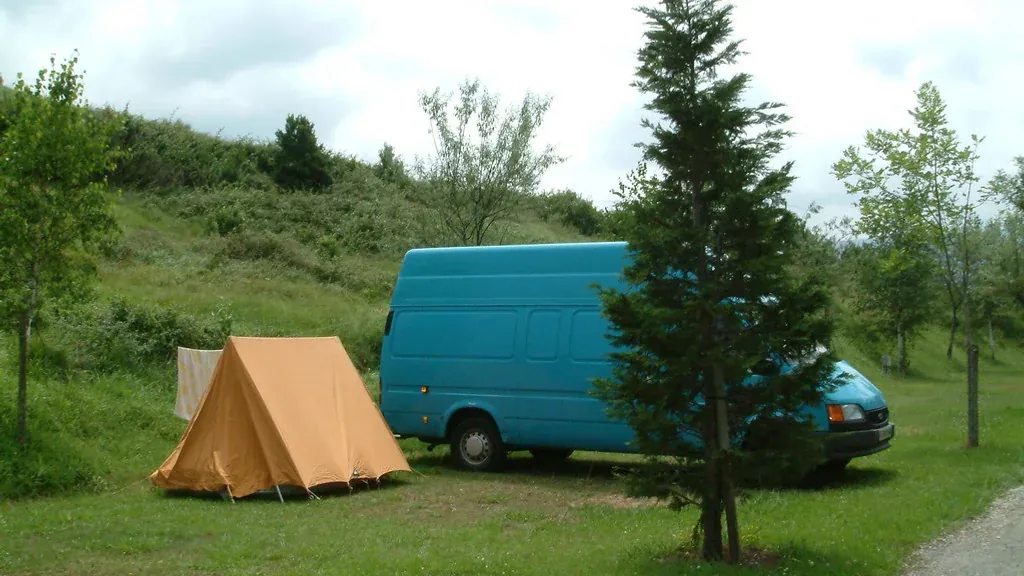
This guide is for people building or kitting a van, truck camper or overland rig around a 12V compressor fridge. The question is never really how many watt-hours a unit holds. It is how many days that lasts with the fridge cycling, and how much of it comes back the next morning from panels, shore power or driving. We compared four units on the four specifications that decide that: maximum solar input, capacity, weight and recharge rate, plus the port list, because a fridge run on 12V DC costs less than the same fridge run through an inverter. We did not test these units, and every review says exactly what its judgement rests on. What you get here is the arithmetic: days of fridge duty per unit, watt-hours per pound, watt-hours per cubic inch of cabinet, and a clear statement of every assumption behind them.
What is the best portable power station for overlanding?
For most van and overland builds the EcoFlow DELTA 2 Max is the right unit. Its 1000W solar ceiling is the only one here that will not throttle a full roof array, 2048Wh covers about 51 hours of a 40W average fridge, and it expands to 6kWh later without replacing anything. If weight is your binding constraint, the EcoFlow RIVER 2 Pro holds 42Wh per pound against the DELTA's 40 in a case under half the size.
Key takeaways
- Maximum solar input is a hard ceiling; panels above it are throttled and the money spent on them is wasted
- A 12V compressor fridge averages roughly 40W across its duty cycle, which is about 960Wh a day
- Running that fridge through the inverter instead of a DC port costs roughly another 20% once idle draw is counted
- Watt-hours per pound ranges from 42 down to 28 across these four units, a difference you feel every time you lift one
- Case dimensions decide as many purchases as electrical specifications, because van cabinets are drawn before the battery is bought
- Expandability is only worth paying for if you know which loads you will add
Our picks at a glance
Every unit below wins a specific situation rather than a place in a ranking. Pick the row that matches how you will actually use it.
-
Best for solar-first van builds

EcoFlow DELTA 2 Max
Van builds with a permanent roof array and a fixed cabinet, where the power station is installed once and expected to grow with the rest of the system.
-
Best for short shore-power stops

Anker SOLIX C1000
Weekend and two-week overlanders who pass a powered site, a town outlet or a friend's garage often enough that a fast refill beats a bigger battery.
-
Best for running 12V loads without the inverter
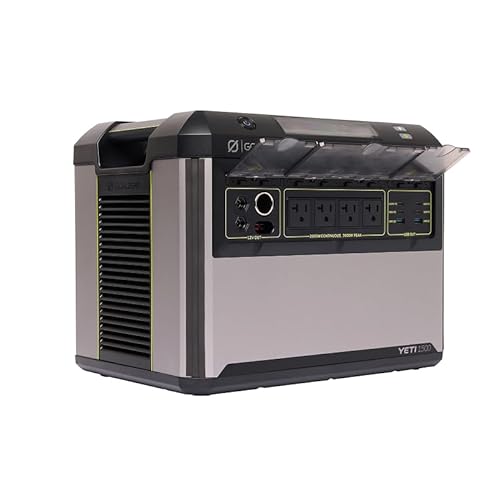
Goal Zero Yeti 1500 (6th Gen)
Overland rigs wired mostly in 12V, where a compressor fridge, fans and lighting are the standing load and the inverter is only for occasional AC tools.
-
Best for weight-limited rigs

EcoFlow RIVER 2 Pro
Rooftop tents, small SUVs and minimalist truck setups where every pound and every inch of cabin space is already spoken for.
How they compare
Scroll the table sideways to see every column.
| Product | Where to buy | Award | Capacity | AC output | Max solar input | Weight | AC recharge time | Rated cycle life | Best for |
|---|---|---|---|---|---|---|---|---|---|
| EcoFlow DELTA 2 Max | Best for solar-first van builds | 2048Wh | 2400W (3400W X-Boost) | 1000W | 50.7 lb (23.0 kg) | 1.1 hours to 80% on AC, 43 minutes with AC plus solar | 3,000 cycles to 80% | Van builds with a permanent roof array and a fixed cabinet, where the power station is installed once and expected to grow with the rest of the system. | |
| Anker SOLIX C1000 | Best for short shore-power stops | 1056Wh | 1800W (2400W SurgePad) | 600W | 28.4 lb (12.9 kg) | 58 minutes to 80% | 3,000 cycles to 80% | Weekend and two-week overlanders who pass a powered site, a town outlet or a friend's garage often enough that a fast refill beats a bigger battery. | |
| Goal Zero Yeti 1500 (6th Gen) | Best for running 12V loads without the inverter | 1505Wh | 2000W (3600W surge) | -- | 52.9 lb (24.0 kg) | Under 1 hour from 0% to 80% from the wall | 4,000 cycles | Overland rigs wired mostly in 12V, where a compressor fridge, fans and lighting are the standing load and the inverter is only for occasional AC tools. | |
| EcoFlow RIVER 2 Pro | Best for weight-limited rigs | 768Wh | 800W | 220W | 18.2 lb (8.3 kg) | 70 minutes to full | 3,000 cycles to 80% | Rooftop tents, small SUVs and minimalist truck setups where every pound and every inch of cabin space is already spoken for. |
The full reviews
Best for solar-first van builds
EcoFlow DELTA 2 Max
EcoFlow
This is the only unit on the shortlist whose 1000W solar ceiling can swallow a full van roof array through one input, and the 2048Wh pack triples to 6kWh later without replacing anything. You pay for that in a 20-inch case length that has to be designed into a cabinet rather than dropped into an existing one.
What we like about the EcoFlow DELTA 2 Max
- Accepts up to 1000W of solar, so a roof array can grow to five 200W panels before the input becomes the limit
- Expands from 2kWh to 6kWh with up to 2 extra batteries, which is roughly six days of fridge duty at a 40W average
- 2048Wh covers about 51 hours of a 40W average 12V fridge, so two nights parked with no sun is comfortable
- Reaches 80% in 1.1 hours on AC, or 43 minutes with AC and solar working together
- 15 outlets means the panel is unlikely to run out of sockets in a finished build
Where it falls short for the EcoFlow DELTA 2 Max
- One side of the case measures 20 inches, which will not drop into an under-bench cubby sized for the 15.75-inch Yeti 1500 and forces the cabinet to be built around it
- At 50.7 lb this is a two-hand lift, and once expansion batteries are stacked the system stops being portable in any practical sense
- Rated 3,000 cycles to 80%, about eight years at one full cycle a day, where the Yeti 1500 is rated 4,000
- The 43-minute recharge figure requires AC and solar at once, so on a cloudy shore-power stop the number that applies is 1.1 hours to 80%
Key specifications
- Capacity
- 2048Wh
- Max solar input
- 1000W
- Expandable
- Yes, from 2kWh to 6kWh with up to 2 extra batteries
- AC output
- 2400W (3400W X-Boost)
- Weight
- 50.7 lb (23.0 kg)
- Dimensions
- 12.2 x 9.7 x 20 in
Most van builds fail on charging, not on storage. The battery is full when you leave the driveway and the question that matters from day two is how much goes back in each morning. That is the specific problem this unit is built around.
The solar ceiling is the real specification
Maximum solar input is a hard limit. Panels above it are throttled, and the only way past it is a second unit or a separate controller.
At 1000W this has more than four times the headroom of the RIVER 2 Pro and two-thirds more than the Anker SOLIX C1000. Practically, five 200W panels can feed one input. Assume a 65% real-world derate for flat roof mounting, heat and imperfect sun angle, and five usable hours a day: that is roughly 3,250Wh returned. A 12V compressor fridge averaging 40W across its duty cycle uses about 960Wh a day. The array covers the fridge three times over and starts filling the battery for the days it does not.
That headroom is the whole reason to choose this over the C1000, which tops out at 600W and would throttle the same array.
What 2048Wh actually buys
At a 40W average fridge draw, 2048Wh is about 51 hours. Add a laptop, lights, a water pump and phone charging at a combined 300Wh a day and the honest figure is closer to a day and a half of everything with no charging at all.
Run the fridge through the inverter instead of a DC port and it gets worse. If you allow roughly 10% conversion loss plus the inverter’s idle draw while it waits for the compressor to restart, the 40W load costs nearer 48W at the battery, and 51 hours becomes about 43.
Where the case will annoy you
The specification reads 12.2 x 9.7 x 20 in. That works out to about 2,367 cubic inches for 2048Wh, or 0.87Wh per cubic inch, which is actually the best volume efficiency in this comparison. The problem is not total volume, it is that one dimension is 20 inches. Cabinets designed around a 15 or 16-inch unit will not take it, and a lot of van layouts are drawn before the battery is bought.
Measure the bay first. That single number has sent more of these back than any electrical shortcoming.
Who should pick something else
If the unit will live loose in a truck bed and be carried to camp, 50.7 lb is the wrong answer and the RIVER 2 Pro exists. If your loads are almost entirely 12V, the Goal Zero Yeti 1500 publishes the DC port list this one does not break out. And if you already know your build will never exceed 2kWh, the expansion path you are paying into is capacity you will never install.
- Best for
- Van builds with a permanent roof array and a fixed cabinet, where the power station is installed once and expected to grow with the rest of the system.
- Choose something else if
- Your rig has no dedicated bay and you will be lifting the unit in and out of a truck bed daily, or your cabinet run is shorter than 20 inches.
Best for short shore-power stops
Anker SOLIX C1000
Anker
The C1000 earns its place on refill speed rather than storage. Fifty-eight minutes on a campground pedestal or a friend's garage outlet puts roughly 845Wh back into the pack, which is close to a full day of fridge duty bought from one lunch stop. It holds barely half what the DELTA 2 Max does, and on a long cloudy week that gap shows.
What we like about the Anker SOLIX C1000
- 58 minutes to 80% recovers about 845Wh, near a full day of a 40W fridge from a single short stop
- 600W solar input takes three 200W panels on one controller, enough for most single-panel and dual-panel van roofs
- 1056Wh in 28.4 lb works out at 37Wh per pound, so one person can move it between vehicle and campsite
- Expandable to 2112Wh with one expansion battery when trips get longer
- Under 20ms UPS switchover keeps a router or satellite modem alive when you unplug from shore power
Where it falls short for the Anker SOLIX C1000
- 1056Wh is about 26 hours of a 40W 12V fridge, so three overcast days parked up with no driving will flatten it
- Only one expansion battery is supported, capping the system at 2112Wh where the DELTA 2 Max reaches 6kWh
- The 600W solar ceiling is 400W below the DELTA 2 Max, so a large roof array is throttled at the input and the extra panels are wasted
- 1800W continuous AC is 600W under the DELTA 2 Max's 2400W, so a 1500W induction hob leaves almost no headroom and running it alongside anything else on AC is out
Key specifications
- Capacity
- 1056Wh
- AC recharge time
- 58 minutes to 80%
- Max solar input
- 600W
- Weight
- 28.4 lb (12.9 kg)
- Expandable
- Yes, to 2112Wh with one expansion battery
- AC output
- 1800W (2400W SurgePad)
Storage is the specification everyone shops on. For a rig that moves, throughput matters more, and that is the argument for this unit over the larger ones here.
Refill rate, not capacity
Eighty per cent of 1056Wh is 845Wh. Reaching it takes 58 minutes on AC. A single stop for lunch, laundry or fuel with a working outlet therefore returns close to a full day of a 40W average 12V fridge.
Compare that with the EcoFlow RIVER 2 Pro, which takes 70 minutes to refill its entire 768Wh. That is 77Wh less energy recovered, and it takes twelve minutes longer to recover it. The RIVER also has nowhere to go afterwards, because it is already full.
The point is not that this unit charges fast in the abstract. It is that a rig that drives every few days converts short outlet access into usable days, and this unit converts it faster than anything else here per hour plugged in.
Where 1056Wh runs out
A 40W average fridge draw is about 960Wh a day. The C1000 holds 1056Wh, so with nothing else connected that is roughly 26 hours. Add lights, a water pump, phone and laptop charging at a combined 300Wh and you are down near 20 hours.
That is a night and a morning, not a weekend. Anyone parking in one dispersed spot for several days needs solar that genuinely breaks even, or the larger pack.
The solar ceiling is the honest limit
600W of input handles three 200W panels. Under the same 65% derate and five usable hours used across this guide, that is around 1,950Wh a day, which covers a 960Wh fridge twice over.
The trouble comes if your roof is already built for more. The DELTA 2 Max takes 1000W. Panels beyond the C1000’s 600W do not add anything, and rebuilding a roof around a battery is not a project anybody enjoys twice.
Who this is wrong for
Full-timers who stay put. The 2112Wh ceiling with its single expansion battery is half the DELTA 2 Max’s 6kWh, and once you hit it the only move left is a different unit. If your fridge, fans and lights are all 12V, the Goal Zero Yeti 1500 spells out the DC ports this one leaves inside a total count.
- Best for
- Weekend and two-week overlanders who pass a powered site, a town outlet or a friend's garage often enough that a fast refill beats a bigger battery.
- Choose something else if
- You park in one dispersed spot for four or five days at a time with a fridge running and no realistic way to reach an outlet.
Best for running 12V loads without the inverter
Goal Zero Yeti 1500 (6th Gen)
Goal Zero
Goal Zero itemises what most brands hide inside a port count: a 12V vehicle outlet, an HPP output and two 6mm outlets. In a rig where the fridge, fans and lighting are all 12V, that panel lets the inverter stay switched off for days at a time. The bill arrives as 52.9 lb and no published solar input figure at all.
What we like about the Goal Zero Yeti 1500 (6th Gen)
- Ports are itemised as a 12V vehicle outlet, an HPP output and two 6mm outlets, so DC loads never pass through the inverter
- 4,000 rated cycles is a third more than the 3,000-cycle units here, roughly eleven years at one full cycle a day
- 3600W surge is the largest surge headroom on this shortlist, which is the figure a compressor or pump start actually draws against, though the DELTA 2 Max is higher on continuous output at 2400W to this unit's 2000W
- 1505Wh reaches 80% from the wall in under an hour, recovering about 1,204Wh from a single stop
- A 140W USB-C port among six USB outlets charges a laptop without touching an AC socket
Where it falls short for the Goal Zero Yeti 1500 (6th Gen)
- No maximum solar input is published in the specification, so you cannot size a roof array against this unit before buying it, which is the one number a van build is planned around
- 1505Wh in 52.9 lb is 28Wh per pound, the worst ratio here and about a third behind the RIVER 2 Pro's 42Wh per pound
- No expansion battery is listed, so the only route to more capacity is a second complete unit and a second charging setup
- At 12 x 11.38 x 15.75 in it takes about 2,151 cubic inches to hold 1505Wh, or 0.70Wh per cubic inch, the least efficient use of cabinet space in this comparison
Key specifications
- Capacity
- 1505Wh
- Ports
- 4 AC outlets, 6 USB outlets (including a 140W USB-C), 12V vehicle outlet, HPP output, 2 x 6mm outlets
- Rated cycle life
- 4,000 cycles
- AC output
- 2000W (3600W surge)
- Weight
- 52.9 lb (24.0 kg)
- Dimensions
- 12 x 11.38 x 15.75 in
Most comparisons in this category are decided on watt-hours. For a 12V rig the decision is often made on the port panel instead, and that is why this unit is here.
Why the DC ports matter more than they look
An inverter converts DC to AC and loses some of the energy doing it. It also draws idle power while it sits waiting for a compressor to cycle back on, which in a fridge is most of the night.
Assume a modest 10% conversion loss plus that standby draw and a 12V fridge averaging 40W costs closer to 48W at the battery when it runs through an inverter. Across 1505Wh, that is the difference between roughly 37 hours and roughly 31. Six hours of fridge duty recovered for free, simply by plugging into the 12V vehicle outlet rather than an AC socket.
None of that is unique to Goal Zero. What is useful here is that the outlet is named in the specification, alongside an HPP output and two 6mm outlets, so you can plan a DC loom before the unit arrives.
The number that is missing
There is no published maximum solar input for this unit in the specification we work from. That is a genuine problem for a van build, because the array is usually specified first and the charge path second.
You can work around it by charging from shore power and from the vehicle, and the under-one-hour figure to 80% makes that viable: roughly 1,204Wh recovered per stop. But if your plan is a fixed roof array sized to break even every day, the EcoFlow DELTA 2 Max publishes a 1000W ceiling and the Anker SOLIX C1000 publishes 600W. Buying blind on this specification is not a good way to spend a build weekend.
Longevity against weight
At 4,000 rated cycles this outlasts the three 3,000-cycle units by about a third. For a full-timer cycling the pack daily, that is roughly eleven years against eight.
That longevity comes in a heavy, bulky case. 28Wh per pound and 0.70Wh per cubic inch are both the worst figures in this comparison. If the unit is bolted into a cabinet and never moved, those numbers are an accounting detail. If you carry it, they are the reason to look at the RIVER 2 Pro instead.
- Best for
- Overland rigs wired mostly in 12V, where a compressor fridge, fans and lighting are the standing load and the inverter is only for occasional AC tools.
- Choose something else if
- You are designing a solar array around a published input rating, or you expect to add capacity later without buying a whole second unit.
Best for weight-limited rigs
EcoFlow RIVER 2 Pro
EcoFlow
768Wh in 18.2 lb is 42Wh per pound, the densest thing in this comparison, and the case takes about 901 cubic inches, under half the Yeti 1500. That is the answer for a rooftop tent, a small SUV or any rig where a bracket has a weight rating. The 800W inverter and the 220W solar ceiling are both the lowest here, and that is the entire compromise.
What we like about the EcoFlow RIVER 2 Pro
- 768Wh in 18.2 lb works out at 42Wh per pound, the best capacity-to-weight ratio of the four units compared here
- A 10.5 x 10.1 x 8.5 in case is about 901 cubic inches, well under half the volume of the Yeti 1500 for a bit over half the energy
- 70 minutes to full from empty, so one meal stop with an outlet refills the entire pack rather than most of it
- Rated 3,000 cycles to 80%, the same rating as the two much larger LiFePO4 units in this guide
- 11 outlets on a case this small means it does not force a hub or splitter for phones and a laptop
Where it falls short for the EcoFlow RIVER 2 Pro
- The 220W maximum solar input caps you at roughly one 200W panel; under the 65% derate and five usable hours used throughout this guide that is around 650Wh a day, short of the 960Wh a 40W average fridge needs, so it loses ground every day it is parked
- 800W AC output will not start a 1500W induction hob or a full-size compressor, so anything heavier than a laptop, lights and charging has to move to DC or wait
- No expansion battery is offered, so 768Wh is permanent and the only upgrade path is replacing the unit entirely
- At 768Wh a 40W average 12V fridge empties it in about 19 hours, which means daily charging is not optional, it is the operating model
Key specifications
- Capacity
- 768Wh
- Weight
- 18.2 lb (8.3 kg)
- Max solar input
- 220W
- AC output
- 800W
- AC recharge time
- 70 minutes to full
- Dimensions
- 10.5 x 10.1 x 8.5 in
Every other unit in this guide is chosen by how much it holds. This one is chosen by what it costs you to carry, and for a lot of rigs that is the binding constraint.
The density argument
768Wh divided by 18.2 lb is 42Wh per pound. The Anker SOLIX C1000 manages 37, the DELTA 2 Max 40 and the Yeti 1500 only 28. Put differently: for any given weight you are willing to carry, the Yeti gives you about a third less energy than this unit does.
Volume tells the same story. 10.5 x 10.1 x 8.5 in is roughly 901 cubic inches. The Yeti 1500 needs about 2,151 to hold 1505Wh. If your storage is a drawer, a footwell or a rooftop tent locker, that difference decides the purchase before any electrical specification does.
Where the arithmetic turns against it
768Wh at a 40W average 12V fridge draw is about 19 hours. Add lights, phone and laptop charging at 300Wh a day and it is closer to 15.
Solar cannot rescue that. The input ceiling is 220W, so one 200W panel is the realistic array. Under the 65% derate and five usable hours used across this guide, that returns roughly 650Wh a day against a fridge budget of 960Wh. The shortfall is about 310Wh every parked day, and it compounds.
The honest conclusion: this unit works if you drive most days or reach an outlet most days. It does not work as a stationary off-grid system running a fridge, and no panel arrangement fixes that, because the limit is the input, not the sun.
What the 800W inverter rules out
An 800W continuous rating covers a laptop, lights, a fan, camera batteries and a small kettle if you are patient. It does not cover an induction hob, a heat gun, or a full-size fridge compressor starting. The other three units here are rated 1800W, 2000W and 2400W, and that is not a marginal difference in what you can plug in.
Who should buy it
People who have already decided that weight wins. Rooftop tent campers, small SUV builds, anyone loading and unloading by hand every trip. If the unit will be bolted into a van cabinet and left there, weight stops mattering and there is no reason to accept the 220W ceiling.
- Best for
- Rooftop tents, small SUVs and minimalist truck setups where every pound and every inch of cabin space is already spoken for.
- Choose something else if
- You run a 12V compressor fridge continuously and cannot drive, reach an outlet or get good sun on most days of a trip.
How we researched this guide
Four units were compared using published manufacturer specifications and electrical documentation. None were tested by us. Every runtime, energy density and solar figure on this page is arithmetic from rated specifications with the assumptions stated in the text, and each review lists what its evaluation does not cover.
The full process is on our how we test portable power stations page, including what counts as hands-on use.
- Units evaluated
- 4
- Used hands-on
- 0
- Assessed from documentation and owner reports
- 4
Evaluation methods used: specification comparison
Which one should you buy?
Match your situation on the left to the recommendation on the right.
-
You have a fixed roof array of 600W or more
Recommendation: Buy the EcoFlow DELTA 2 Max, the only unit here with a 1000W solar input ceiling
-
Your fridge, fans and lighting are all wired 12V and the inverter is a backup
Recommendation: Buy the Goal Zero Yeti 1500 for its itemised 12V vehicle outlet, HPP output and two 6mm outlets
-
You drive every few days and pass a powered site or town outlet regularly
Recommendation: Buy the Anker SOLIX C1000, which returns about 845Wh in 58 minutes on shore power
-
The unit will be lifted by hand into a rooftop tent locker or a small SUV
Recommendation: Buy the EcoFlow RIVER 2 Pro at 18.2 lb, but accept daily charging as the operating model
-
You expect the build to grow past 2kWh within a couple of seasons
Recommendation: Buy the EcoFlow DELTA 2 Max and add its extra batteries, since the C1000 stops at 2112Wh
-
You will cycle the pack fully almost every day for years
Recommendation: Buy the Goal Zero Yeti 1500, rated 4,000 cycles against 3,000 for the other three
Mistakes buyers make
- Buying capacity without checking maximum solar input, then discovering the roof array is throttled at the charge input
- Sizing from a manufacturer runtime chart instead of a real fridge duty cycle, which overstates days on battery
- Running a 12V fridge through the AC inverter out of habit and paying conversion and idle losses all night
- Designing a van cabinet before measuring the unit, then finding the 20-inch DELTA 2 Max will not go in
- Paying for an expansion path when the build has a fixed load list that will never reach the current capacity
- Treating watt-hours per pound as irrelevant because the unit is installed, then removing it twice a season anyway
- Assuming a single 200W panel breaks even on a fridge; under a realistic derate it does not
Our final recommendation
If you want one answer rather than a shortlist, this is the unit that suits the widest range of readers in this category.
Best for solar-first van builds
Van builds with a permanent roof array and a fixed cabinet, where the power station is installed once and expected to grow with the rest of the system.
Questions buyers ask
How long will one of these run a 12V fridge?
A 45 to 55 litre 12V compressor fridge averages roughly 40W across its duty cycle in warm weather, or about 960Wh a day. That gives about 51 hours from the 2048Wh DELTA 2 Max, 37 from the 1505Wh Yeti 1500, 26 from the 1056Wh C1000 and 19 from the 768Wh RIVER 2 Pro. Add lights, a pump and charging and take roughly a quarter off each figure.
Should I run my fridge on 12V DC or through the inverter?
On 12V, whenever the unit has a DC port that fits. An inverter loses energy in conversion and also draws idle power while it waits for the compressor to cycle back on, which in a fridge is most of the night. Allowing about 10% conversion loss plus standby, a 40W fridge becomes nearer 48W at the battery, which is roughly a fifth of your runtime given away for nothing.
How much solar do I actually need to break even each day?
Assume a flat-mounted panel returns about 65% of its rating and that you get five usable hours. On that basis 200W of panel returns roughly 650Wh a day and 300W returns roughly 975Wh, which is where a 960Wh fridge budget breaks even. Anything less and you are drawing down the pack a little every parked day.
Does a bigger solar input rating mean faster charging?
Only up to what your panels can supply. The rating is a ceiling, not a promise. The DELTA 2 Max's 1000W input does nothing for you with one 200W panel connected. It matters when the array is already large, because the C1000's 600W and the RIVER 2 Pro's 220W will throttle panels you have already paid for.
Can I charge one of these while driving?
The published recharge figures in this guide are AC figures from a wall outlet, and none of these specifications describe alternator charging. Charging from a vehicle usually means a DC input cable or a separate DC-to-DC charger, and both the cable rating and your alternator decide the rate. Treat drive-time charging as a separate part of the build, not a specification you can read off the box.
Do these lose capacity in cold weather?
Yes. All lithium packs deliver less when cold, and LiFePO4 cells will refuse to charge below freezing to protect themselves. A unit living in an unheated van through a winter may not accept solar in the morning until the cabin warms up, which is a real problem if your daily plan depends on it.
About the author